Tu plan de aprendizaje · Continuar · Revisar →
常常 vs 往往 (often vs tends to)
IntroducidoTu posición guardada se conserva en este navegador. Continuar no completa la lección ni responde sus preguntas.
Lunes lluviosos
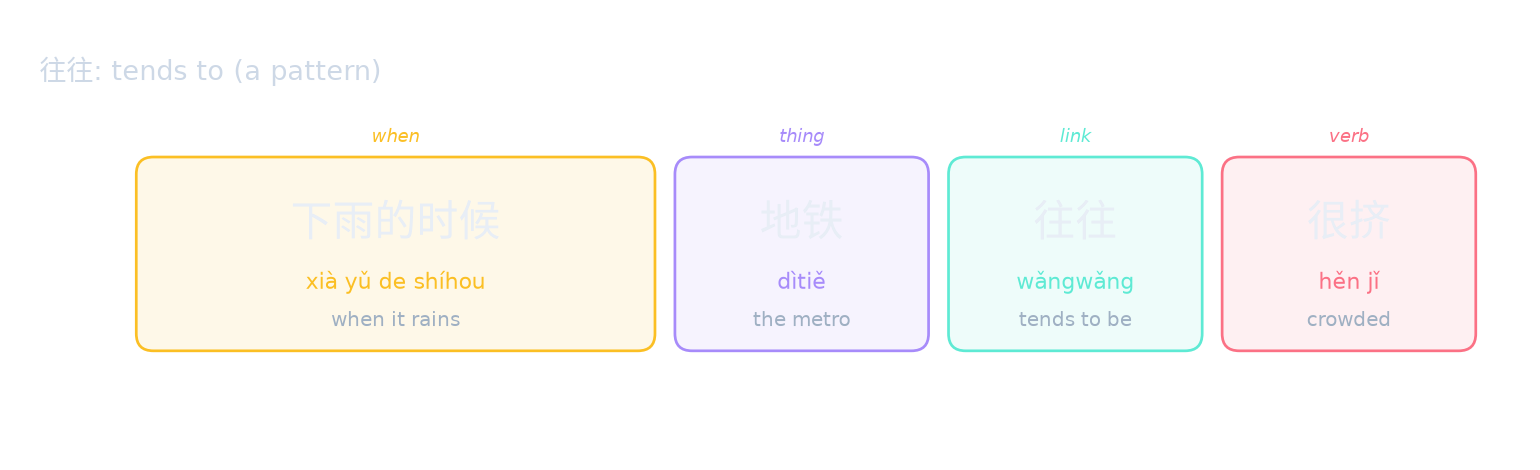
- Notas un patrón: el metro suele estar más concurrido cuando llueve.
- to rain下雨(modifier / structural particle)的when时候,underground railway地铁tend to往往很挤。 — "Cuando llueve, el metro tiende a estar muy concurrido."
often常常 = a menudo (frecuencia)
- often常常 indica que algo ocurre frecuentemente: I我often常常go to去the library图书馆. Puede describir el futuro: after以后I我can / will会often常常to come来.
- No requiere ninguna condición especial.
I我often常常go to去the library图书馆。
tend to往往 = tiende a (bajo una condición)
- tend to往往 describe un patrón regular bajo ciertas condiciones: at weekends周末(modifier / structural particle)的supermarkets超市tend to往往people人be many很多。 — "Los supermercados suelen estar muy concurridos los fines de semana."
- La condición (tiempo, situación) se suele especificar.
at weekends周末的supermarkets超市tend to往往people人be many很多。
Complete: “At weekends, parks tend to be full of people.” 周末公园里____人很多。
Dificultad 1/5 · 100 monedas + un pequeño bono en el primer intento de hoy
A pattern under a condition (weekends) takes 往往.
Dónde tend to往往 no aplica
- tend to往往 no se usa para deseos o el futuro: after以后I我can / will会often常常to come来, no after以后I我can / will会tend to往往to come来.
- Sin una condición, tend to往往 suena incompleto: he / him他tend to往往to arrive late迟到 es débil; he / him他下雨天tend to往往to arrive late迟到 funciona.
“I'll come and visit you often in future.” Which fits? 以后我会____来看你。
Dificultad 1/5 · 100 monedas + un pequeño bono en el primer intento de hoy
Future and wishes take 常常.
往往 works well for future plans.
Dificultad 1/5 · 100 monedas + un pequeño bono en el primer intento de hoy
False. 往往 states what tends to happen from past experience and cannot describe future plans. For plans use 常常: 以后我会常常来看你.
Comparación directa
- I我often常常drink喝coffee咖啡 — "A menudo bebo café" (frecuencia).
- I我stay up late熬夜(modifier / structural particle)的when时候tend to往往drink喝coffee咖啡 — "Cuando me quedo despierto hasta tarde, suelo beber café" (un patrón bajo una condición).
I我stay up late熬夜的when时候tend to往往drink喝coffee咖啡。
Build: “When I stay up late, I tend to drink coffee.”
Dificultad 3/5 · 200 monedas + un pequeño bono en el primer intento de hoy
Condition + 往往 + verb.
Resumen
- often常常 = a menudo (en cualquier momento, incluido el futuro). tend to往往 = tiende a, bajo una condición establecida.
- tend to往往 no se usa para deseos ni planes futuros.
Lee la referencia completa: Gramática HSK 4 — Comparación de adverbios similares.
You notice a pattern: the subway is always more crowded when it rains. Close the examples. Say a Mandarin response, then write it in Chinese. Explain briefly in English what the lesson’s pattern adds. Compare with the model, then change one detail and try again.
This is supported productive practice. Compare meaning and structure; your answer need not copy the model. A partner or teacher must hear the spoken response to comment on pronunciation.