Describe un proceso a partir de una secuencia visual
IntroducidoA list of nouns does not explain what happens
- A fictional paper-reuse workshop shows four stages: sort clean scraps, soak and mix, spread and press, then dry and inspect. Saying only “paper, water, tray, sheet” names objects but leaves the process unclear.
- This original GAC007-aligned lesson practises a spoken process description from a visual prompt. The diagram is a simplified classroom example, not a complete industrial method or permission to operate equipment. Use the named actions and sequence to explain it.
¿Por qué «papel, agua, bandeja, hoja» es insuficiente como descripción de proceso?
Dificultad 1/5 · 100 monedas + un pequeño bono en el primer intento de hoy
Los objetos necesitan acciones y relaciones para explicar qué sucede.
Read stages, arrows and the final check
- Follow the arrows from left to right. Each box gives an action, and the last adds inspection before use. The diagram supplies order, not exact times, water quantities or machine settings. Do not invent those details while presenting.
- Use a partner-read description if you want rehearsal, then compare it with the visual. No reviewed recording is provided here. The on-screen checks concern the supplied text and image, while spoken practice is reviewed with a partner.
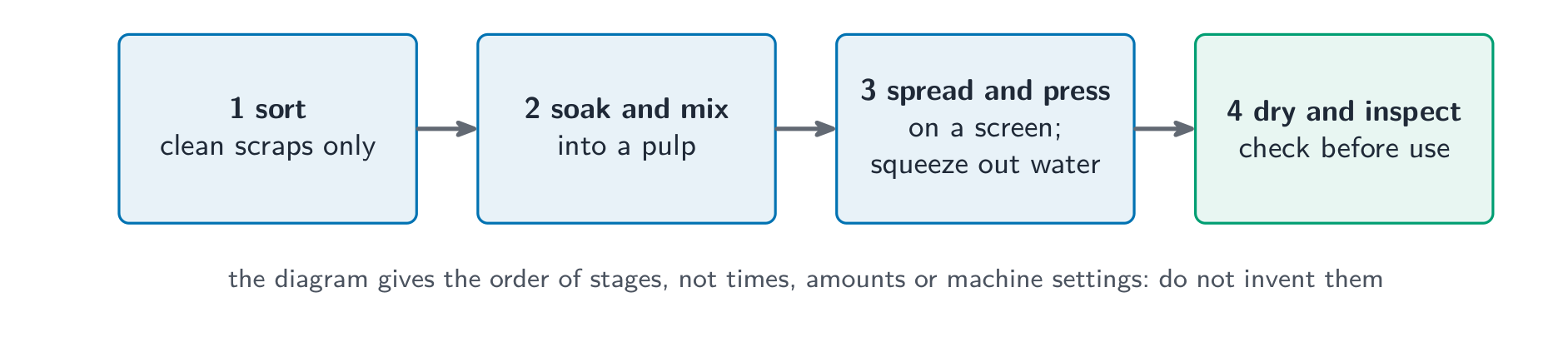
Ordena las etapas mostradas en lo visual.
Dificultad 3/5 · 200 monedas + un pequeño bono en el primer intento de hoy
Las flechas dan esta secuencia, con la inspección en la etapa final.
Turn each stage into a clear clause
- Start with the overall purpose, then use first, next, after that, finally. An active description names the people: “Participants sort the clean scraps.” A passive description focuses on material: “The clean scraps are sorted.” Either needs an action, not just an object name.
- Keep tense consistent for this general process: present simple. “The material was mixed and then will be pressed” changes the time perspective without a reason. A historical report could use past tense, but that would be a different description task.
The diagram shows a simplified paper-reuse activity. First, clean scraps are sorted. Next, they are soaked and mixed. After that, the mixture is spread and pressed into a sheet. Finally, the sheet is dried and inspected before it is used.
¿Qué oración usa correctamente la pasiva para la primera etapa?
Dificultad 1/5 · 100 monedas + un pequeño bono en el primer intento de hoy
Son clasificados hace que el material sea el sujeto de una descripción pasiva en presente simple.
Explain relationships without adding unsupported causes
- Before and after show timing; so that gives a purpose when the prompt supports it. “The sheet is inspected before use” follows the diagram. “It is inspected by an automatic laser for ten minutes” adds equipment and timing not shown.
- Use a noun again if a pronoun would be unclear. “It is spread and then it dries” may leave the listener unsure whether it means water, scraps or the mixture. Naming the mixture and then the sheet helps them track the material's stage.
A process arrow shows the next stage, not proof that every possible defect has been removed. The final inspection remains part of the described activity; do not report a guarantee of perfect paper.
¿Cuáles DOS detalles son suministrados por el enunciado?
Dificultad 2/5 · 140 monedas + un pequeño bono en el primer intento de hoy
Las etapas nombradas y la inspección previa al uso son suministradas. El equipo, el tiempo y las garantías de perfección no lo son.
Present from the visual rather than a written script
- Rehearse a 40-second description using the stage verbs as cue words. Point to the relevant box only when you discuss it. Do not cover the image with a long paragraph or describe a stage before the audience can locate it.
- A partner checks the purpose, four stages, order and final inspection. Ask them to repeat the sequence afterwards. If they swap two stages, inspect your signposts before assuming they did not listen carefully.
Adapt the grammar while preserving the process
- Describe the same visual once with participants as the subject and once with the material as the subject. The wording may change, but the order and supplied facts should remain. Grammar practice is not a licence to change the diagram's evidence.
- Write a five-sentence model, mark every sequence signal and remove an invented detail. Then give the spoken version using only the image. This task practises describing a process; it does not certify practical production skills.
State the purpose, follow the visual order, give each stage a verb and retain the final check. Change sentence structure without inventing missing facts.
Cambiar una descripción de proceso de activa a pasiva permite cambiar el orden de las etapas.
Dificultad 1/5 · 100 monedas + un pequeño bono en el primer intento de hoy
El cambio de voz alterna el enfoque de la oración, no la secuencia ni los hechos en lo visual.