Skip to content

IGCSE Physics · June 2025 · Paper 42 · Difficulty 4 · Challenging

Question 6

6
(a)

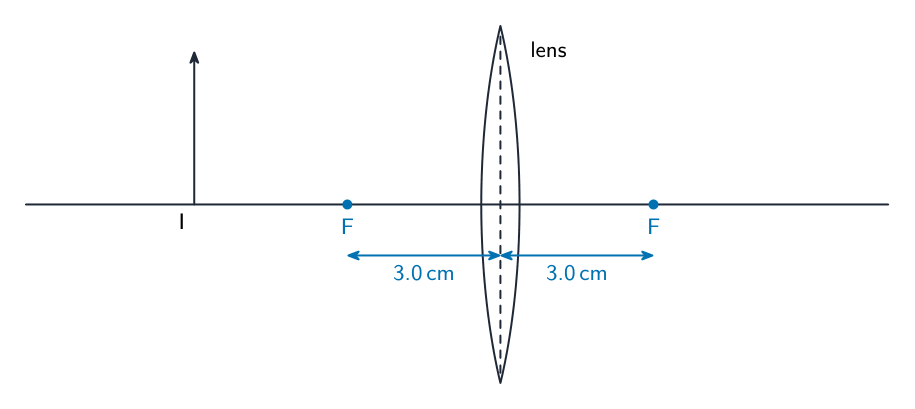
Fig. 6.1 is a full-size diagram of a lens and an image I of an object.

The focal length of the lens is 3.0 cm.

(i)

On Fig. 6.1, mark two points with labels F, to show the positions of the principal focuses (focal points) of the lens.[1]

(ii)

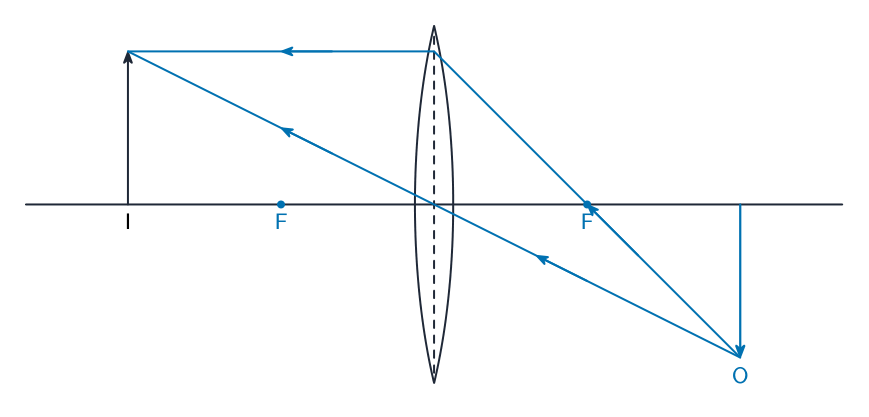
On Fig. 6.1, draw two rays from the image I to locate the object. Draw the object and label it O.[3]

(iii)

The object is moved so that it is 6 cm to the left of the lens.

State one characteristic of the image formed when the object is in this position[1]

(b)

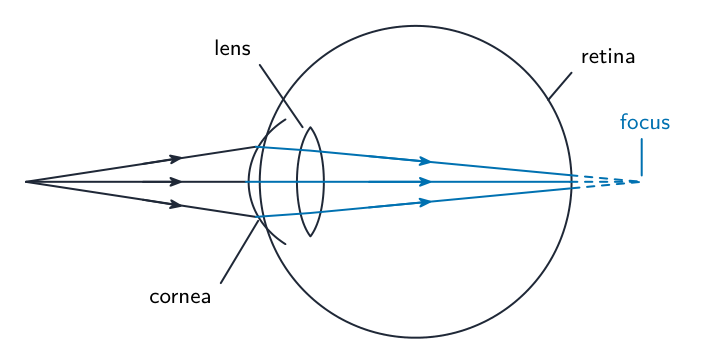
Fig. 6.2 shows a simplified diagram of an eye with rays from a near object. The eye needs correction for long-sightedness.

(i)

On Fig. 6.2, draw the path of the rays inside the eye to show the effect of long-sightedness.[1]

(ii)

A lens is used to correct the long-sightedness.

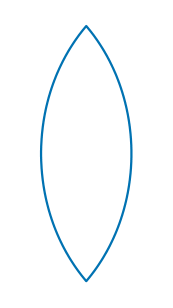
Draw a lens suitable for this correction.

lens to correct long-sightedness[1]

[Total: 7]
Show the mark scheme

These are the official mark-scheme rows. Each point that matches your answer earns a mark.

Tap the mark scheme to open it full size.

Show a worked answer

How to reach each mark, step by step. Try the question yourself first.

6(a)(i)

  • Mark a point F on the principal axis 3.0 cm from the lens centre on each side.
Worked answer drawing

6(a)(ii)

  • Draw a ray from the top of I through the lens centre.
  • Draw a second ray from the top of I parallel to the axis to the lens, then through the focus on the right.
  • Label the object O where the rays meet on the right of the lens.
Worked answer drawing

6(a)(iii)

  • The image is real.

6(b)(i)

  • Draw the rays so that they would meet behind the retina if extended.
Worked answer drawing

6(b)(ii)

  • Draw a converging lens, thicker at the centre than at the edges.
Worked answer drawing
Original question

Log in or create account

IGCSE, A-Level & AP