خطة التعلم الخاصة بك · متابعة · مراجعة →
استماع قصير — الوظيفة، النبرة فخامة، فخامة الفخامة المحفوفة بكلمات متكررة
مُقدَّميبقى موقعك المحفوظ في هذا المتصفح. لا يكتمل استئناف الموقع الدرس أو الإجابة على أسئلته.
 17:03
الاستماع: تدريب صفري محلول
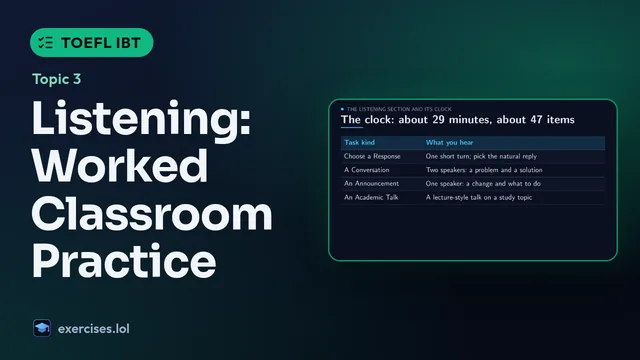
تقدم لك قسم الاستماع حوالي تسعة وعشرين دقيقة وحوالي سبعة وأربعين عنصرًا، في أربعة أنواع من المهام: استمع واختر ردًا، استمع إلى…
سرد باللغة الإنجليزية · ترجمة نصية بالإنجليزية و中文 يمكنك التبديل بينهما
في هذا الدرس
| English | المعنى |
|---|---|
| function/ˈfʌŋkʃn/ | The role, purpose or operation performed by a part, process or system. |
| intonation/ˌɪntəˈneɪʃn/ | The rise and fall of the voice across a sentence. |
| draft/dræft/ |
Shared words can't answer a request
- An invented exchange: "Could you show me where the library desk is?" Reply A: "It's beside the entrance — I can walk there with you." Reply B: "Libraries contain many books." A answers the request; B only shares the topic.
- Now the question is "Is the library desk beside the entrance?" "Yes, the library desk is just inside" fits, even though it repeats words. Check what the whole reply does and means. A keyword has no licence to answer on its own.
Work out what the turn is doing
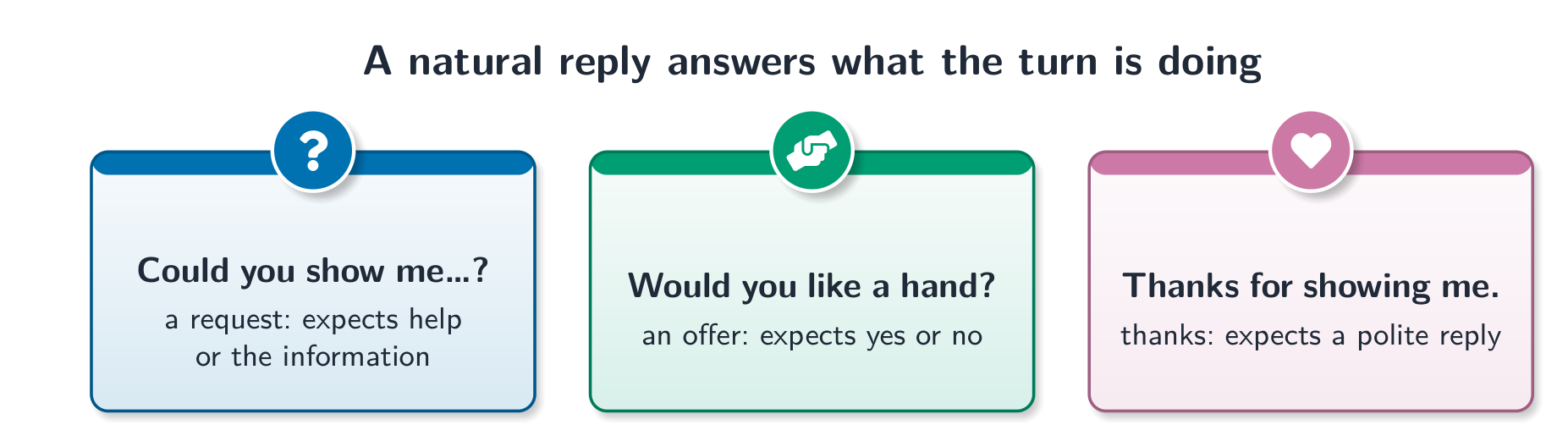
- "Would you like a hand?" offers help. "Thanks for showing me" thanks someone. "Could you show me…?" asks for help. An offer expects yes or no; a request expects the information or the action.
- "I can't find the new room" can be a request for help, even without a question mark — it doesn't always need an apology. This is a text exercise about function; in real audio, tone and intonation help too.
Does the reply answer what the speaker wants?
Work out what the turn is doing — a request, an offer, a complaint — and pick the reply that fits it.
You hear: 'I could give you a lift if you like.' What is the speaker doing?
الصعوبة 1/5 · 100 عملة + مكافأة صغيرة عند الإنجاز الأول اليوم
An offer is accepted or declined. Naming the function first tells you the shape of the right reply before you compare the options.
Suggested isn't the same as agreed
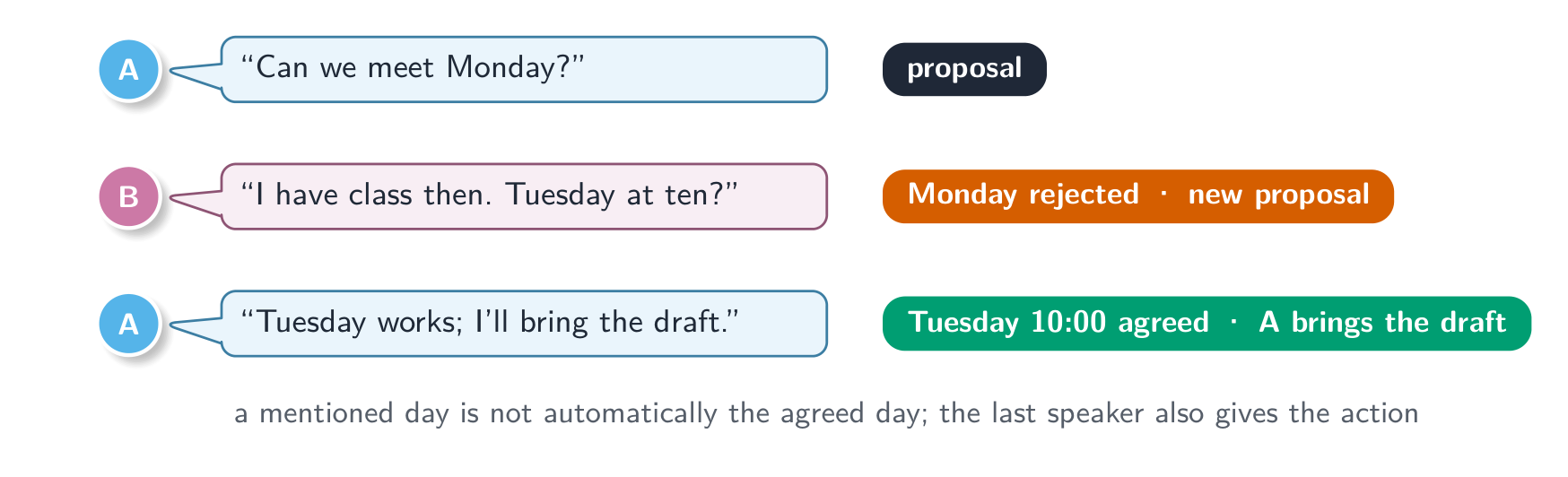
- "Can we meet Monday?" — "I have class then. Tuesday at ten?" — "Tuesday works; I'll bring the draft." Tuesday at ten is agreed. Monday was suggested and rejected. Note who said each detail and whether it was accepted.
- In another exchange, "Tuesday is unavailable; let's keep Monday" means Monday. The last day you hear isn't automatically the answer. Track what was accepted, not the last word.
An option repeats “the seminar room” from the prompt. What should you do?
الصعوبة 1/5 · 100 عملة + مكافأة صغيرة عند الإنجاز الأول اليوم
A repeated phrase can belong in a correct reply. Check the turn’s function and meaning instead of accepting or rejecting a word match.
“Can we meet Monday?” “I have class then. Tuesday at ten?” “Tuesday works; I will bring the draft.” Which appointment is accepted?
الصعوبة 1/5 · 100 عملة + مكافأة صغيرة عند الإنجاز الأول اليوم
Monday is rejected; the final turn accepts Tuesday at ten.
In a new exchange: “Tuesday is unavailable; let us keep Monday.” Which day is supported?
الصعوبة 1/5 · 100 عملة + مكافأة صغيرة عند الإنجاز الأول اليوم
Status and meaning matter; the Tuesday mention explicitly rules it out.
Infer only what the exchange supports
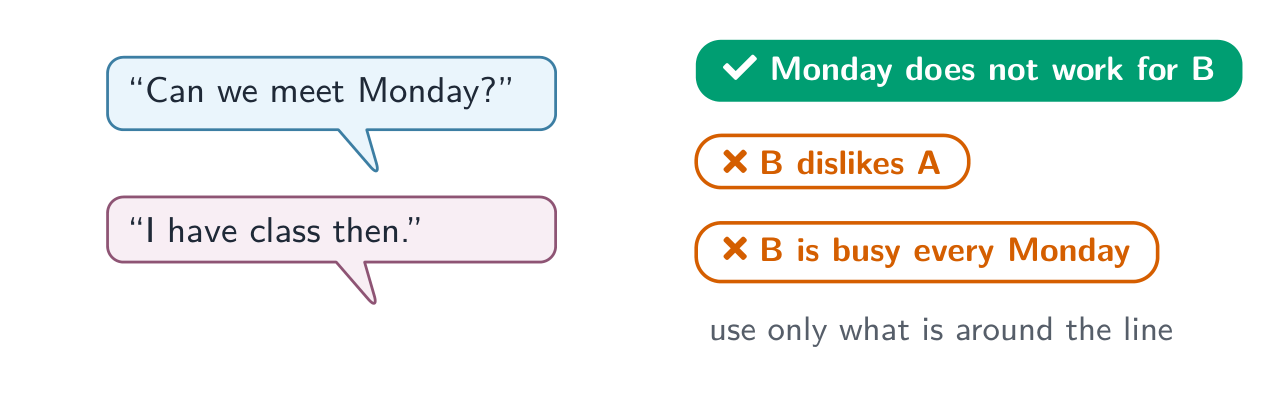
- "I have class then" explains why Monday doesn't work. It doesn't mean the speaker dislikes the other person, or is busy every Monday. Infer only from what's around it.
- Conversation questions aren't only about the problem and the solution. A question about who brings the draft is answered by the last speaker's promise — so don't remember only the day.
Which approach preserves useful evidence in the appointment conversation?
الصعوبة 1/5 · 100 عملة + مكافأة صغيرة عند الإنجاز الأول اليوم
Conversations may ask for main ideas, details or implied meaning; the accepted decision is one important relation, not a rule about most questions.
“I have class then” explains a timetable conflict, not the speaker's feelings about the other person.
الصعوبة 1/5 · 100 عملة + مكافأة صغيرة عند الإنجاز الأول اليوم
True. The sentence gives a practical reason for declining; it says nothing about attitude toward the person.
The first listen and the replay do different jobs
- On a first attempt, follow the sample's playback rules and keep the transcript hidden. Replaying afterwards helps you find a correction or phrase you missed — useful for review, but it doesn't change your first result.
- Before naming the error, compare the audio, the transcript and your answer. A wrong day could be a sound you misheard, a moment you lost focus, or a correction you ignored. Test the fix on new audio, not by remembering the answer letter.
During an independent attempt following one-play instructions, you may replay before answering.
الصعوبة 1/5 · 100 عملة + مكافأة صغيرة عند الإنجاز الأول اليوم
Follow the playback instructions during the first attempt. Replay afterwards can help diagnose a missed cue.
Change the situation, then use real sound
- Turn the written request into an offer, or change which time is agreed, and check whether your answer changes for the right reason. These checks train understanding; real listening also needs real recordings and fresh attempts.
- Now try it on real recordings: start with Choose a response drills, then do one full conversation, one announcement and one academic talk. Each recording plays once, as in the test; the transcript and explanation open only after you submit.
- Review by the type of mistake, not by the letter. For each miss, ask: did I not hear it, or did I hear it and misjudge what it was doing? Then take a different drill of the same kind — the same one again only tests your memory of the key.
- In short: what the speaker wants → the fitting reply; suggestion → what's agreed; inference → evidence. Checked on 2 October 2026: ETS Listening overview. The examples are our own text exercises, with no official score predictions.
Match the three distinctions from the worked case.
الصعوبة 2/5 · 140 عملة + مكافأة صغيرة عند الإنجاز الأول اليوم
Now try “Is the library desk beside the entrance?” A natural reply can repeat library desk: “Yes, the library desk is just inside.” The repeated words are useful because the meaning fits.
What makes “It is beside the entrance; I can walk there with you” fit the first request?
الصعوبة 1/5 · 100 عملة + مكافأة صغيرة عند الإنجاز الأول اليوم
Original written exchange: “Could you show me where the library desk is?” Reply A: “It is beside the entrance; I can walk there with you.” Reply B: “Libraries contain many books.” A answers the request; B only shares a topic. Now try “Is the library desk beside the entrance?” A natural reply can repeat library desk: “Yes, the library desk is just inside.” The repeated words are useful because the meaning fits.
Complete the worked-case label: Could you show me…? → ____. Use the phrase in the diagram.
الصعوبة 1/5 · 100 عملة + مكافأة صغيرة عند الإنجاز الأول اليوم
Judge what the turn is doing and whether the reply responds to it; do not reject shared words mechanically.
ما المشكلة؟ لا يرى ذلك سوى فريق الموقع.