خطة التعلم الخاصة بك · متابعة · مراجعة →
明明 (clearly …, yet …)
مُقدَّميبقى موقعك المحفوظ في هذا المتصفح. لا يكتمل استئناف الموقع الدرس أو الإجابة على أسئلته.
You clearly knew!
- Your friend knew about the change of exam room but didn't tell you.
- you你clearly明明knew知道,why为什么not不tell告诉me我? — "You clearly knew — why didn't you tell me?"
- Goal: point out an obvious fact that someone acts against with clearly明明, often with a complaint or surprise.
clearly明明 + obvious fact,(but; yet却 / still / also / even还) + the opposite
- clearly明明 (míngmíng) = "clearly, obviously". It states a fact that is plain to see; the next part shows someone acting as if it weren't true.
- he / him他clearly明明won't / can't不会,still / also / even还to speak说oneself自己can / will会。 — "He obviously can't do it, but he still says he can."
you你clearly明明knew知道,why为什么not不tell告诉me我?
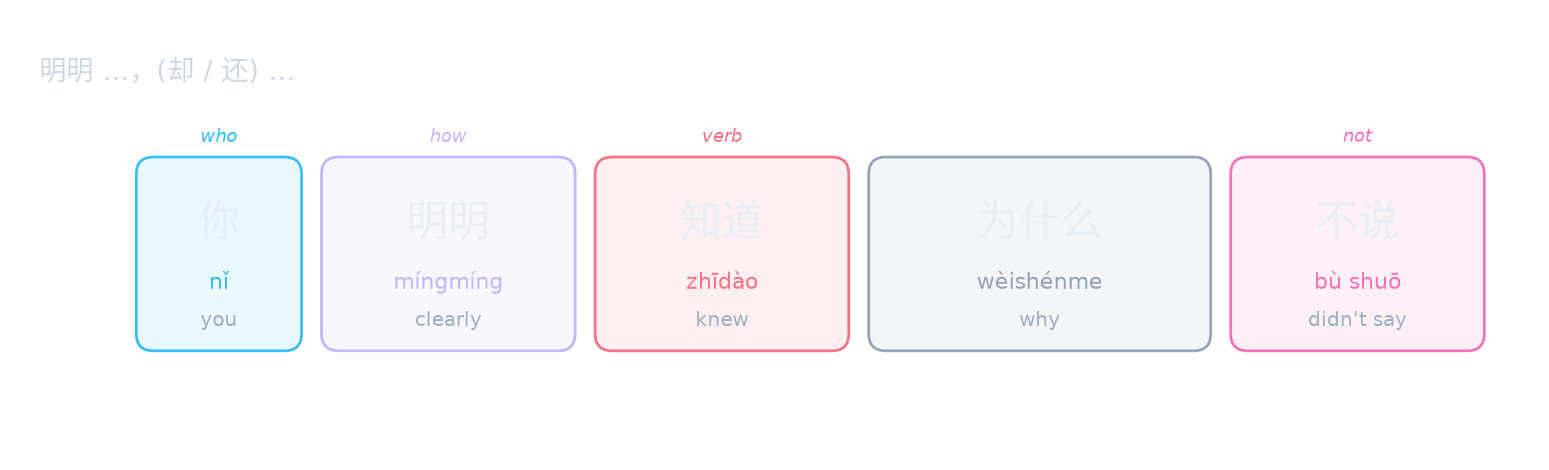
Complete: “You clearly knew — why didn't you tell me?” 你____知道,为什么不告诉我?
الصعوبة 1/5 · 100 عملة + مكافأة صغيرة عند الإنجاز الأول اليوم
A plain fact, then a complaint — 明明.
Build: “He obviously can't do it, but he still says he can.”
الصعوبة 3/5 · 200 عملة + مكافأة صغيرة عند الإنجاز الأول اليوم
明明 + fact, 还 + the opposite.
Surprise at your own mistake
- clearly明明 also shows surprise when something doesn't match what you remember: me我clearly明明(object)把keys钥匙put on放在the table桌上(completed / change)了,how come怎么not see / missing不见(completed / change)了? — "I definitely put the keys on the table — how come they're gone?"
- The tone is usually complaining, puzzled or annoyed.
I我definitely明明(object)把keys钥匙put on放在the table桌上了,how come怎么gone不见了?
我明明把钥匙放在桌上了,怎么不见了?How does the speaker feel?
الصعوبة 1/5 · 100 عملة + مكافأة صغيرة عند الإنجاز الأول اليوم
明明 + 怎么 shows surprise that things don't match.
clearly明明 needs a contrast
- clearly明明 is used when what follows goes against the fact. Without that contrast it sounds odd: for a plain "obviously", say obviously显然 or degree / adjective linker很obvious明显: degree / adjective linker很obvious明显,he / him他degree / adjective linker很tired累。 — "Obviously, he's tired."
- clearly明明 usually goes after the subject. It can also come first for emphasis: clearly明明to be / is是you你to speak说(modifier / structural particle)的,how come怎么not不to admit承认? — "You clearly said it — why won't you admit it?"
A neutral report says the plan obviously failed. Which fits best?
الصعوبة 1/5 · 100 عملة + مكافأة صغيرة عند الإنجاز الأول اليوم
A neutral conclusion — 显然. 明明 needs a contrast after it.
明明 usually goes after the subject, but it can also start the sentence for emphasis.
الصعوبة 1/5 · 100 عملة + مكافأة صغيرة عند الإنجاز الأول اليوم
你明明知道 / 明明是你说的.
clearly明明, obviously显然 and clear; clearly分明
- obviously显然 = obviously (a neutral conclusion, often written). clear; clearly分明 = clearly (close to clearly明明, a bit more written).
- clearly明明 = it's plain that …, yet …: the feeling is in the contrast.
Recap
- (Subject +) clearly明明 + fact,(but; yet却 / still / also / even还 / why为什么) + the opposite = clearly …, yet ….
- A neutral "obviously" = obviously显然 / degree / adjective linker很obvious明显.
Read the full reference: HSK 6 grammar — Adverbs.
Write two short complaints with 明明: one about a friend, one about something you lost or forgot.
Your answer need not copy the model. A partner or teacher must hear the spoken response to comment on pronunciation.