خطة التعلم الخاصة بك · متابعة · مراجعة →
总 (always / keep on)
مُقدَّميبقى موقعك المحفوظ في هذا المتصفح. لا يكتمل استئناف الموقع الدرس أو الإجابة على أسئلته.
The same teammate keeps arriving late
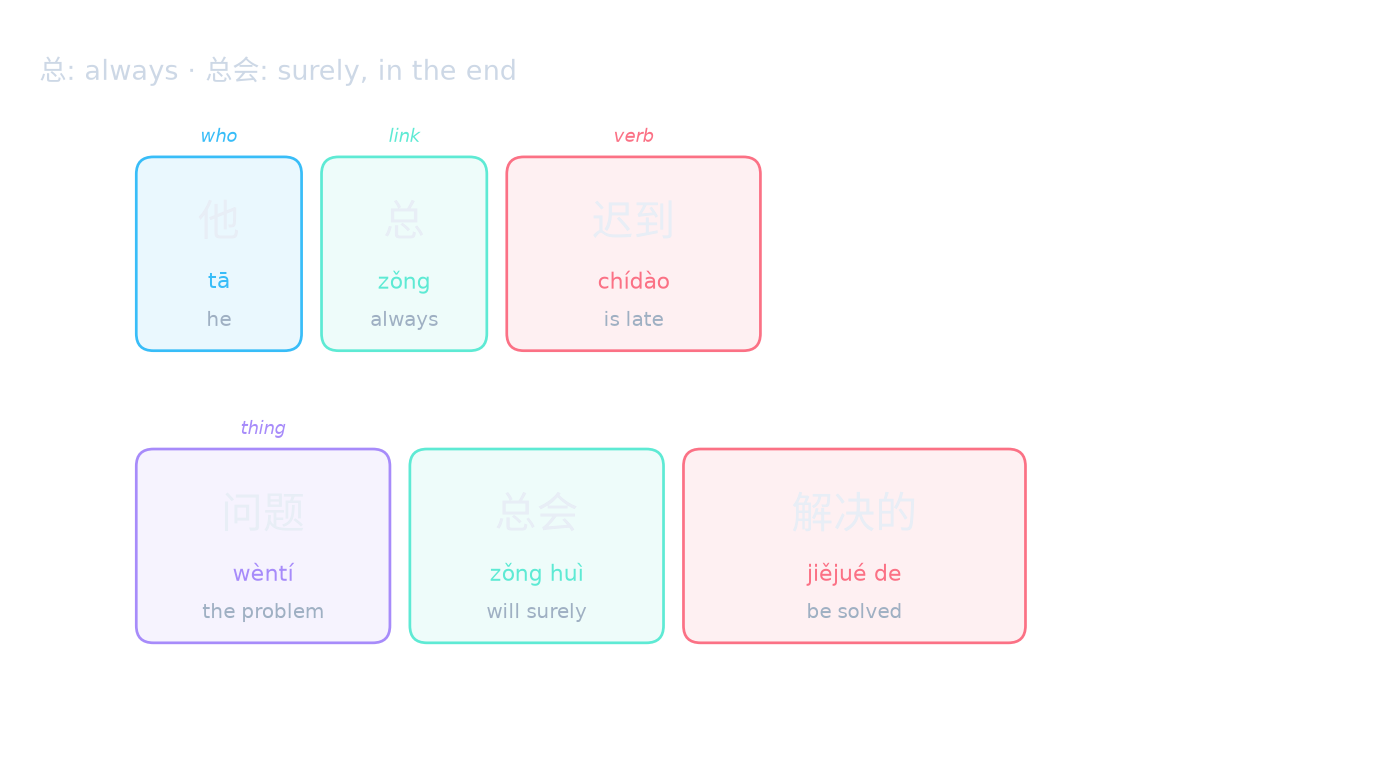
- Your teammate was late on Monday, Wednesday and again today. You sigh: he他always总is late迟到。 — "He's always late."
- Goal: use always总 for something that keeps happening, and will eventually总会 for "sooner or later, surely".
1 · always总 + verb = always, keeps doing
- Subject + always总 + verb: the action happens again and again. always总 = always总是 in this use.
- weekend周末he他always总to sleep睡to / arrive / (result: get)到noon中午。 — "At weekends he always sleeps until noon." you你how / why怎么keep playing总玩mobile phone手机? — "Why are you always on your phone?"
he他always总is late迟到。
Your roommate forgets the keys again and again. Complain: 你怎么____忘带钥匙?
الصعوبة 1/5 · 100 عملة + مكافأة صغيرة عند الإنجاز الأول اليوم
总 + verb = keeps doing it.
Often a complaint, not always
- With bad habits, always总 sounds annoyed: you你how / why怎么always总忘带key钥匙? It is the speaker's feeling, so it can exaggerate.
- With good habits it is praise: she / her她always总help帮助other people别人。 — "She is always helping others."
她总帮助别人 is a complaint.
الصعوبة 1/5 · 100 عملة + مكافأة صغيرة عند الإنجاز الأول اليوم
总 only says it happens again and again. With a good habit it is praise.
2 · will eventually总会 + verb = surely, sooner or later
- will eventually总会 + verb (+ (modifier / structural particle)的): the speaker is sure it will happen in the end. Used to comfort someone.
- 别难过,will eventually总会good / become better好(modifier / structural particle)的。 — "Don't be sad; things will get better in the end." question / problem问题will eventually总会to solve解决(modifier / structural particle)的。 — "The problem will be solved sooner or later."
نمط متكرر أو توقع نهائي؟
اميز المعاني في أمثلة سياقية كاملة، لا تصحح آليًا أو ترفض العزلة.
Your friend failed an exam and is sad. What does 别难过,总会好的 tell them?
الصعوبة 1/5 · 100 عملة + مكافأة صغيرة عند الإنجاز الأول اليوم
总会 + verb = surely, sooner or later.
always总 or often经常? One time or many?
- always总 is stronger than often经常: ✓ he他always总is late迟到。 (every time, it feels like) ✓ he他often经常is late迟到。 — "He's often late."
- always总 is for a habit, not one event: ✗ he他yesterday昨天always总is late迟到. ✓ he他yesterday昨天is late迟到(completed / change)了。 — "He was late yesterday."
Which sentence is wrong?
الصعوبة 1/5 · 100 عملة + مكافأة صغيرة عند الإنجاز الأول اليوم
总 describes a habit over many times, not one day's event. Say 他昨天迟到了。
Match each sentence to its meaning.
الصعوبة 2/5 · 140 عملة + مكافأة صغيرة عند الإنجاز الأول اليوم
总 is stronger than 经常; 总会 looks to the future.
Recap
- always总 + verb = always, keeps doing (often a complaint): he他always总is late迟到.
- will eventually总会 + verb (+ (modifier / structural particle)的) = surely, sooner or later: will eventually总会good / become better好(modifier / structural particle)的. often经常 = often (weaker than always总).
Read the full reference: HSK 5 grammar — Adverbs.
Your little brother keeps losing his phone, and now he is upset. Complain about the habit with 总, then comfort him with 总会.
Your answer need not copy the model. A partner or teacher must hear the spoken response to comment on pronunciation.