Musical analysis and context
引入| English | 释义 | 拼音 |
|---|---|---|
| texture/ˈtekstʃə/ | 织体 | zhī tǐ |
| monophonic | 单声部 | dān shēng bù |
| homophonic | 主调 | zhǔ diào |
| polyphonic | 复调 | fù diào |
| drone | 持续音 | chí xù yīn |
| timbre/ˈtæmbə/ | 音色 | yīn sè |
| context/ˈkɒntekst/ | 语境 | yǔ jìng |
A second voice under the chant, c. 900
- Around 900 CE an anonymous treatise, Musica enchiriadis, described how singers could add a second voice beneath a plainchant melody — moving with it, or holding a single note while the chant moved above.
- A single melody had become two lines heard together. That change is a change of texture 织体: how many layers of sound there are and how they relate.
What did Musica enchiriadis (c. 900) describe?
难度 1/5 · 今日首次完成可获 100 金币及少量额外奖励
It describes early two-voice texture.
Types of texture
- Monophonic 单声部: one melody alone. Homophonic 主调: a melody with chords or accompaniment. Polyphonic 复调: several independent melodies at once.
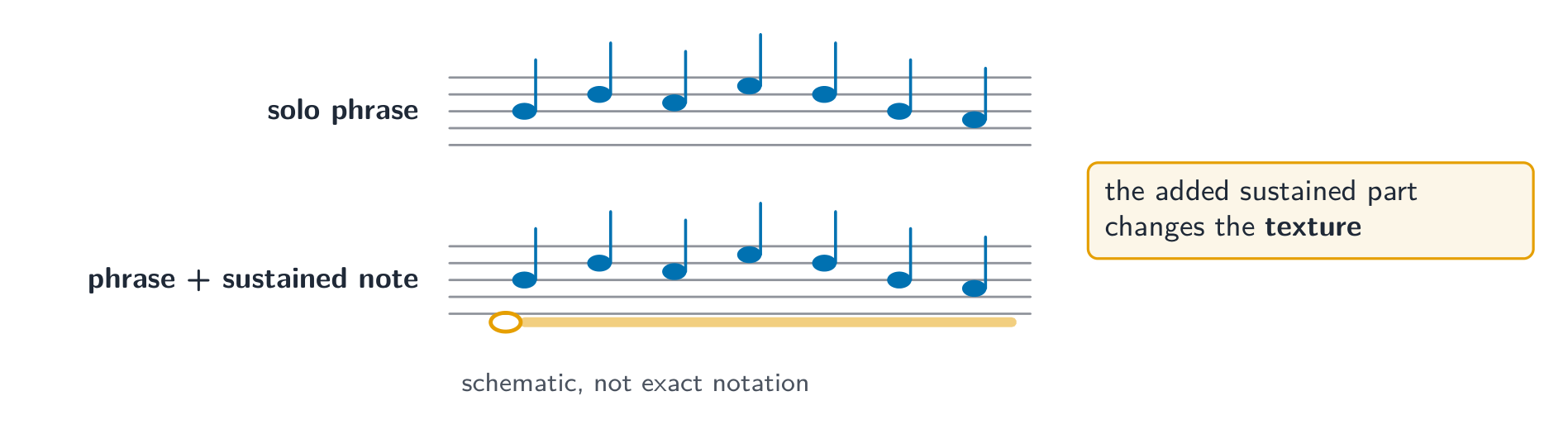
- A drone 持续音 — a held or repeated low note — adds a layer without adding a new melody, as in bagpipe music or the tanpura in Indian classical music.
Match each texture to its description.
难度 2/5 · 今日首次完成可获 140 金币及少量额外奖励
Texture describes how layers relate.
A drone adds a layer of sound without adding a new melody.
难度 1/5 · 今日首次完成可获 100 金币及少量额外奖励
It is a held or repeated low note.
The elements of music
- Describe music with its elements: melody, harmony, rhythm, texture, timbre (tone colour), dynamics (loudness) and structure.
- Use precise terms with evidence: "the strings hold a drone on D while the flute's melody moves stepwise above".
Which are elements of music?
难度 2/5 · 今日首次完成可获 140 金币及少量额外奖励
The composer's age is context, not an element.
Worked example: one phrase, two textures
A student plays a short folk melody on the violin, then plays it again while a cellist holds a low D.
- Version 1 — monophonic: the melody is exposed; every small change of pitch is clear, and the sound is thin and personal.
- Version 2 — melody plus drone: the low D gives the melody a home note. Notes that clash with D create tension, and notes that match it feel restful, so the phrase gains a sense of pull and release.
- Context: drone textures are common in Scottish, Indian and medieval music, where they anchor the mode.
In version 2 of the worked example, what creates tension?
难度 1/5 · 今日首次完成可获 100 金币及少量额外奖励
The drone gives a home note; clashes create pull.
Music in context
- Context 语境 is the time, place, people and purpose of the music: a medieval monastery, a Highland gathering, a Bollywood film score.
- Explain how context explains a musical choice: chant was sung in echoing churches, so slow, smooth lines kept the words clear.
Why did slow, smooth chant suit its context?
难度 1/5 · 今日首次完成可获 100 金币及少量额外奖励
Context explains musical choices.
Analysing an unfamiliar piece
- Listen several times with a different focus each time: first structure, then texture, then timbre and dynamics.
- Note timings ("at 0:45 the texture thickens") so your points can be checked.
"The music is calm" is not analysis. Say which elements create the effect: "a slow tempo, a quiet dynamic and a sustained drone make the opening calm".
"The music is calm" is a complete analytical point.
难度 1/5 · 今日首次完成可获 100 金币及少量额外奖励
Name the elements that create the effect.
Analyse music through its elements — melody, harmony, rhythm, texture, timbre, dynamics and structure — with precise terms, timings and evidence. Texture describes how layers relate: monophonic, homophonic, polyphonic, or melody with a drone. Link choices to their context.
Describe the texture of a song you know at two different moments, using timings and elements.
Texture, timings, elements, effect.