Data, algorithms and digital power
引入| English | 释义 | 拼音 |
|---|---|---|
| algorithm/ˈælɡərɪθəm/ | 算法 | suàn fǎ |
| data/ˈdeɪtə/ | 数据 | shù jù |
| power/ˈpaʊə/ | 权力 | quán lì |
| metadata/ˌmetəˈdeɪtə/ | 元数据 | yuán shù jù |
| concepts/ˈkɒnsepts/ | 概念 | gài niàn |
The exam-grade algorithm, August 2020
- With exams cancelled by COVID-19, England's exam regulator used an algorithm 算法 to set A-level grades. It adjusted teachers' predictions using each school's past results, and about 39 % of grades came out lower than predicted.
- Strong students at schools with weak histories were pulled down. After protests ("Ditch the algorithm!") the government dropped it on 17 August 2020. Data and algorithms carry power over people's lives.
Data
- Data 数据 are recorded facts — numbers, text, locations, clicks. Metadata 元数据 is data about data: when a photo was taken, where, on which phone.
- Data are never complete or neutral: someone chose what to collect, from whom and how. Missing data can mean very different things.
Which is an example of metadata?
难度 1/5 · 今日首次完成可获 100 金币及少量额外奖励
Metadata describes the data itself — when, where and how it was made.
Algorithms
- An algorithm is a set of steps that turns inputs into outputs — sorting a news feed, recommending a video, approving a loan. Machine-learning algorithms learn their rules from past data.
- If the past data are biased, the algorithm can repeat the bias at scale. The 2020 algorithm trusted school history more than individual students.
A hiring algorithm is trained on ten years of a company's past hires, who were mostly men. What is the risk?
难度 1/5 · 今日首次完成可获 100 金币及少量额外奖励
Machine learning copies patterns in past data, including biased ones.
Worked example: a missing quiz
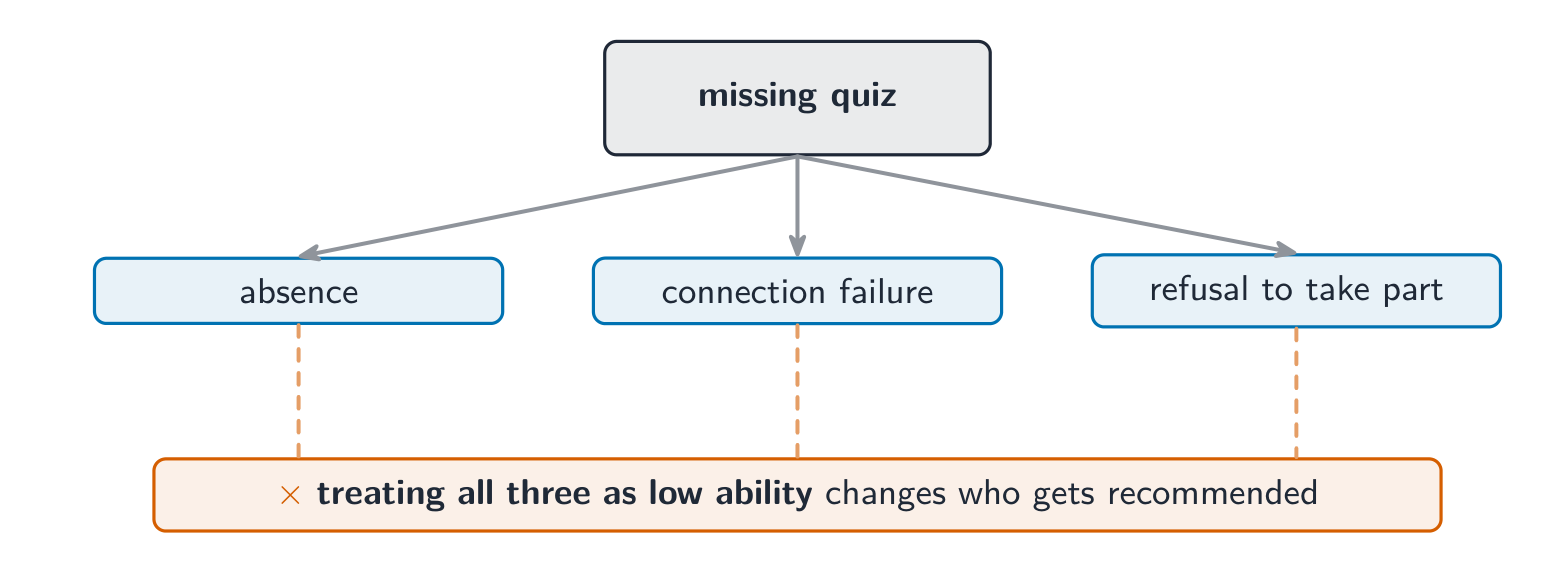
A learning app recommends extra-help lessons to students with low quiz scores. It records a missing quiz as a score of 0. In one class, 6 of 30 students have missing quizzes. Evaluate the design.
- Data problem: a missing quiz may mean absence, a connection failure or refusal — not low ability. Scoring it as 0 treats them all the same.
- Who is affected: students with poor home internet are more likely to miss quizzes, so the app labels them "weak" and changes what it shows them.
- Better design: record "missing" separately, ask the teacher why, and recommend only on completed work. A design choice in the data creates or prevents unfairness.
A student's quiz result is missing. Which could it mean?
难度 2/5 · 今日首次完成可获 140 金币及少量额外奖励
Missing data have many causes; treating them as low ability is an error.
In a class of 30, 6 quizzes are missing. What percentage is missing?
难度 2/5 · 今日首次完成可获 140 金币及少量额外奖励
$\dfrac{6}{30} \times 100 = 20\,\%$.
Digital power
- Power 权力 asks who designs a system, who controls the data and who is affected but has no say. The regulator, schools and students had very different power in 2020.
- Transparency (explaining how a decision was made), contestability (a way to appeal) and accountability (someone responsible) limit that power.
Match each safeguard to its meaning.
难度 2/5 · 今日首次完成可获 140 金币及少量额外奖励
Together these limit the power of automated decisions.
The IB concepts
- Digital Society uses seven concepts 概念: change, expression, identity, power, space, systems, and values and ethics. Each gives a different question about the same system.
- For the grading algorithm: change (exams replaced by models), identity (students judged by their school), values and ethics (fairness to individuals or to the national grade pattern?).
Match each question to the IB concept it uses.
难度 2/5 · 今日首次完成可获 140 金币及少量额外奖励
Each concept asks a different question about the same system.
"Algorithms are neutral because computers have no opinions" is wrong. People choose the data, the goal and the rules. The 2020 algorithm was designed to stop grade inflation, so it valued the national pattern over individual fairness. Every algorithm carries its designers' choices.
An algorithm cannot be biased, because computers have no opinions.
难度 1/5 · 今日首次完成可获 100 金币及少量额外奖励
People choose the data, goals and rules; bias enters through those choices.
Data are chosen, partial records, and missing data need careful meaning. Algorithms turn data into decisions and can repeat bias at scale. Ask who holds power over a system, and use the course concepts — change, expression, identity, power, space, systems, values and ethics — to analyse its impact.
Evaluate the use of an algorithm to set exam grades when exams are cancelled.
Evaluate both sides and decide.