老是
引入您的已保存位置保留在此浏览器中。恢复操作不会完成课程或回答其中的问题。
Not again!
- Your roommate leaves dirty dishes in the sink, and it is the third time this week.
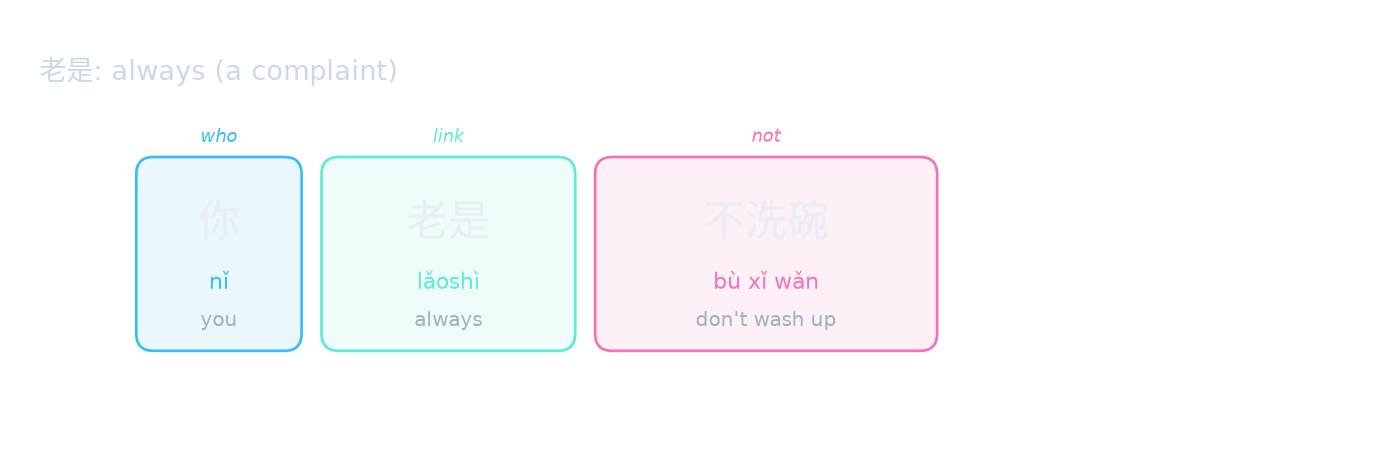
- 你老to be / is是not不to wash the dishes洗碗! — "You never wash the dishes!" (literally "you always don't wash them"). keeps老是 complains.
Subject + keeps老是 + Verb
- keeps老是 = "always, keep on (doing)" with annoyance. It goes before the verb, like always总是.
- It is spoken and emotional; you usually would not use it in a formal report.
he他keeps老是being late迟到。
Complain: “You keep playing on your phone!” 你____玩手机!
难度 1/5 · 今日首次完成可获 100 金币及少量额外奖励
老是 + verb for an irritating habit.
Complaints and worries
- my我(modifier / structural particle)的computer电脑keeps老是having出problems问题。 — "My computer keeps having problems."
- It can describe yourself: my我old老to be / is是to forget忘记带伞。 — "I keep forgetting to bring an umbrella."
my我的computer电脑keeps老是having出problems问题。
Build: “I keep forgetting to bring an umbrella.”
难度 3/5 · 今日首次完成可获 200 金币及少量额外奖励
Subject + 老是 + verb phrase.
Tone and position
- Use keeps老是 for something irritating or worrying; for a neutral habit (he他always总是七点to get up起床) choose always总是.
- keeps老是 goes before the verb (or before not不 / not / haven't没): 你老to be / is是not不to listen to听, not you你not不old老to be / is是to listen to听.
你不老是听 is the right way to say “You never listen.”
难度 1/5 · 今日首次完成可获 100 金币及少量额外奖励
老是 comes before 不: 你老是不听.
keeps老是 versus always总是
- always总是 reports a pattern: he他always总是take坐underground railway地铁to go to work上班。 — "He always takes the subway to work."
- keeps老是 adds a complaint: he他old老to be / is是take坐to give right of way to…错车。 — "He keeps getting on the wrong train."
he他keeps老是take坐the wrong错train车。
A news report says the factory opens at eight every day. Which adverb suits the neutral report?
难度 1/5 · 今日首次完成可获 100 金币及少量额外奖励
总是 states a neutral habit; 老是 would sound like a complaint.
Recap
- keeps老是 + Verb = keeps doing, always, with annoyance or worry.
- Spoken and emotional. For a neutral habit, use always总是.
Read the full reference: HSK 3 grammar — Adverbs.
Your roommate leaves dirty dishes in the sink, and it is the third time this week. Close the examples. Say a Mandarin response, then write it in Chinese. Explain briefly in English what the lesson’s pattern adds. Compare with the model, then change one detail and try again.
This is supported productive practice. Compare meaning and structure; your answer need not copy the model. A partner or teacher must hear the spoken response to comment on pronunciation.