Scope 范围 and prerequisites
Digital SAT framework; original paper practice is nonadaptive and gives no scaled-score prediction.
- Distinguish the passage’s central claim from a supporting example
- Interpret details without widening their stated scope
- Choose an accurate summary covering the whole passage
Prerequisites: Identify a paragraph's subject; distinguish stated fact from inference 推断.
Explain and choose the method
Read for the passage’s controlling relationship: a problem and response, a contrast, an explanation or a qualified claim. A topic label such as museum collections identifies the subject but not what the author says about it. State the main point in a short sentence before comparing options.
A supporting detail 细节 illustrates, explains or qualifies that point. It may be memorable without being the central idea 中心思想. If the passage gives two examples of improved access, a summary about only one example is too narrow. If it reports one collection, a conclusion about all collections is too broad.
Preserve scope and certainty. Some, may and in this study are meaningful limitations. An answer can reuse the passage’s vocabulary while changing its claim from possible to guaranteed. Check the answer’s subject, action and qualification against the passage, not simply the number of shared words.
When a question asks about a specific detail, answer that narrower task rather than choosing the central idea by habit. Locate the relevant sentence, read nearby context and distinguish what is directly stated from a proposed reason. Prior subject knowledge is unnecessary and should not supply missing evidence 证据.
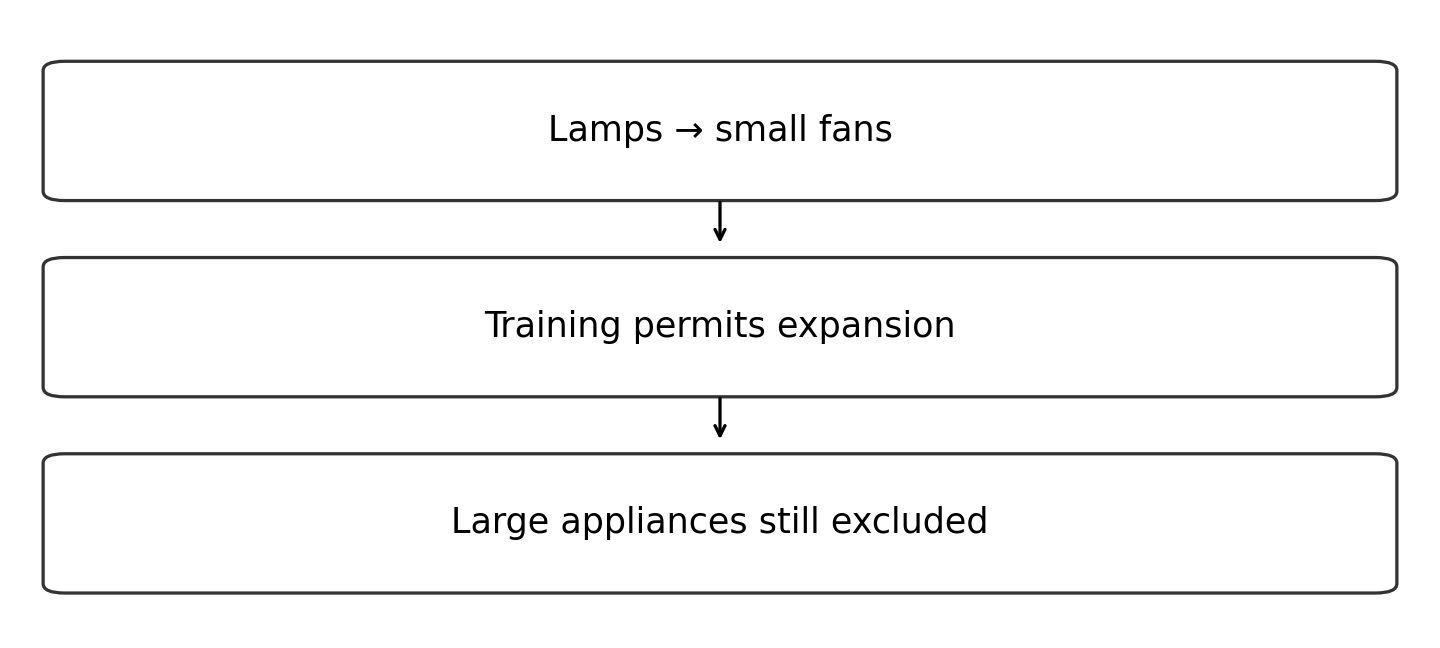
The central idea is the relationship that holds the passage together. Read: “The repair café first accepted only lamps. It later added small fans after volunteers received training. Large appliances still went to specialist shops.” A sound summary is: the café expanded its repairs within limits. “It repaired everything” ignores the last sentence. “It repaired lamps” omits the change.
Existing worked example: Original passage: “The town archive digitised its most frequently requested maps first. Researchers could then inspect those maps remotely, reducing repeated handling of fragile originals. Staff continued to offer supervised access to items not yet scanned.” Central idea: selective digitisation improved access and protection while physical access continued. “All maps became available online” overstates coverage; “the archive ended visits” contradicts the final sentence.
Complete original context
Original passage: The city archive began a trial in which readers could search handwritten shipping registers using an online index. Volunteers entered names and dates, while staff checked entries that were difficult to read. The index often helped researchers locate a likely page before travelling to the archive. It did not replace the register images: two people with the same name could still be distinguished only by reading nearby entries. Staff therefore described the index as a route into the records rather than a final answer to every question. They also kept a public list of corrected entries so that researchers could see how the index changed.
Independent practice and checked reasoning
Transfer 1
State the central idea in one sentence, preserving both benefit and limit.
Reasoning: The checked index helps researchers find relevant records, but consulting the underlying register remains necessary for some distinctions. This covers the search benefit and same-name limitation without claiming complete accuracy.
Transfer 2
Which detail explains why register images remain necessary? Distinguish that from the purpose of the corrections list.
Reasoning: People with the same name may require nearby register entries to distinguish them. The corrections list instead makes revisions visible; it does not itself identify every person.
Transfer 3
Reject each proposed summary with specific evidence — A “Volunteers replaced staff”; B “The index made all archive visits unnecessary”; C “The archive hid changes to the index”.
Reasoning: A contradicts staff checking difficult entries. B overstates “often” and the need to consult underlying records; the passage does not say every visit is replaced. C contradicts the public corrections list. None preserves the stated scope.
Limits and next use
A true detail can still be a wrong main-idea answer. Watch for all, always and only where the passage makes a narrower claim.
All tasks here are public original practice with authored guidance. They are not official questions or fresh diagnostics. Existing protected tests and mocks remain separate.