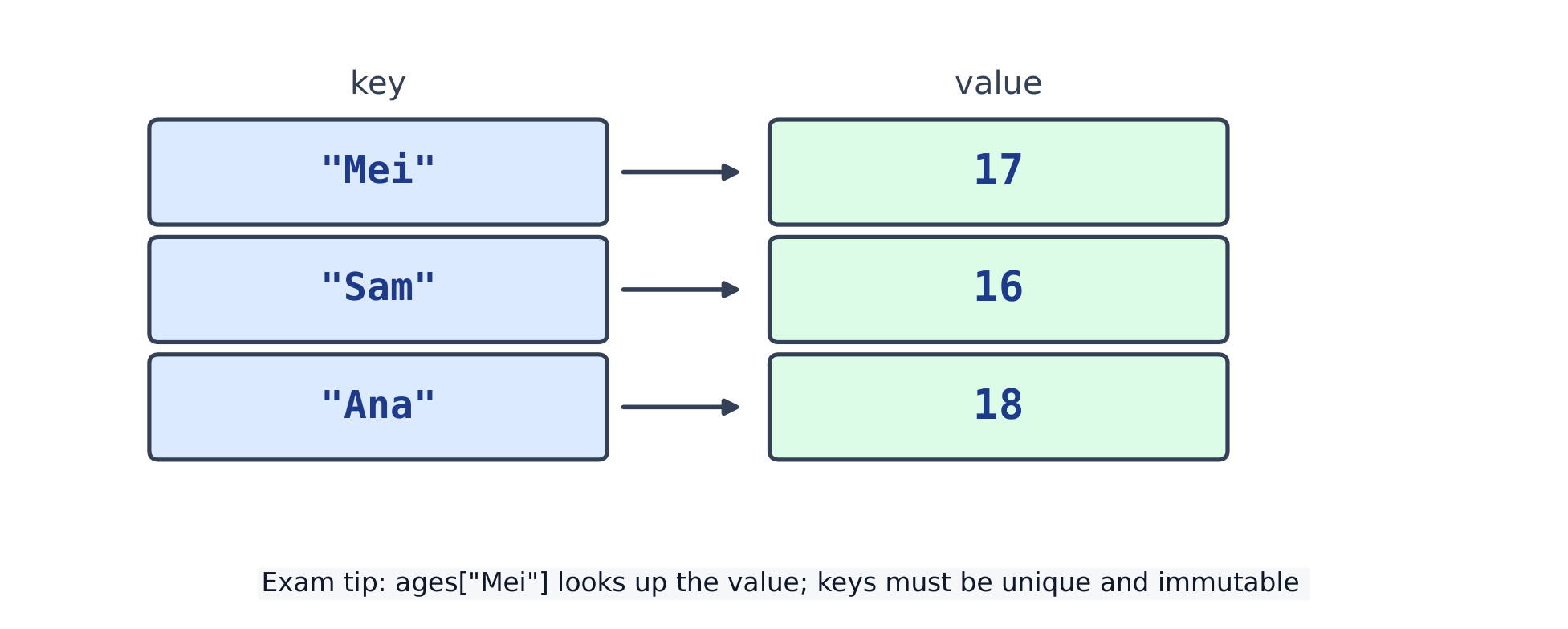
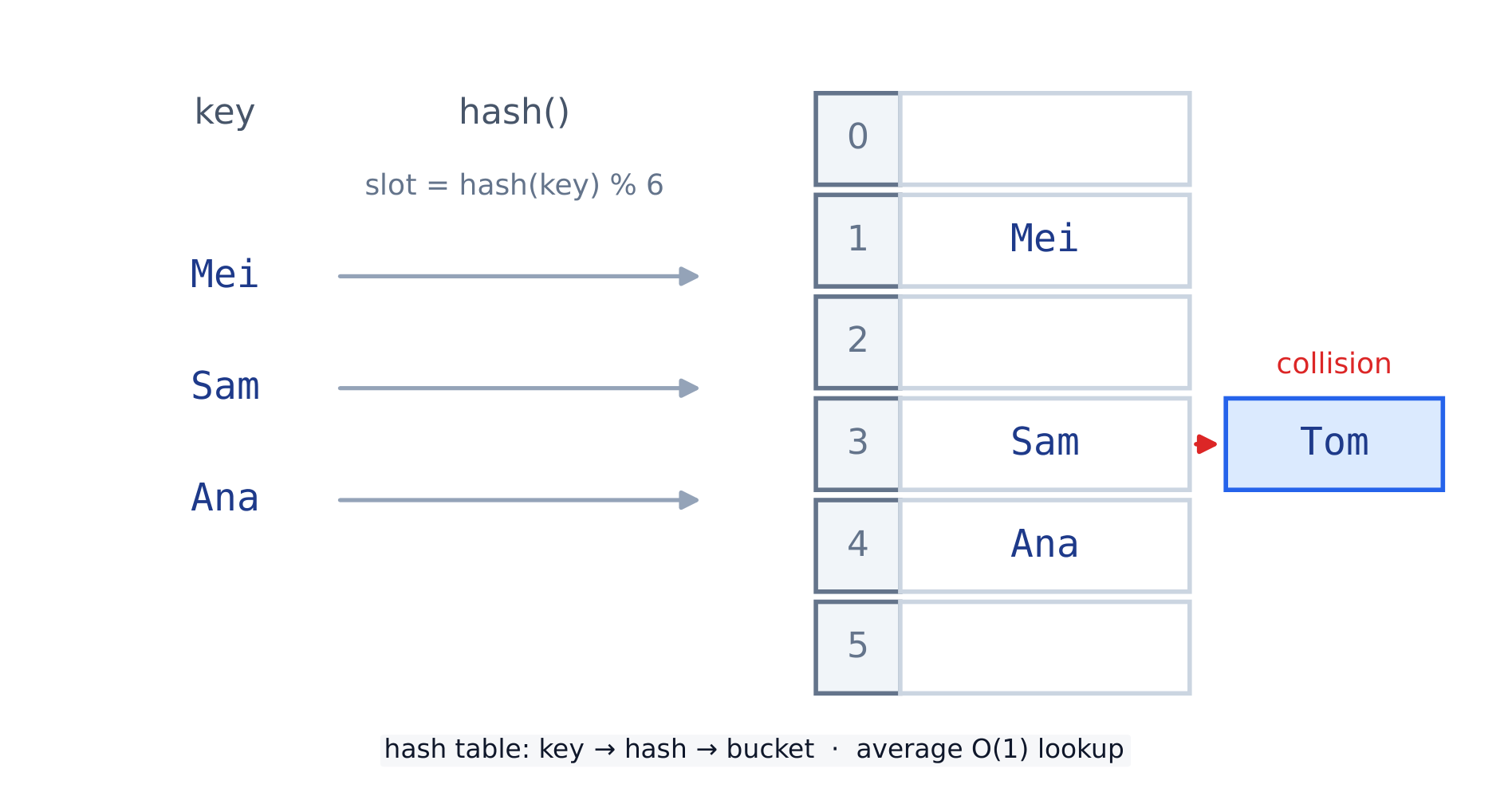
student = {"name": "Mei"}
student["score"] = 88      # add a new key
student["score"] = 90      # update the value
print(student)             # {'name': 'Mei', 'score': 90}
检查与遍历
用 in 检查某个键是否存在。遍历所有键,或遍历 .items() 同时得到键和值。
student = {"name": "Mei", "score": 90}
print("score" in student)  # True
for key, value in student.items():
    print(key, "=", value)
# name = Mei
# score = 90
# A runtime error, caught so this block still finishes:
try:
    print(10 / 0)
except ZeroDivisionError:
    print("cannot divide by zero")
# cannot divide by zero
def set_age(age):
    if age < 0:
        raise ValueError("age cannot be negative")
    return age

try:
    set_age(-1)
except ValueError as err:
    print("error:", err)
# error: age cannot be negative
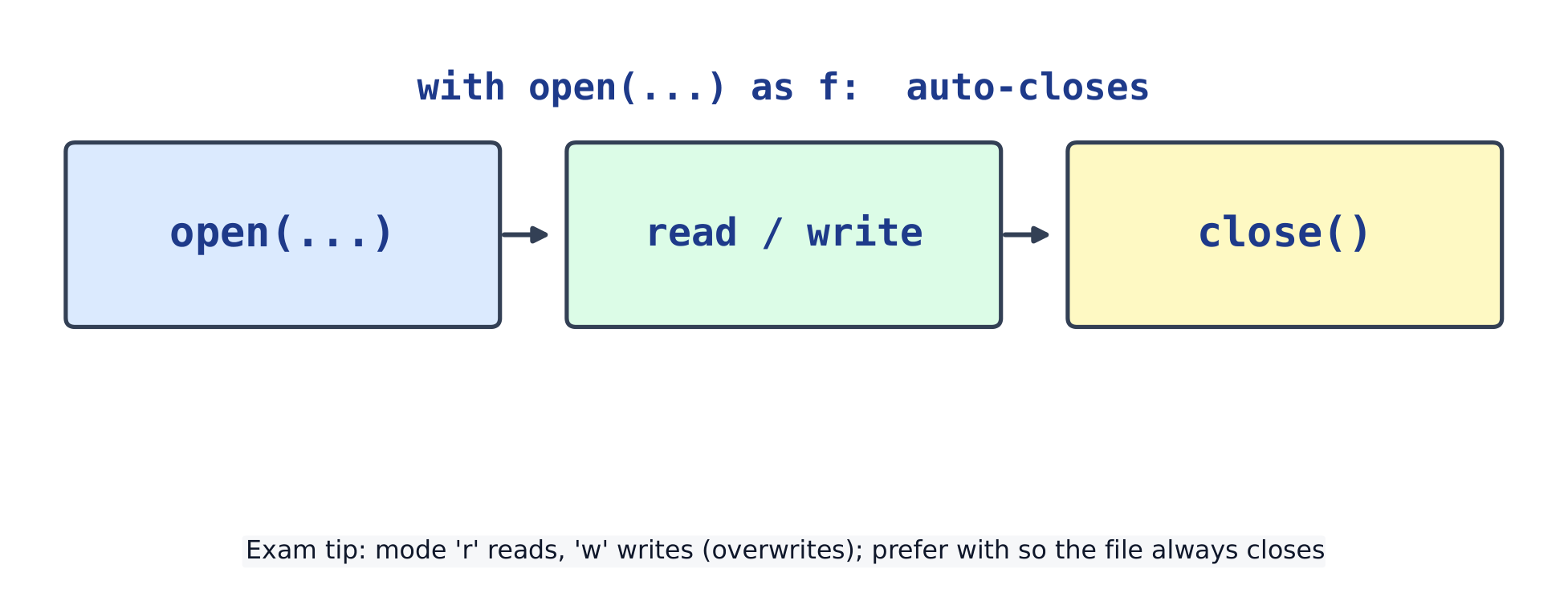
with open("notes.txt", "w") as f:
    f.write("first line\n")
    f.write("second line\n")
print("saved")            # saved
读取
模式 "r"(默认)用来读。.read() 把整个文件作为一个字符串返回。
with open("notes.txt", "w") as f:
    f.write("hello\nworld\n")
with open("notes.txt") as f:
    print(f.read().strip())   # hello / world
逐行读取
遍历文件,一次得到一行。.strip() 会去除(remove)末尾的换行符(newline)。
with open("data.txt", "w") as f:
    f.write("Mei,88\nSam,71\n")
with open("data.txt") as f:
    for line in f:
        name, score = line.strip().split(",")
        print(name, "scored", score)
# Mei scored 88
# Sam scored 71
追加
模式 "a" 追加(append)——它在末尾添加,而不抹掉原有内容。
with open("log.txt", "w") as f:
    f.write("line 1\n")
with open("log.txt", "a") as f:
    f.write("line 2\n")
with open("log.txt") as f:
    print(f.read().strip())   # line 1 / line 2
# Algorithm: find the largest number in a list
def largest(nums):
    best = nums[0]
    for n in nums:
        if n > best:
            best = n
    return best

print(largest([3, 9, 2, 7]))   # 9
def linear_search(items, target):
    for i in range(len(items)):
        if items[i] == target:
            return i
    return -1     # not found

print(linear_search([4, 8, 2, 9], 2))   # 2
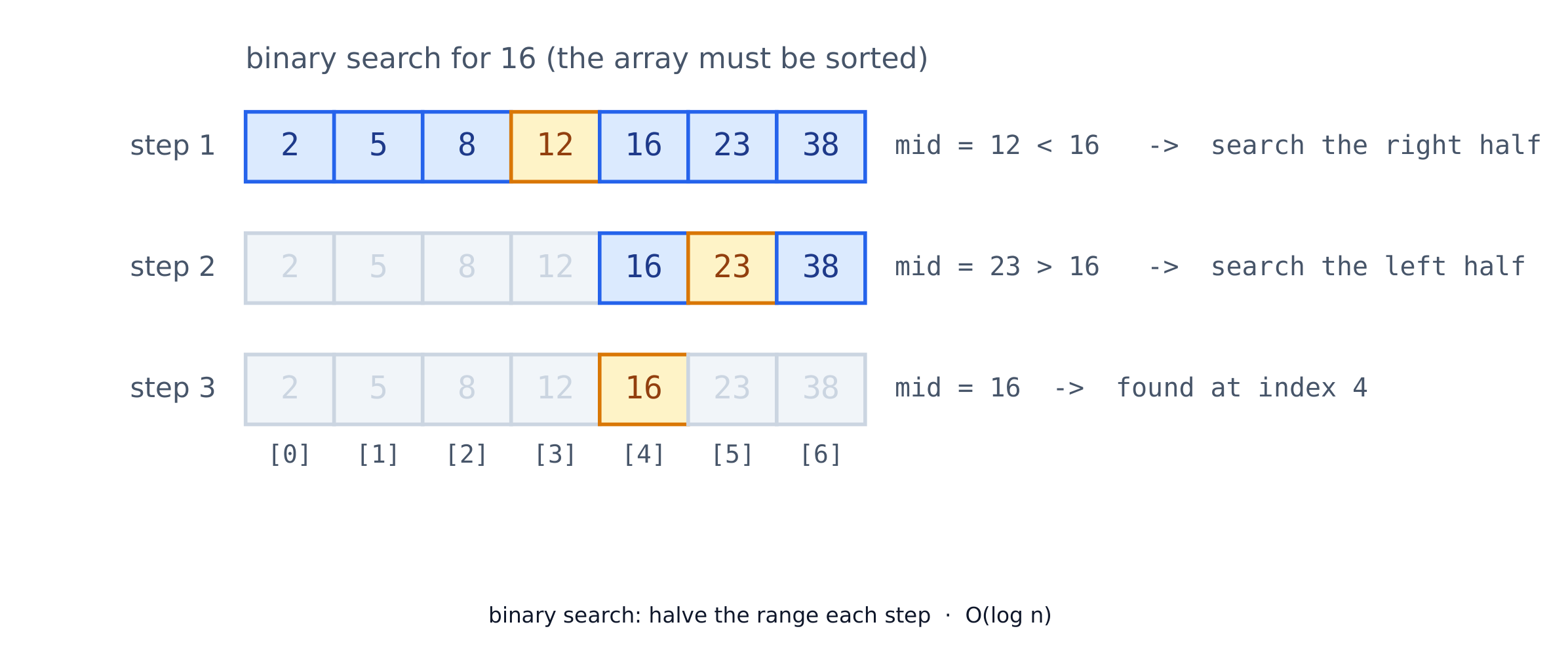
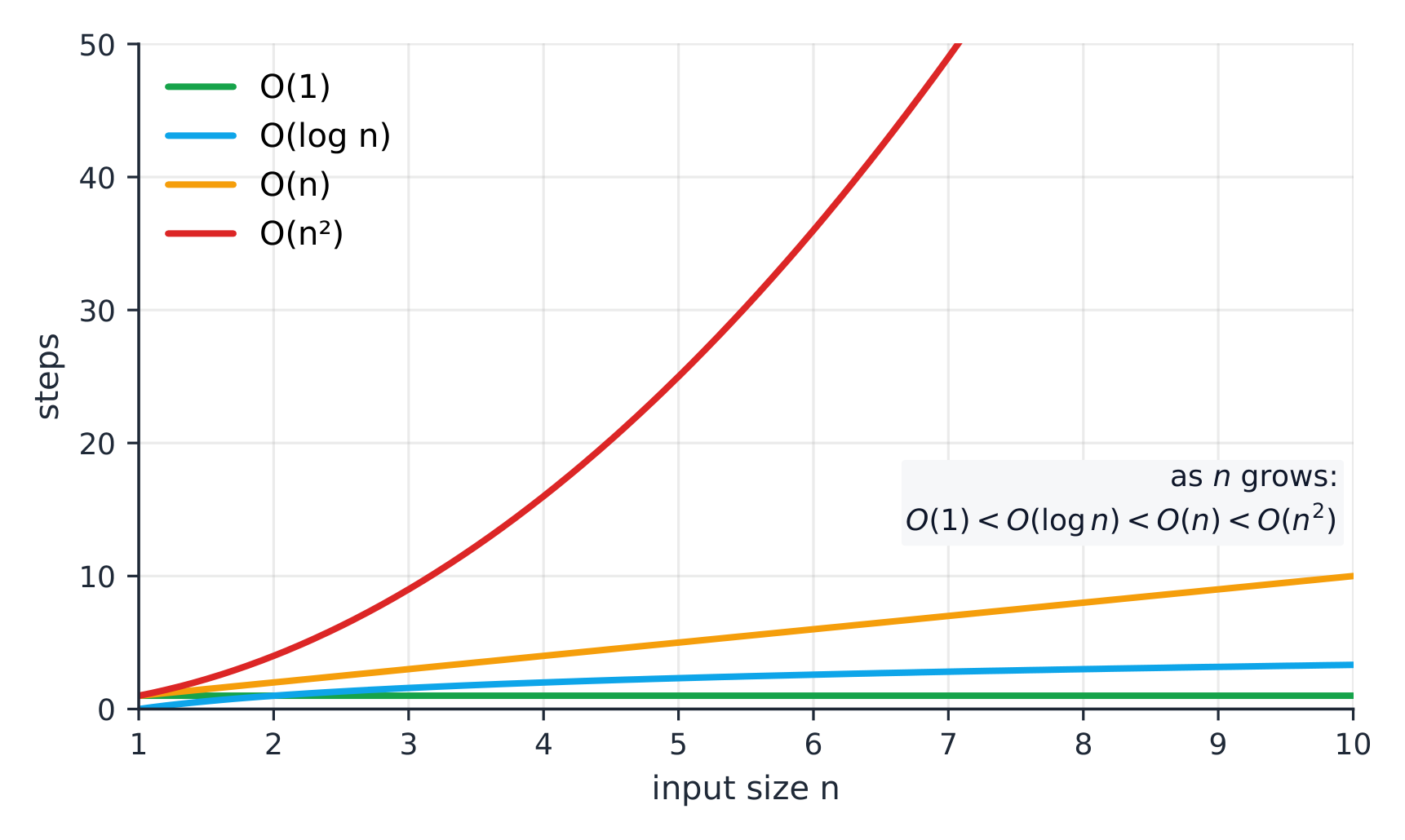
二分查找(binary search)快得多,但需要一个已排序的列表。它每一步把范围折半。
def binary_search(items, target):
    lo, hi = 0, len(items) - 1
    while lo <= hi:
        mid = (lo + hi) // 2
        if items[mid] == target:
            return mid
        elif items[mid] < target:
            lo = mid + 1
        else:
            hi = mid - 1
    return -1

print(binary_search([1, 3, 5, 7, 9], 7))   # 3
def bubble_sort(a):
    a = a[:]                          # work on a copy
    for i in range(len(a)):
        for j in range(len(a) - 1 - i):
            if a[j] > a[j + 1]:
                a[j], a[j + 1] = a[j + 1], a[j]
    return a

print(bubble_sort([5, 2, 4, 1]))      # [1, 2, 4, 5]
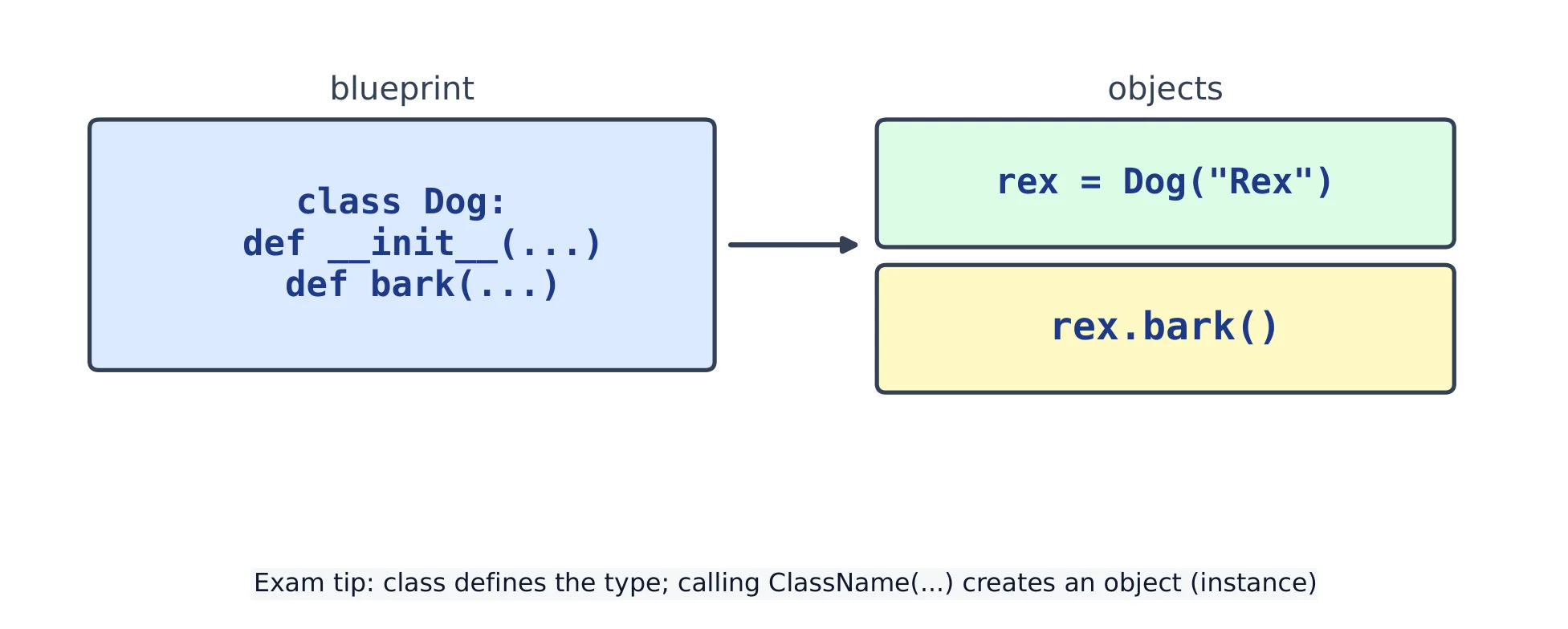
class Cat:
    def speak(self):
        return "meow"

class Cow:
    def speak(self):
        return "moo"

for animal in [Cat(), Cow()]:
    print(animal.speak())   # meow, then moo
def rle(text):
    out = ""
    i = 0
    while i < len(text):
        run = 1
        while i + run < len(text) and text[i + run] == text[i]:
            run += 1
        out += str(run) + text[i]
        i += run
    return out

print(rle("AAAABBBCCD"))   # 4A3B2C1D