Your learning plan · Continue · Review →
太……了 and 不太 — too, so, and not very
Đã giới thiệuVị trí đã lưu của bạn vẫn giữ nguyên trong trình duyệt này. Tiếp tục sẽ không hoàn thành bài học hay trả lời câu hỏi của nó.
It's too hot!
- It is 38 °C in July. You step outside and want to say how hot it is.
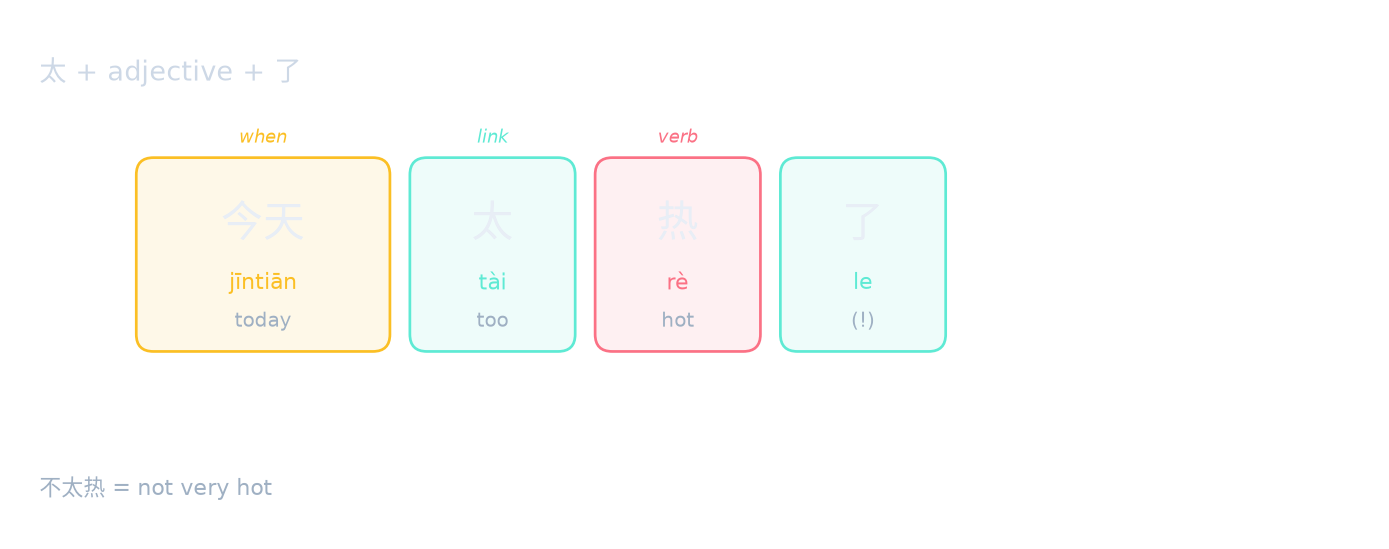
- today今天too太to warm up热(completed / change)了! Jīntiān tài rè le! — "It's too hot today!"
too太 + adjective + (completed / change)了
- too太……(completed / change)了 means “too …” or “so …”: too太expensive贵(completed / change)了, too expensive; very good太好了, that's great!
- (completed / change)了 at the end is part of the pattern and makes it sound natural and emotional.
this这个too太expensive贵了。
Complete: “It’s too expensive.” 太贵____。
Độ khó 1/5 · 100 xu + một phần thưởng nhỏ cho lần hoàn thành đầu tiên trong ngày
了 at the end completes 太……了.
Build: “It’s too hot today!”
Độ khó 3/5 · 200 xu + một phần thưởng nhỏ cho lần hoàn thành đầu tiên trong ngày
太 + adjective + 了.
Good or bad
- With a negative word, it complains: too太cold冷(completed / change)了, it's too cold; too太to distance oneself from…远(completed / change)了, it's too far.
- With a positive word, it praises: very good太好了! Tài hǎo le! — "Great!" too太pretty漂亮(completed / change)了, so beautiful!
so太good好了!
太好了! can mean “Great!”
Độ khó 1/5 · 100 xu + một phần thưởng nhỏ cho lần hoàn thành đầu tiên trong ngày
True. With a positive word, 太……了 praises.
not very不太: not very
- not very不太 + adjective softens: not very不太to warm up热, not very hot; not so good不太好, not very good. No (completed / change)了 here.
today今天not very不太cold冷。
It is a little cold, but not much. Which fits?
Độ khó 1/5 · 100 xu + một phần thưởng nhỏ cho lần hoàn thành đầu tiên trong ngày
不太 + adjective means “not very”, with no 了. 太冷了 means it is too cold.
Watch out
- Keep (completed / change)了 in too太……(completed / change)了: too太to warm up热(completed / change)了, not just too太to warm up热.
- not very不太 has no (completed / change)了: not very不太to warm up热, not not very不太to warm up热(completed / change)了 in this meaning.
Recap
- too太 + adjective + (completed / change)了 = too … / so …: too太to warm up热(completed / change)了, very good太好了.
- not very不太 + adjective = not very: not不too太cold冷 (no (completed / change)了).
Talk about today with a friend. Complain about one thing, praise one thing, and say one thing is not very bad. Close the examples. Say it, then write it in Chinese.
Compare meaning and word order with the model; your sentences need not copy it. A partner or teacher must hear the spoken version to comment on pronunciation.