Введение в задачи оптимизации
Введено| English | Значение |
|---|---|
| optimization/ˌɒptɪmaɪˈzeɪʃn/ | оптимизация |
| variable/ˈveərɪəbl/ | переменная |
| objective function/ɒbˈdʒektɪv ˈfʌŋkʃn/ | целевая функция |
| constraint/kənˈstreɪnt/ | ограничение |
Making something as big (or small) as possible
- Real problems ask: what dimensions give the largest area? the cheapest cost? the shortest time?
- These are optimization 最优化 problems — find the max or min of a quantity.
- Calculus solves them because extrema live where the derivative is zero.
- This lesson is about the setup; the solving comes next.
Name a variable and write the objective
- Choose a variable 变量 for the quantity you can control (a length, a radius, a price).
- Write the thing you want to maximize or minimize as a function of that variable — the objective function 目标函数.
- Example: for a rectangle of fixed perimeter, write the area in terms of one side length.
- Draw a picture and label it — most setup errors are unlabeled diagrams.
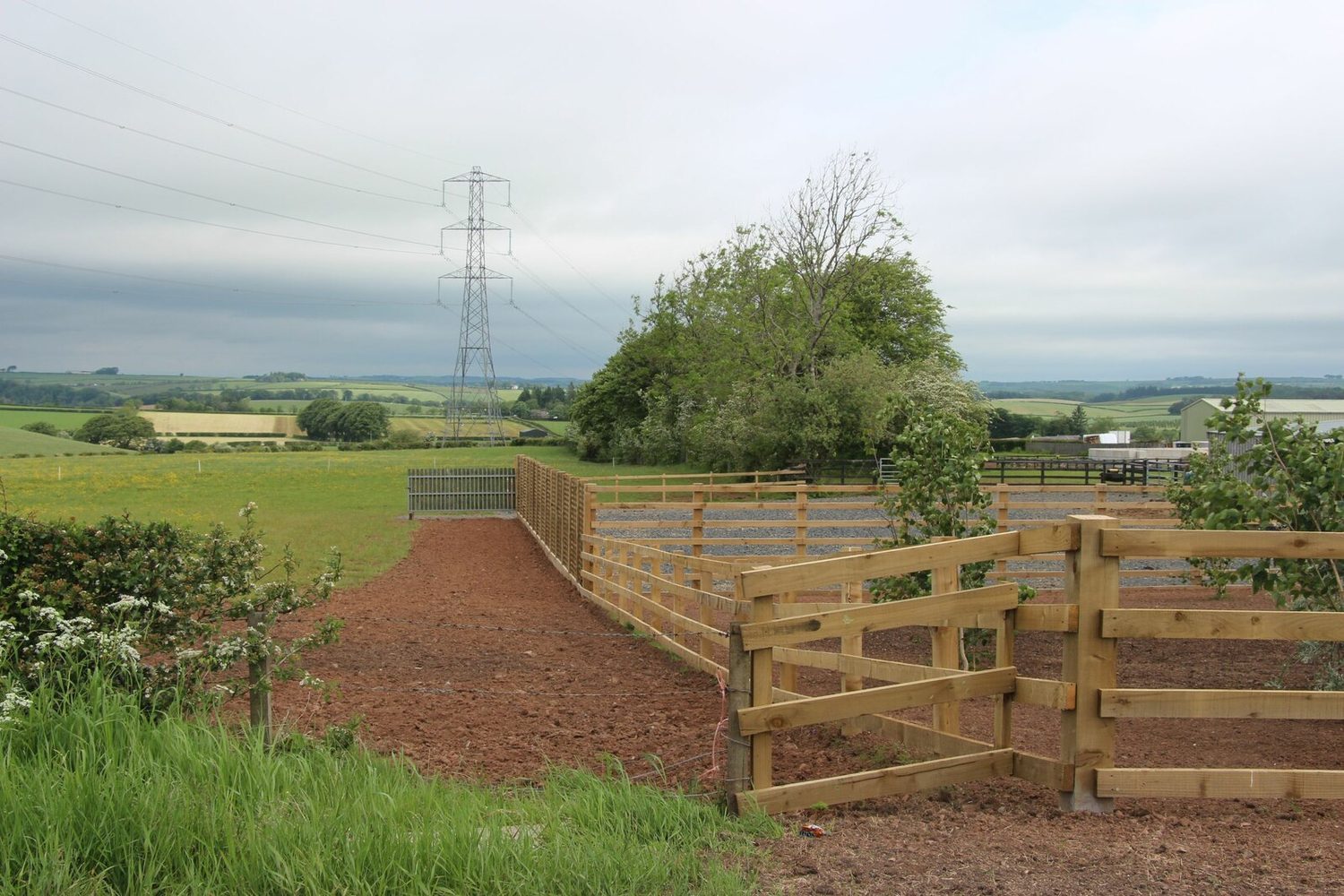
Fenced enclosures: optimization finds the dimensions that maximise area for a fixed fence length
В задаче «максимизировать площадь при фиксированном периметре» площадь является...
Сложность 1/5 · 100 монет + небольшой бонус за первое выполнение сегодня
Вы оптимизируете целевую величину (площадь); периметр — это ограничение.
Use a constraint to get one variable
- Usually the objective starts with two variables (like length and width).
- A constraint 约束条件 equation relates them (a fixed perimeter, a fixed volume, a budget).
- Solve the constraint for one variable and substitute, so the objective depends on a single variable.
- Now it's an ordinary "find the extremum" problem.
Площадь как парабола, направленная ветвями вниз
y = ax² + bx
После применения ограничения площадь становится $A=10x-x^2$ — это парабола, направленная ветвями вниз, с одной вершиной, которую нужно найти.
Уравнение ограничения используется для того, чтобы...
Сложность 1/5 · 100 монет + небольшой бонус за первое выполнение сегодня
Выразите одну переменную из уравнения ограничения и подставьте её.
Цель подготовки заключается в том, чтобы записать целевую функцию через ____ переменную.
Сложность 1/5 · 100 монет + небольшой бонус за первое выполнение сегодня
Одна переменная ⇒ обычная задача на экстремум.
Расставьте этапы решения задачи оптимизации по порядку.
Сложность 3/5 · 200 монет + небольшой бонус за первое выполнение сегодня
Переменная, целевая функция, ограничение, подстановка.
A worked setup
- "A farmer has $40$ m of fence for a rectangular pen against a wall (no fence on the wall side)."
- Constraint: fence used $=2x+y=40$, so $y=40-2x$.
- Objective: area $A=xy=x(40-2x)=40x-2x^2$, now a function of $x$ alone.
- Ready to maximize $A(x)$ — that's lesson 5.11.
При наличии $2x+y=40$ (стены с одной стороны) площадь $A=xy$ принимает вид...
Сложность 1/5 · 100 монет + небольшой бонус за первое выполнение сегодня
$y=40-2x$, следовательно, $A=x(40-2x)=40x-2x^2$.
Учет области определения переменной (например, $0<x<10$) является частью правильного решения задачи оптимизации.
Сложность 1/5 · 100 монет + небольшой бонус за первое выполнение сегодня
Границы области определения — это значения, при которых возможен правильный ответ.
Keep the objective (what you optimize) separate from the constraint (the fixed relationship). You maximize/minimize the objective, and you use the constraint only to eliminate a variable. Also note the domain of the variable (e.g. $x>0$ and $y>0$) — it bounds where a valid answer can lie.
Set up: maximize the area of a rectangle with perimeter $20$.
- Let the sides be $x$ and $y$. Constraint: $2x+2y=20\Rightarrow y=10-x$.
- Objective: $A=xy=x(10-x)=10x-x^2$.
- Domain: $0<x<10$. The problem is now "maximize $A(x)=10x-x^2$."
An optimization problem finds a maximum or minimum. Set it up by naming a variable, writing the objective function to optimize, and using a constraint equation to reduce it to a single variable. Note the domain. Then it becomes a standard extremum problem (next lesson).