Passwords and authentication · Senhas e autenticação
Proving who you are
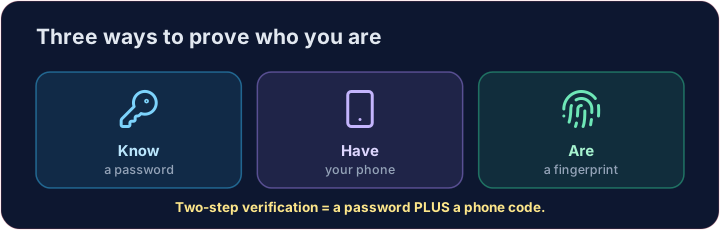
- Authentication means proving you are who you claim to be. There are three classic ways:
- Something you know (a password), something you have (a phone), something you are (a fingerprint).
Provar quem você é
- Autenticação significa provar que você é quem diz ser. Existem três formas clássicas:
- Algo que você sabe (uma senha), algo que você tem (um celular), algo que você é (uma impressão digital).
Stronger logins
- Biometrics — fingerprints or face scans; hard to steal, but not perfect.
- Two-step verification (2FA) — a password plus a one-time code sent to your phone.
- Even if an attacker steals your password, 2FA stops them logging in.
Login mais seguro
- Biometria — impressões digitais ou scans faciais; difícil de roubar, mas nem perfeito.
- Verificação em duas etapas (2FA) — uma senha mais um código único enviado para seu celular.
- Mesmo que um atacante roube sua senha, o 2FA impede que ele acesse.
What makes a password strong?
- Length beats everything. Each extra character multiplies the guesses an attacker needs.
- A mix of letters, digits, and symbols helps — but a long passphrase like
correct horse battery stapleis both strong and memorable.
O que torna uma senha forte?
- Comprimento vence tudo. Cada caractere extra multiplica as tentativas que um atacante precisa.
- Uma mistura de letras, dígitos e símbolos ajuda — mas uma frase-chave longa como
correct horse battery stapleé forte e memorável.
Build a checker
- Below, write a tiny rule: a password is "strong" only if it is long enough and has a digit.
- Real checkers also reject common passwords like
123456andpassword.
Covers: IGCSE 5.3 (authentication), A-Level 6.1, AP CSP Big Idea 5.
Construa um verificador
- Abaixo, escreva uma regra simples: uma senha é "forte" apenas se for longa o suficiente e tiver um dígito.
- Verificadores reais também rejeitam senhas comuns como
123456epassword.
Cobertura: IGCSE 5.3 (autenticação), A-Level 6.1, AP CSP Grande Ideia 5.
Common mistakes
- Long and unique beats short, complex, but reused.
- Two-factor authentication adds a second, different check.
Erros comuns
- Longa e única vence curta, complexa, mas reutilizada.
- Autenticação de dois fatores adiciona uma segunda verificação diferente.
Write a simple strength checker. A password is strong if it is at least 8 characters AND contains a digit; otherwise weak. Print the right word for the given password. · Escreva um verificador simples de força. Uma senha é strong se tiver pelo menos 8 caracteres E conter um dígito; caso contrário é weak. Imprima a palavra correta para a senha dada.
Click Run to see the output here. · Clique em Executar para ver a saída aqui.
Real checkers also reject common passwords. Improve the rule: if the password is in the common list it is weak no matter what; otherwise apply the old rule (length ≥ 8 AND a digit). Print the verdict. · Verificadores reais também rejeitam senhas comuns. Melhore a regra: se a senha estiver na lista common ela é weak independentemente do mais; caso contrário aplique a regra antiga (comprimento ≥ 8 E um dígito). Imprima o veredito.
Click Run to see the output here. · Clique em Executar para ver a saída aqui.