Structure: introduction, body and conclusion
IntroducedThree rooms, one argument
- An essay is a house with three rooms: you walk in, you live there, you leave.
- The introduction is the front door: it names the topic and your approach.
- Keep it short — two or three sentences that tell the reader what is coming.
The introduction is a front door; do not make readers camp there all afternoon.
The essay staircase
Introduction, one idea per body paragraph, the other side answered, then a conclusion that adds nothing new.
How long should an essay introduction be?
Keep the introduction short.
Write a one-sentence introduction for an essay about whether homework is useful.
Example: 'Homework is a part of school life, but is it really useful?'
Body paragraphs
- Put one main idea in each body paragraph.
- Start with the idea, then add reasons and examples.
- Use linking words to connect your ideas.
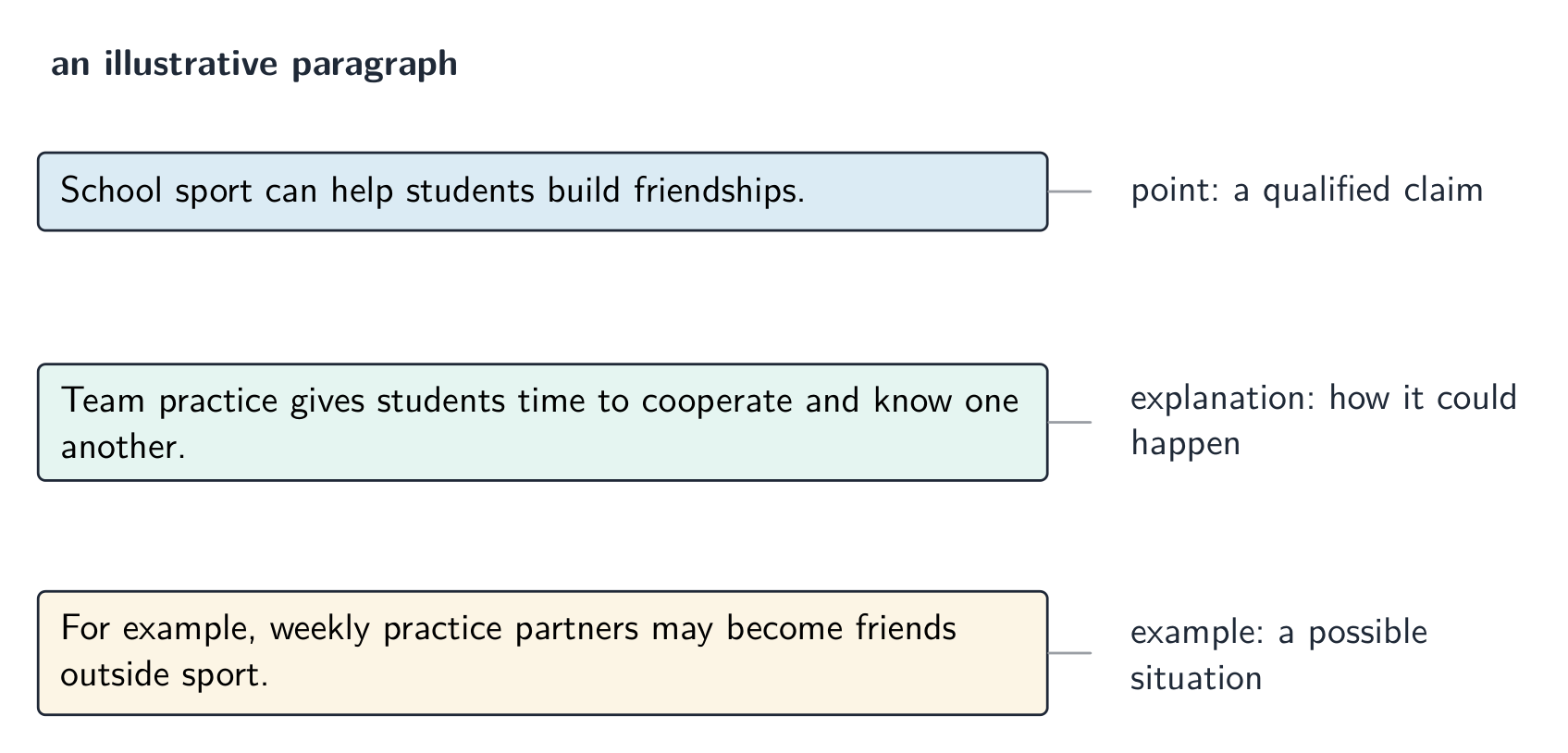
A body paragraph: the idea first, then reasons, then an example
Put ___ main idea in each body paragraph. (one / five)
One main idea per paragraph keeps it clear.
Conclusion
- The conclusion brings your ideas together.
- Do not add a new point here.
- Sum up your view clearly.
In your conclusion, you should…
A conclusion sums up; it adds nothing new.
A skeleton essay: homework
- Introduction: "Homework fills our evenings, but does it actually help us learn?"
- Body 1: "Firstly, homework lets students practise alone…" + an example.
- Body 2: "However, too much homework cuts into sleep and hobbies…" + an example.
- Conclusion: "In conclusion, homework is useful in small doses." — sums up, adds nothing new.
Put the essay paragraphs in order.
Introduction, first idea, the other side, conclusion — the staircase in action.
- Introduction → body paragraphs → conclusion.
- One main idea per body paragraph, with support.
- The conclusion sums up; it adds nothing new.