Group I properties
Introduced| English | Meaning |
|---|---|
| Group I/ɡruːp aɪ/ | Group I |
| alkali metals/ˈælkəlaɪ ˈmetlz/ | The metallic elements of group 1, which typically form ions with a single positive charge. |
| reactivity/rɪəkˈtɪvɪti/ | The tendency or readiness of a substance to undergo chemical reactions. |
| hydroxide/haɪˈdrɒksaɪd/ | A compound containing hydroxide ions, each consisting of oxygen and hydrogen with a single negative charge. |
The reactive Group I 第一族 metals
- Drop a small piece of sodium in water and it fizzes across the surface.
- The Group I metals (the alkali metals 碱金属) are soft, light and very reactive.
Group I trend lab
Follow Group I metals down the group and watch reactivity increase.
How many electrons are in the outer shell of a Group I element?
Difficulty 2/5 · 140 coins + a small bonus on first completion today
Group I elements have one outer electron.
Group I metals are soft enough to cut with a knife.
Difficulty 1/5 · 100 coins + a small bonus on first completion today
They are soft and have low densities.
Group I metals lose one electron to form ions with a charge of +______.
Difficulty 1/5 · 100 coins + a small bonus on first completion today
Losing one electron gives a +1 ion.
Properties of Group I
- They are soft (can be cut with a knife) and have low densities.
- They have one outer electron, which they readily lose to form +1 ions.

Every Group I atom has one electron in its outer shell, which is why they react in similar ways

Groups are columns and periods are rows; metals sit on the left, non-metals on the right
Going down Group I, reactivity:
Difficulty 1/5 · 100 coins + a small bonus on first completion today
The outer electron is lost more easily down the group.
Reactivity 活泼性 down the group
- Reactivity increases down Group I (lithium → sodium → potassium...).
- The outer electron is further from the nucleus, so it is lost more easily.
Group I metals react with water to form a hydroxide and:
Difficulty 1/5 · 100 coins + a small bonus on first completion today
Metal + water → metal hydroxide + hydrogen.
Reaction with water
- Group I metals react with water to form a hydroxide 氢氧化物 + hydrogen gas.
- The reaction gets more vigorous down the group.
Worked example. Lithium fizzes gently on water; sodium darts about; potassium reacts so fast it bursts into lilac flame. Reactivity clearly increases down the group.
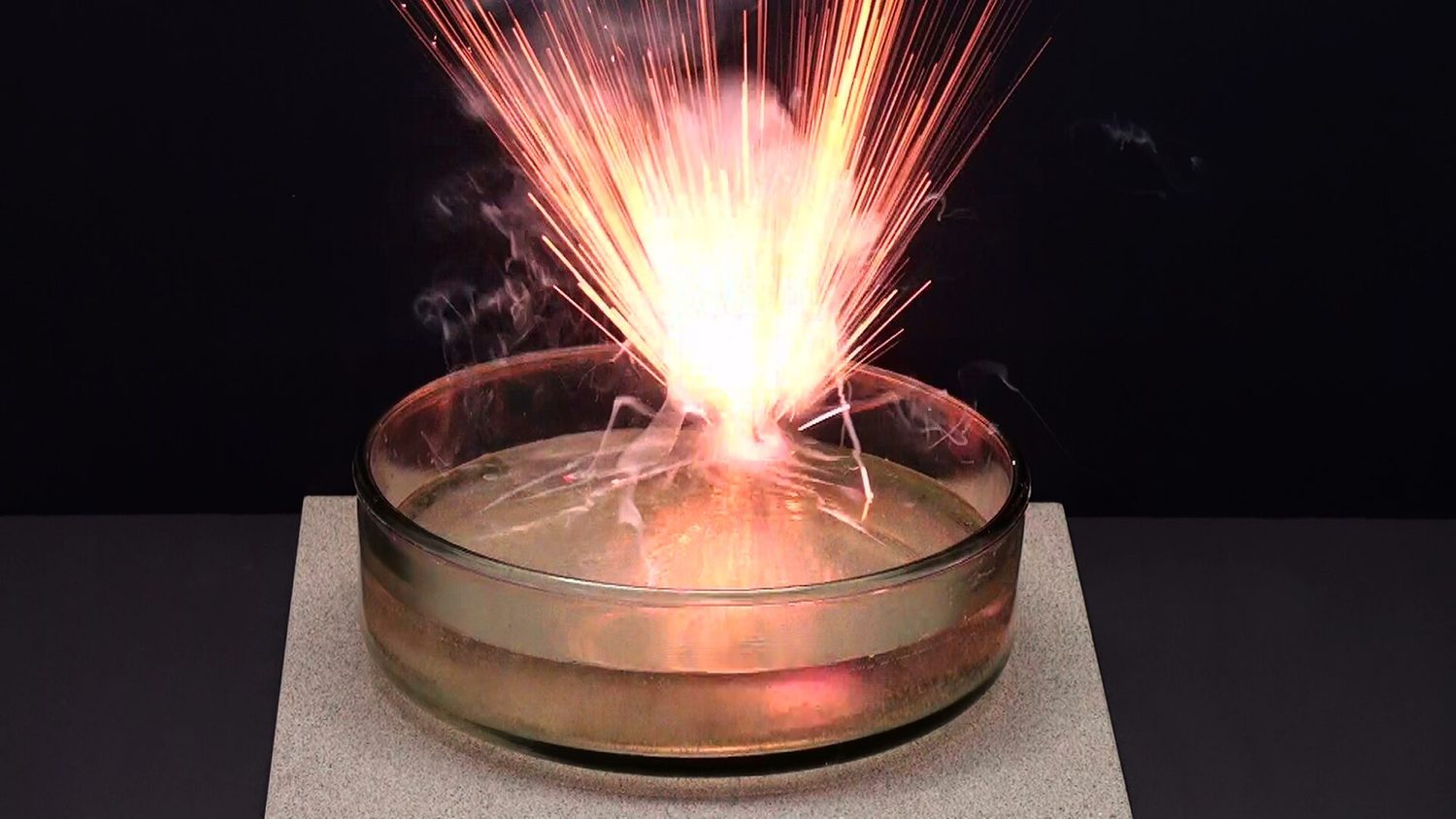
Potassium reacts so vigorously with water that the hydrogen given off burns with a lilac flame — reactivity increases down Group I
You've got it
- Group I (alkali metals) are soft, low-density, with one outer electron (+1 ions)
- reactivity increases down the group (outer electron lost more easily)
- they react with water → metal hydroxide + hydrogen, more vigorously down the group