Business and the international economy
Introduced| English | Meaning |
|---|---|
| international economy/ˌɪntəˈnæʃənl ɪˈkɒnəmi/ | international economy |
| globalisation/ˌɡləʊbəlaɪˈzeɪʃn/ | The increasing connections and interdependence between countries through trade, investment, communication and other flows. |
| investment/ɪnˈvestmənt/ | Spending on assets intended to provide future returns or increase productive capacity. |
| multinational company/ˌmʌltɪˈnæʃənl ˈkʌmpəni/ | A business that owns or controls operations in more than one country. |
| free trade/friː treɪd/ | International exchange of goods and services without trade barriers such as tariffs or quotas. |
| tariffs/ˈtærɪfs/ | Taxes imposed on goods imported into a country. |
| quotas/ˈkwəʊtəz/ | A fixed limit on the quantity of a good that may be produced, sold or imported. |
Business goes global
- A phone designed in one country, made in another, sold worldwide — that's the international economy 国际经济 at work.
- Trading across borders brings big opportunities and real risks.
International market lab
See how access to world markets changes quantity and price pressure.
Globalisation refers to:
Difficulty 1/5 · 100 coins + a small bonus on first completion today
Globalisation links economies through trade, investment and technology.
Globalisation 全球化
- Globalisation is the growing connection of the world's economies through trade, investment 投资 and technology.
- It lets businesses sell to, and buy from, the whole world.
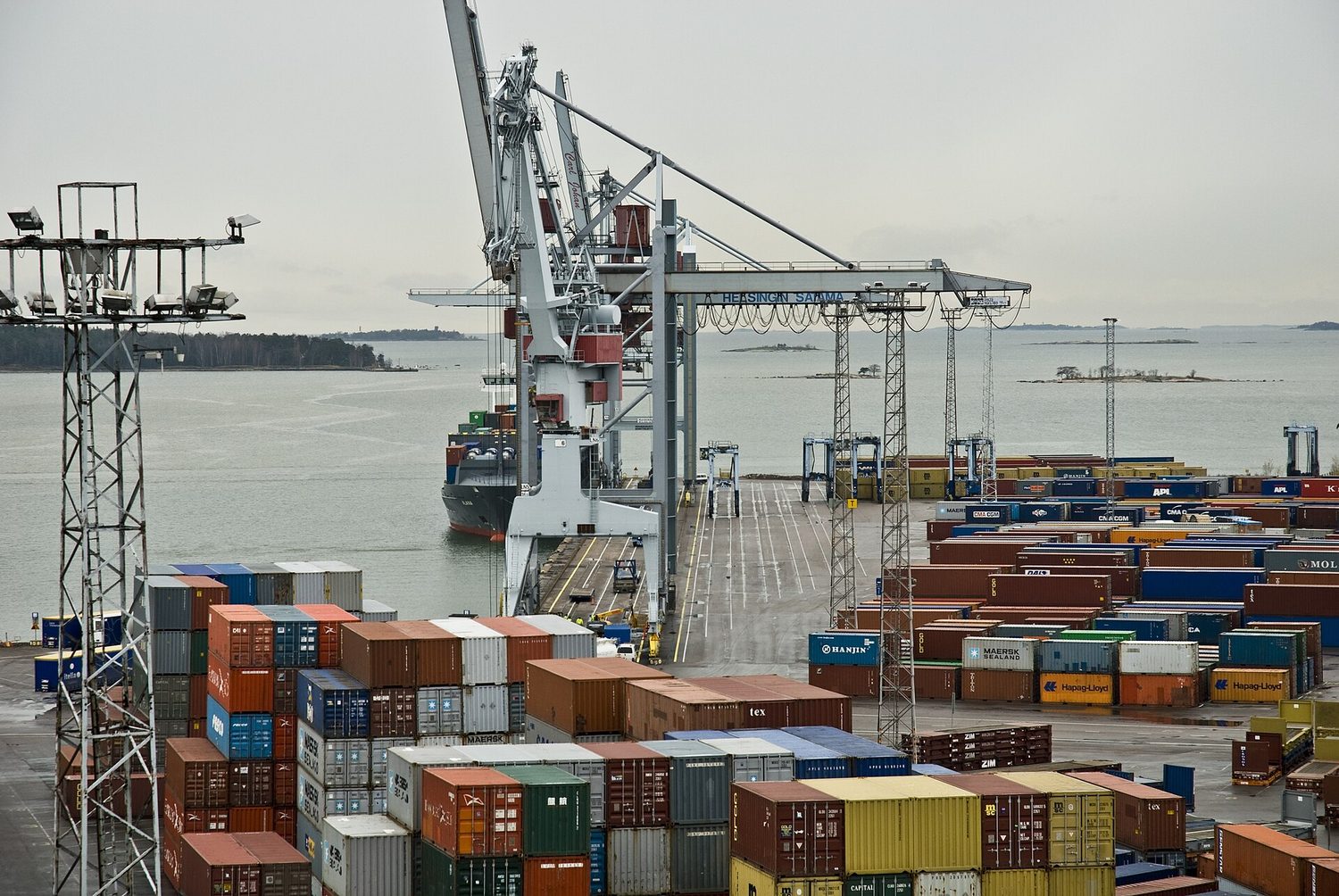
Shipping containers: businesses trade with the wider international economy
A multinational company (MNC) is one that:
Difficulty 1/5 · 100 coins + a small bonus on first completion today
MNCs operate across several countries.
A company that operates in many countries is called a ______ company.
Difficulty 1/5 · 100 coins + a small bonus on first completion today
MNCs span many countries.
Multinational companies
- A multinational company 跨国公司 (MNC) produces or sells in more than one country.
- MNCs bring jobs and investment, but are criticised over tax, wages and the environment.

Interest rates, taxes, unemployment and inflation all affect business
A tariff is:
Difficulty 1/5 · 100 coins + a small bonus on first completion today
A tariff is an import tax; a quota is a quantity limit.
Free trade tends to lower prices and increase choice for consumers.
Difficulty 1/5 · 100 coins + a small bonus on first completion today
Removing barriers widens choice and lowers prices.
Free trade 自由贸易 and protection
- Free trade lets goods cross borders without barriers — lower prices, more choice.
- Tariffs 关税 (import taxes) and quotas 配额 (import limits) protect home industries but raise prices.
Worked example. A clothing firm imports cheap fabric (benefiting from free trade) but faces a tariff when exporting to a country protecting its own makers — raising its price there and cutting sales.
You've got it
- globalisation connects economies through trade, investment and technology
- a multinational (MNC) operates in many countries — bringing jobs but facing criticism
- free trade lowers prices; tariffs and quotas protect home industries but raise prices