Analysis of accounts
Introduced| English | Meaning |
|---|---|
| profitability/ˌprɒfɪtəˈbɪlɪti/ | The ability of a business to generate profit in relation to its sales, costs, assets or investment. |
| liquidity/lɪˈkwɪdɪti/ | The ease of converting assets into cash without substantial loss, or the ability to meet short-term payment obligations. |
| gross profit margin/ɡrəʊs ˈprɒfɪt ˈmɑːdʒɪn/ | Gross profit expressed as a percentage of sales revenue. |
| net profit margin/net ˈprɒfɪt ˈmɑːdʒɪn/ | net profit margin |
| current ratio/ˈkʌrənt ˈreɪʃɪəʊ/ | Current assets divided by current liabilities, used as an indicator of short-term liquidity. |
Reading the accounts
- Raw profit figures don't show whether a business is doing well for its size. Ratios do.
- Two families matter: profitability 盈利能力 and liquidity 流动性.
Accounts ratio diagnosis
Classify ratios by the question they answer about a business.
Gross profit is 80 and revenue is 200. What is the gross profit margin (%)?
Difficulty 2/5 · 140 coins + a small bonus on first completion today
80 ÷ 200 × 100 = 40%.
The net profit margin is calculated as:
Difficulty 1/5 · 100 coins + a small bonus on first completion today
Net margin = net profit ÷ revenue × 100.
Profitability ratios
- Gross profit margin 毛利率 = gross profit ÷ revenue × 100.
- Net profit margin 净利率 = net profit ÷ revenue × 100.
- Higher margins mean more profit kept from each sale.
Worked example. Gross profit 60, revenue 150 → gross margin = 60 ÷ 150 × 100 = 40%. Net profit 25 → net margin = 25 ÷ 150 × 100 ≈ 17%.
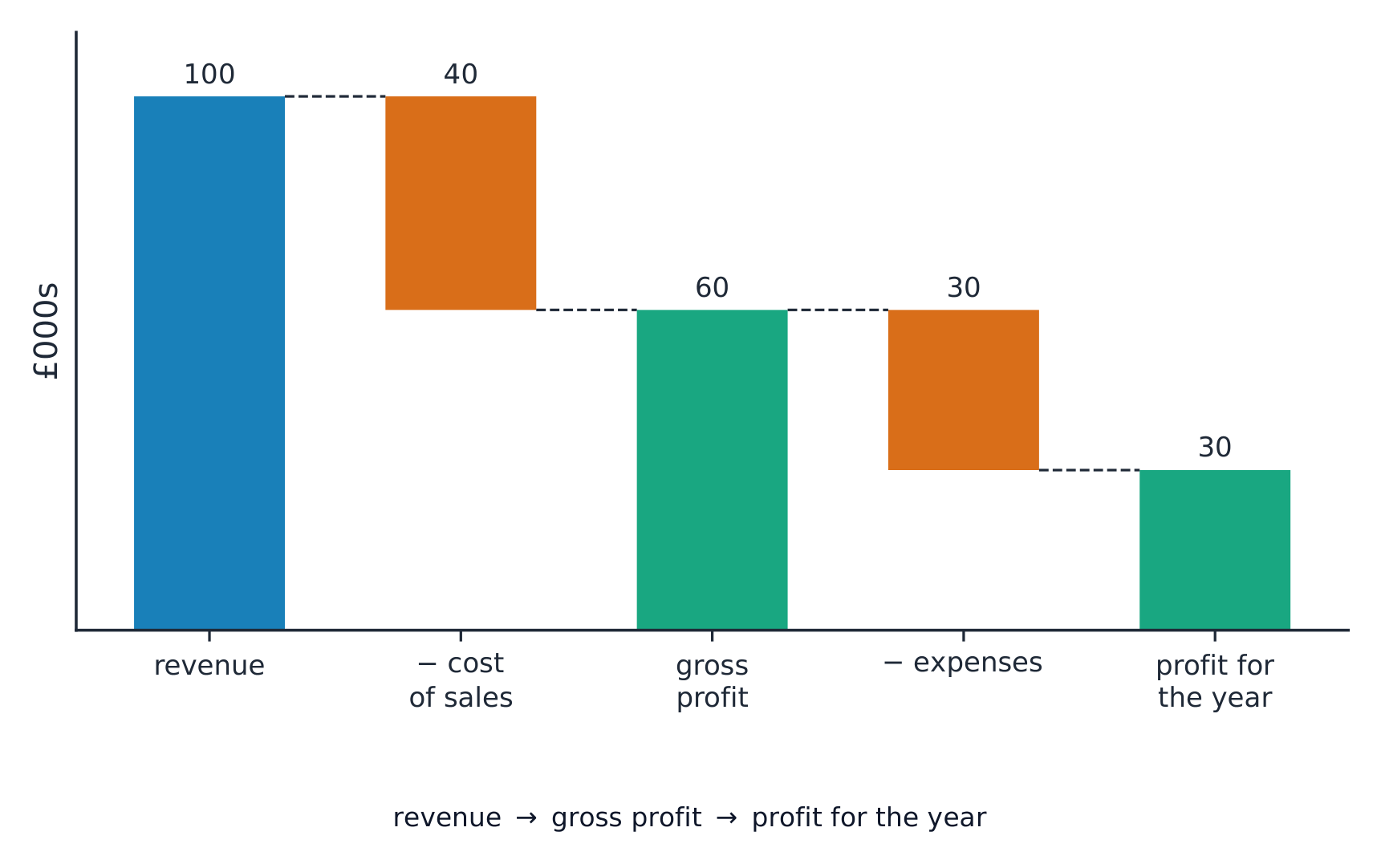
An income statement runs from revenue down to net profit — the basis for the profitability ratios
Current assets are 90 and current liabilities are 45. What is the current ratio?
Difficulty 2/5 · 140 coins + a small bonus on first completion today
90 ÷ 45 = 2 (i.e. 2:1).
The current ratio is a measure of a business's ______ (ability to pay short-term debts).
Difficulty 1/5 · 100 coins + a small bonus on first completion today
Liquidity measures short-term ability to pay debts.
Liquidity
- Current ratio 流动比率 = current assets ÷ current liabilities.
- Around 1.5 to 2 is usually healthy — enough to pay short-term debts.
A ratio is most useful when compared with past years, rivals or targets.
Difficulty 1/5 · 100 coins + a small bonus on first completion today
Ratios mean little in isolation.
Who uses ratios, and their limits
- Owners, lenders and managers compare ratios over time and against rivals.
- Ratios use past data and miss quality factors — they are only useful compared.
A ratio means nothing on its own. A current ratio of 1.5 is only "good" compared with last year, a rival, or a target. Always interpret ratios in context.
You've got it
- profitability: gross margin and net margin (profit ÷ revenue × 100)
- liquidity: the current ratio (current assets ÷ current liabilities)
- ratios use past data and only mean something when compared