The carbon cycle
Introduced| English | Meaning |
|---|---|
| carbon cycle/ˈkɑːbən ˈsaɪkl/ | The movement of carbon between living organisms, the atmosphere, water, soils and rocks. |
| combustion/kəmˈbʌstʃn/ | An exothermic reaction of a fuel with an oxidising agent, usually oxygen. |
| decomposers/ˌdiːkəmˈpəʊzəz/ | Organisms that break down dead organic matter and waste, recycling nutrients. |
| fossil fuels/ˈfɒsl ˈfjuːəlz/ | Coal, oil and natural gas formed from ancient organic matter over millions of years. |
Carbon goes round and round
- Unlike energy, the atoms of carbon are used again and again, cycling between living things and the air.
- This is the carbon cycle 碳循环.
Which process removes carbon dioxide from the air?
Difficulty 1/5 · 100 coins + a small bonus on first completion today
Photosynthesis fixes CO₂ into glucose.
Carbon is locked into glucose in plants by the process of ______.
Difficulty 1/5 · 100 coins + a small bonus on first completion today
Photosynthesis takes carbon out of the air.
Carbon into living things
- Photosynthesis removes carbon dioxide from the air and locks the carbon into glucose in plants.
- Animals get carbon by eating plants (or other animals).

The carbon cycle: photosynthesis removes CO2; respiration, combustion 燃烧 and decay return it
The carbon cycle
Carbon moves between the air, living things and the ground in a never-ending cycle.
Which processes return carbon dioxide to the air?
Difficulty 1/5 · 100 coins + a small bonus on first completion today
Respiration and combustion release CO₂.
Carbon back to the air
- Respiration (by plants, animals and decomposers 分解者) returns carbon dioxide to the air.
- Combustion (burning fuels) also releases carbon dioxide.
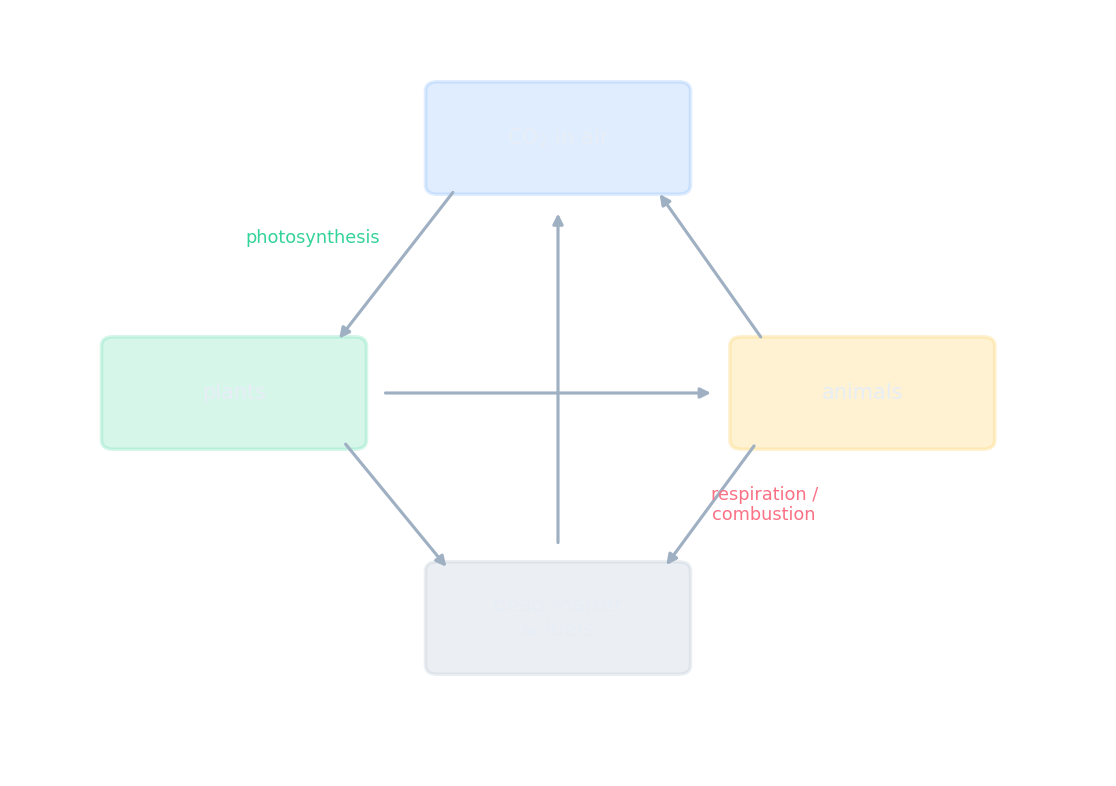
Photosynthesis takes carbon in; respiration and combustion return it to the air.
Decomposers return carbon to the air by:
Difficulty 1/5 · 100 coins + a small bonus on first completion today
Decomposers respire, releasing CO₂.
Burning fossil fuels releases extra carbon dioxide into the air.
Difficulty 1/5 · 100 coins + a small bonus on first completion today
It frees carbon locked away for millions of years.
Decomposers and fossil fuels 化石燃料
- Decomposers break down dead organisms, releasing carbon dioxide.
- Over millions of years, some dead matter formed fossil fuels, releasing CO₂ when burned today.
Burning fossil fuels adds extra CO₂. It releases carbon that was locked away for millions of years, faster than photosynthesis can remove it — raising atmospheric CO₂ and driving climate change.
You've got it
- photosynthesis removes CO₂ from the air; respiration and combustion return it
- animals get carbon by eating; decomposers release it from dead matter
- burning fossil fuels adds extra CO₂, driving climate change