Anaerobic respiration
Introduced| English | Meaning |
|---|---|
| anaerobic respiration/ˌæneəˈrəʊbɪk ˌrespɪˈreɪʃn/ | The release of usable energy from nutrients without using oxygen; some syllabuses use this term broadly to include fermentation. |
| lactic acid/ˈlæktɪk ˈæsɪd/ | An organic acid associated with lactate production during anaerobic metabolism in animal cells. |
| fermentation/fɜːmənˈteɪʃn/ | The breakdown of sugars without oxygen, often by microorganisms, to release energy and form products such as ethanol or lactic acid. |
| oxygen debt/ˈɒksɪdʒn det/ | The extra oxygen needed after exercise to break down accumulated lactic acid. |
Respiration without enough oxygen
- During hard exercise, muscles need energy faster than oxygen can be delivered.
- They switch to anaerobic respiration 无氧呼吸 — releasing energy without oxygen.
Anaerobic respiration in human muscles produces:
Difficulty 1/5 · 100 coins + a small bonus on first completion today
Glucose → lactic acid in muscles.
Compared with aerobic respiration, anaerobic respiration releases:
Difficulty 1/5 · 100 coins + a small bonus on first completion today
Anaerobic respiration is much less efficient.
In muscles
- In animals: glucose → lactic acid 乳酸 (+ a little energy).
- It releases less energy than aerobic respiration and produces lactic acid, which causes fatigue.

A hard sprint relies on anaerobic respiration, building lactic acid
Anaerobic respiration
Without oxygen, glucose is only partly broken down — far less energy, and a different waste product.
Anaerobic respiration in yeast produces:
Difficulty 1/5 · 100 coins + a small bonus on first completion today
Yeast fermentation gives alcohol + CO₂.
Anaerobic respiration in yeast, used in baking and brewing, is called ______.
Difficulty 1/5 · 100 coins + a small bonus on first completion today
Fermentation produces CO₂ (bread) and ethanol (drinks).
In yeast (fermentation 发酵)
- In yeast: glucose → alcohol + carbon dioxide (+ energy).
- This fermentation is used to make bread (the CO₂) and alcoholic drinks (the ethanol).

Lactic acid from anaerobic respiration is broken down later, using extra oxygen
After hard exercise, oxygen is needed to break down the lactic acid built up (the oxygen debt).
Difficulty 1/5 · 100 coins + a small bonus on first completion today
This is why you keep breathing hard after stopping.
Oxygen debt 氧债
- The lactic acid built up must later be broken down using oxygen — the oxygen debt.
- This is why you keep breathing hard after exercise stops.
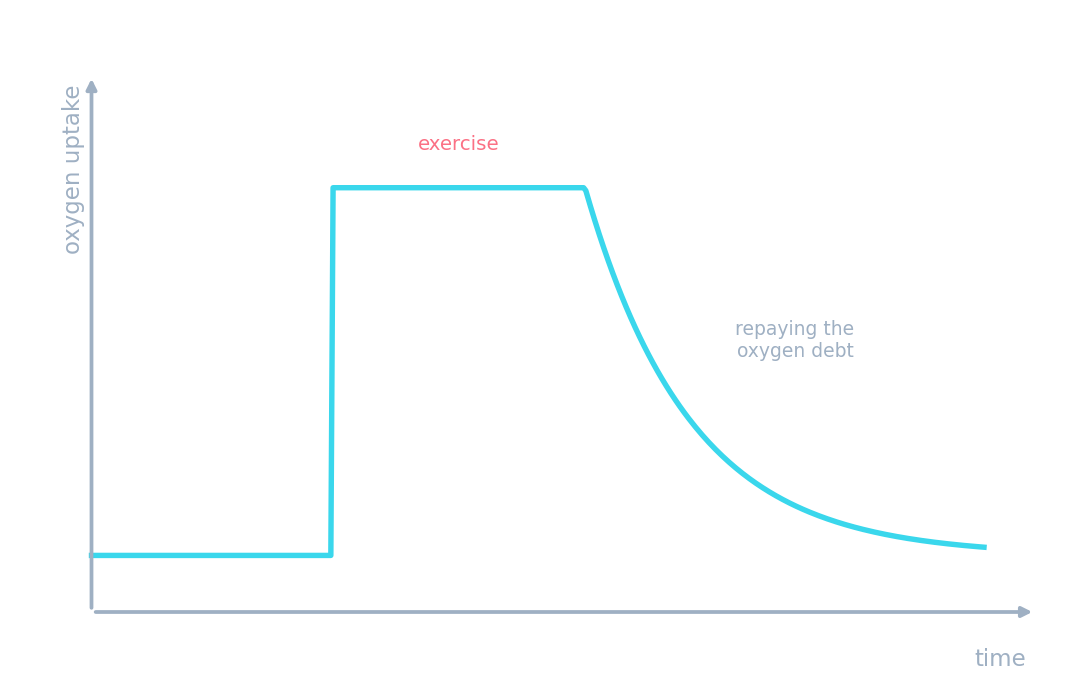
After exercise, oxygen uptake stays high to break down the lactic acid — repaying the oxygen debt.
Anaerobic respiration releases far less energy. It's a fast, short-term backup — but it produces lactic acid and gives little energy per glucose. Aerobic respiration is far more efficient.
You've got it
- anaerobic respiration releases energy without oxygen (and less of it)
- in muscles: glucose → lactic acid; in yeast: glucose → alcohol + carbon dioxide
- lactic acid creates an oxygen debt, repaid by breathing hard after exercise