The immune response and memory cells
Introduced| English | Meaning |
|---|---|
| primary response/ˈpraɪməri rɪˈspɒns/ | Macrophage displays antigen → T-helper activates → B-lymphocytes → plasma cells (antibodies) + memory cells. |
| T-helper cell/tiː ˈhelpə sel/ | A T lymphocyte that coordinates immune responses by signalling to other immune cells after recognising an antigen. |
| B-lymphocyte/biː ˈlɪmfəsaɪt/ | B-lymphocyte |
| plasma cell/ˈplæzmə sel/ | An activated B-cell descendant specialised for secreting antibodies. |
| memory cell/ˈmeməri sel/ | A long-lived immune cell that enables a faster or stronger response when the same antigen is encountered again. |
| secondary response/ˈsekəndəri rɪˈspɒns/ | secondary response |
| clonal selection/ˈkləʊnl sɪˈlekʃn/ | clonal selection |
The body fights back
- The first time a new pathogen enters, the response is slow.
- Several cell types work together to destroy it — and to remember it.
- That memory is what makes you immune next time.
Memory cells make the secondary immune response faster and stronger than the first.
Difficulty 1/5 · 100 coins + a small bonus on first completion today
Memory cells left from the first exposure react quickly when the same pathogen returns — the basis of long-term immunity.
The primary response 初次反应
- a macrophage engulfs the pathogen and displays its antigen.
- T-helper cells 辅助性T细胞 recognise that antigen, become active, and switch on other cells.
- matching B-lymphocytes B淋巴细胞 are selected; they divide into plasma cells 浆细胞 (which pour out antibodies) and memory cells 记忆细胞.
- T-killer cells destroy the body's own cells that are infected.

A blood smear: the large stained cells are white blood cells among the red cells.
The primary immune response
Step through the specific response — the antigen is presented, T-helper cells switch on B-cells, and plasma cells pour out antibodies.
T-helper cells in the immune response:
Difficulty 1/5 · 100 coins + a small bonus on first completion today
T-helper cells recognise the presented antigen and activate B-lymphocytes and other cells.
Which cells actually secrete antibodies?
Difficulty 1/5 · 100 coins + a small bonus on first completion today
Selected B-lymphocytes divide into plasma cells (which secrete antibodies) and memory cells.
Put the primary immune response in order.
Difficulty 3/5 · 200 coins + a small bonus on first completion today
Antigen presented → T-helper activated → B-lymphocytes selected → plasma cells make antibodies.
Match each cell to its job in the immune response.
Difficulty 2/5 · 140 coins + a small bonus on first completion today
The macrophage presents, the T-helper switches things on, plasma cells make antibodies, and memory cells wait for next time.
Memory and the secondary response 二次反应
- Memory cells stay in the body for years.
- If the same pathogen returns, they launch a secondary response that is much faster and larger.
- The pathogen is destroyed before it makes you ill — long-term immunity.
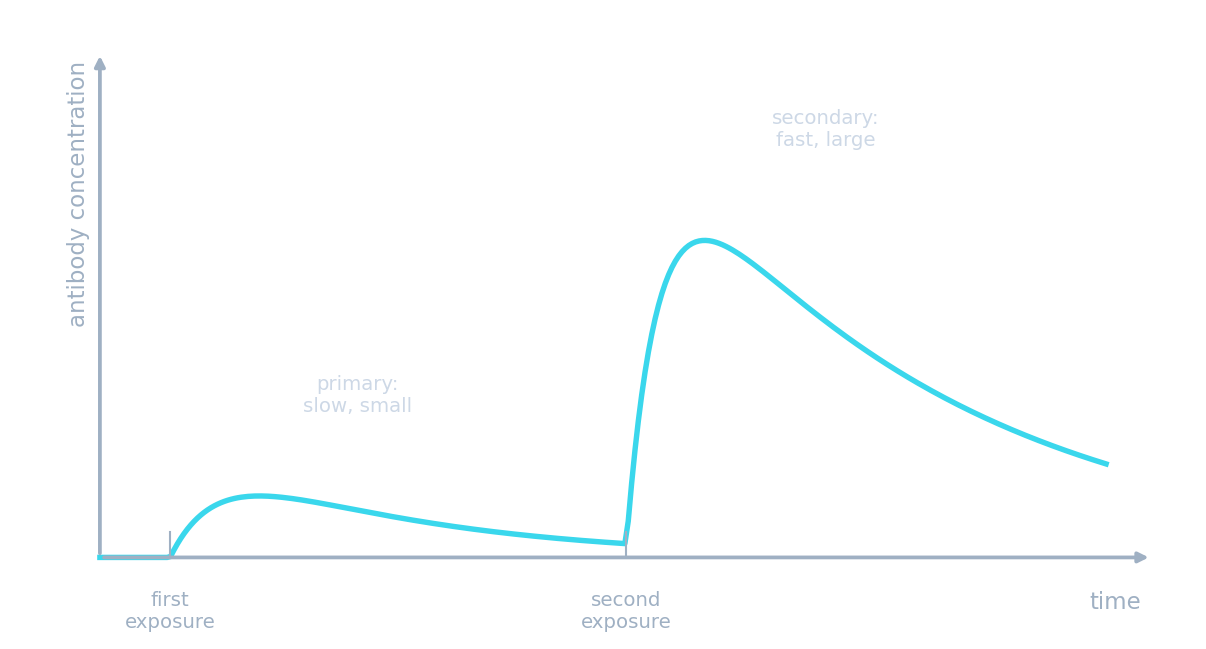
The secondary immune response is faster and larger because:
Difficulty 1/5 · 100 coins + a small bonus on first completion today
Memory cells made in the primary response respond quickly and strongly when the same pathogen returns.
Long-lived cells that stay behind to give a fast secondary response are ______ cells.
Difficulty 1/5 · 100 coins + a small bonus on first completion today
Memory cells let the body respond before you even feel ill the second time — the basis of immunity.
Clonal selection 克隆选择
- Each lymphocyte has receptors for one specific antigen.
- When that antigen appears, the matching lymphocyte is selected and divides rapidly to make an army of identical cells — clonal selection.

The one lymphocyte whose receptor matches the antigen is selected and cloned into many identical cells
You've got it
- primary response: macrophage displays antigen → T-helper activates → B-lymphocytes → plasma cells (antibodies) + memory cells
- T-killer cells destroy infected body cells
- memory cells persist; the secondary response is faster and larger
- that's long-term immunity — the pathogen is cleared before you fall ill