始终 (all along / from start to finish)
導入済み保存位置はこのブラウザに保持されます。再開しても、Implementedの完了や回答は行われません。
He never said a word
- At a two-hour family dinner, your quiet cousin sat in the corner the whole time.
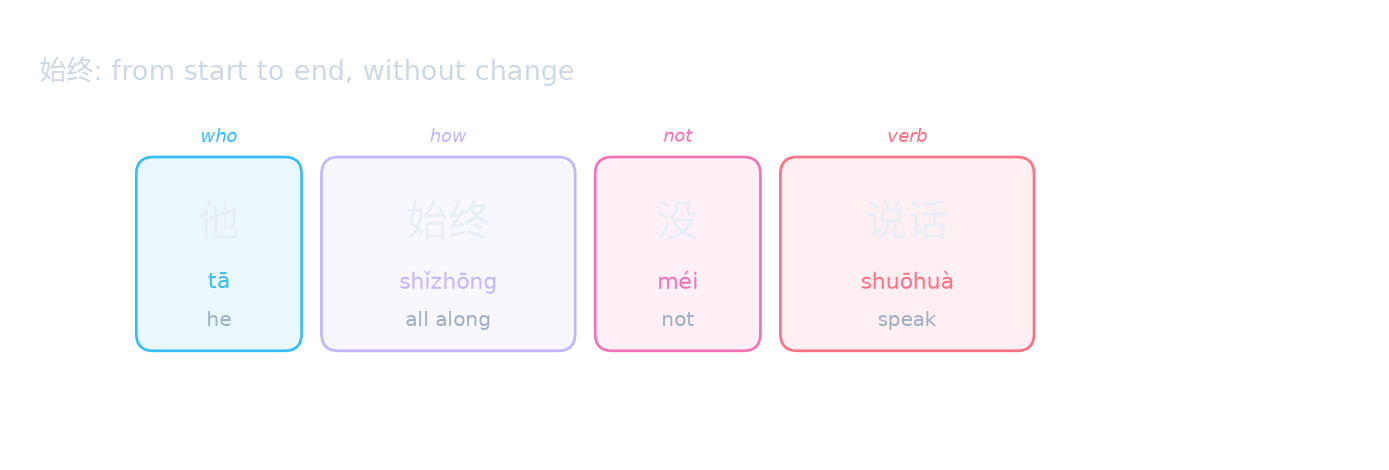
- he他all along始终not没speak说话。 — "He didn't say a word from start to finish."
- Goal: say something stayed the same from beginning to end with all along始终, and keep it apart from all along一直.
all along始终 + verb
- all along始终 (shǐzhōng) = "from start to finish, all along". It covers a whole period and says nothing changed.
- It is common with negatives: all along始终not没 / all along始终not不 = never, the whole time. I / me我all along始终not不clear明白he他why?为什么to walk走。 — "I never understood why he left."
he他all along始终not没speak说话。
Complete: “He didn't say a word the whole time.” 他____没说话。
難易度 1/5 · 100 コイン + 今日初回達成時の小ボーナス
始终没 = never, from start to finish.
我始终不明白 means "I never understood (the whole time)".
難易度 1/5 · 100 コイン + 今日初回達成時の小ボーナス
始终不 / 始终没 = never, from start to finish.
Keeping a position or feeling
- all along始终 often describes an attitude that never changed: she她all along始终believe相信herself自己can能succeed成功。 — "She always believed she could succeed."
- so much这么many years多年,he他all along始终to be / is是I / me我had better; best最好(modifier / structural particle)的friend朋友。 — "All these years, he has always been my best friend."
she她all along始终believe相信herself自己can能succeed成功。
Build: “She always believed she could succeed.”
難易度 3/5 · 200 コイン + 今日初回達成時の小ボーナス
Subject + 始终 + verb.
Not for a set time ahead
- all along始终 is not used with a set future time span. Use all along一直: ✓ tomorrow明天I / me我all along一直to be at home在家。 — "I'll be at home all day tomorrow." ✗ tomorrow明天I / me我all along始终to be at home在家.
- all along始终 goes before the verb, after the subject: ✓ he他all along始终not不to agree同意。 ✗ all along始终he他not不to agree同意 (in speech).
“Go straight ahead and you will see the bank.” Which word fits? ____往前走,就能看到银行。
難易度 1/5 · 100 コイン + 今日初回達成時の小ボーナス
Only 一直 can mean "straight on".
“I'll be at home all day tomorrow.” Which is right?
難易度 1/5 · 100 コイン + 今日初回達成時の小ボーナス
With a set future time span, use 一直. 始终 is not used that way.
all along始终 or all along一直?
- Often both work: he他all along一直 / all along始终not没to come来。 — "He never came (the whole time)."
- Only all along一直 can mean "straight on" or go with a set future time: all along一直往前走。 — "Go straight ahead." all along始终 stresses that nothing changed from start to finish.
Recap
- all along始终 + verb = all along, from start to finish; all along始终not没 / not不 = never (the whole time).
- For a set future time (tomorrow明天, next month下个月) or "straight ahead", use all along一直.
Read the full reference: HSK 5 grammar — Adverbs.
Describe someone whose opinion never changed during a long discussion. Use 始终 twice: once with 不 or 没, once with a verb like 相信 or 认为.
Your answer need not copy the model. A partner or teacher must hear the spoken response to comment on pronunciation.