未必 / 不见得 (not necessarily)
導入済み保存位置はこのブラウザに保持されます。再開しても、Implementedの完了や回答は行われません。
Expensive, but better?
- Your friend wants the most expensive phone because "it must be the best".
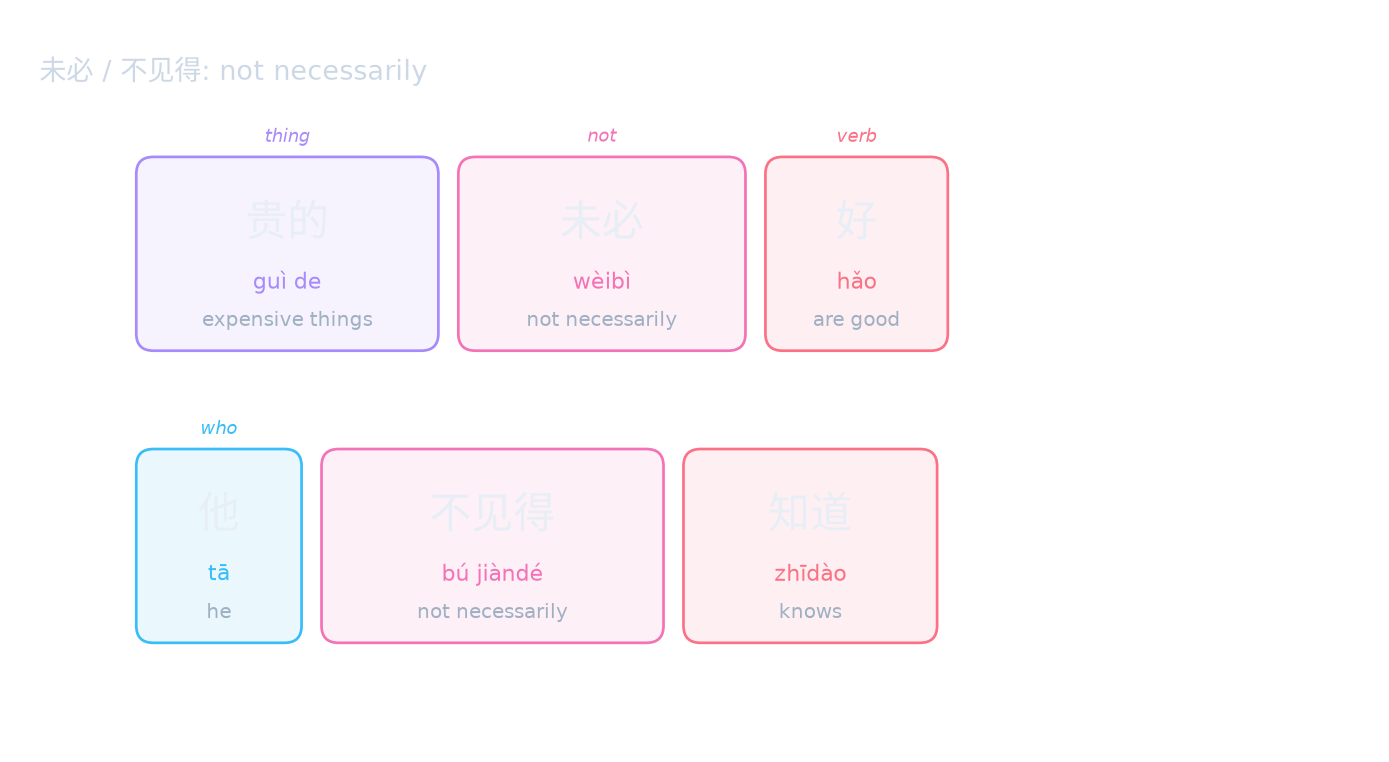
- expensive贵(modifier / structural particle)的things东西not necessarily未必good好。 — "Expensive things are not necessarily good."
- Goal: say "not necessarily" with not necessarily未必 and not necessarily不见得, a softer answer than a flat not不.
not necessarily未必 + verb / adj.
- not necessarily未必 (wèibì) = "not necessarily, may not". It goes before the verb or adjective and answers an idea someone takes for granted.
- he他variant of 说说tomorrow明天can / will会to rain下雨,I / me我to look at; to watch; to read看not necessarily未必。 — "He says it will rain tomorrow; I'm not so sure."
expensive贵的things东西not necessarily未必good好。
Complete: “Expensive things are not necessarily good.” 贵的东西____好。
難易度 1/5 · 100 コイン + 今日初回達成時の小ボーナス
未必 + adjective = not necessarily.
not necessarily不见得: the spoken twin
- not necessarily不见得 (bújiàndé) means the same and sounds more spoken: he他not necessarily不见得know知道这件matter事。 — "He doesn't necessarily know about this."
- Both can stand alone as a reply: — 这家restaurant饭店definitely一定degree / adjective linker很tasty好吃。— not necessarily不见得。 — "This restaurant must be great." "Not necessarily."
he他not necessarily不见得know知道this matter这件事。
Build: “He doesn't necessarily know about this.”
難易度 3/5 · 200 コイン + 今日初回達成時の小ボーナス
不见得 goes before the verb.
“This film will definitely be popular.” You doubt it. Which short reply fits?
難易度 1/5 · 100 コイン + 今日初回達成時の小ボーナス
不见得 (or 未必) can stand alone as a reply.
"Not necessarily" is not "not"
- not necessarily未必good好 = may or may not be good; no good不好 = is not good. ✓ cheap便宜(modifier / structural particle)的not necessarily未必no good不好。 — "Cheap things aren't necessarily bad."
- Don't add not不 again to mean the same thing: ✗ he他not necessarily未必not不know知道 for "he doesn't necessarily know". (not necessarily未必not不know知道 means "he may well know".)
What does 便宜的未必不好 mean?
難易度 1/5 · 100 コイン + 今日初回達成時の小ボーナス
未必不好 = not necessarily bad; it may well be good.
not necessarily未必 or definitely一定not不?
- definitely一定not不 is sure it's no: he他definitely一定not不to come来。 — "He definitely won't come."
- not necessarily未必 leaves it open: he他not necessarily未必to come来。 — "He may not come." Use it to disagree politely.
他未必来 and 他一定不来 mean the same.
難易度 1/5 · 100 コイン + 今日初回達成時の小ボーナス
未必来 leaves it open (he may not come); 一定不来 is sure he won't.
Recap
- not necessarily未必 / not necessarily不见得 + verb / adjective = not necessarily. Both can stand alone as a reply.
- not necessarily未必 leaves it open; not不 and definitely一定not不 close it. not necessarily未必not不 = may well.
Read the full reference: HSK 5 grammar — Adverbs.
A classmate says: "Students who study the longest always get the best marks." Disagree politely in two sentences, using 未必 or 不见得.
Your answer need not copy the model. A partner or teacher must hear the spoken response to comment on pronunciation.