Rencana belajar Anda · Lanjut · Tinjau →
Membaca dalam Kehidupan Sehari-hari — pengumuman, email, dan kata-kata kecil
DiperkenalkanPosisi tersimpan Anda tetap berada di browser ini. Melanjutkan tidak menyelesaikan pelajaran atau menjawab pertanyaannya.
 18:34
Membaca: Latihan Kelas Terarah
Bagian Membaca memberikan waktu sekitar tiga puluh menit dan sekitar lima puluh butir soal. Ini jauh lebih cepat daripada tes lama, dan butir soalnya lebih pendek, sehingga keterampilan yang diuji…
Narasi bahasa Inggris · takarir bahasa Inggris dan 中文 yang dapat dipilih
Dalam pelajaran ini
| English | Makna |
|---|---|
| notice/ˈnəʊtɪs/ | A short public message, often posted for students. |
| main idea/meɪn aɪˈdɪə/ | |
| detail/ˈdiːteɪl/ | A small fact or feature that helps describe or explain something. |
| implied/ɪmˈplaɪd/ | |
| technician/tekˈnɪʃn/ |
Read in Daily Life: the small words decide
-
A notice can change the return desk from Saturday — and still send damaged items somewhere else. Read the dates and the exceptions together before you act.
-
Read in Daily Life uses emails, notices, timetables and other short practical texts. Questions ask about the main idea, a key detail, or what is implied — often, what the reader should do.
-
The texts are short, so students read them too fast and answer from memory of a similar text.
In a notice, the word ‘except’ is small enough to hide and powerful enough to ruin your plan.
Where the answer hides
- Dates, room numbers, prices — and above all: except, unless, only, from Monday, after 6 pm.
- Mark these as you read. They change who a rule applies to, or when it starts.
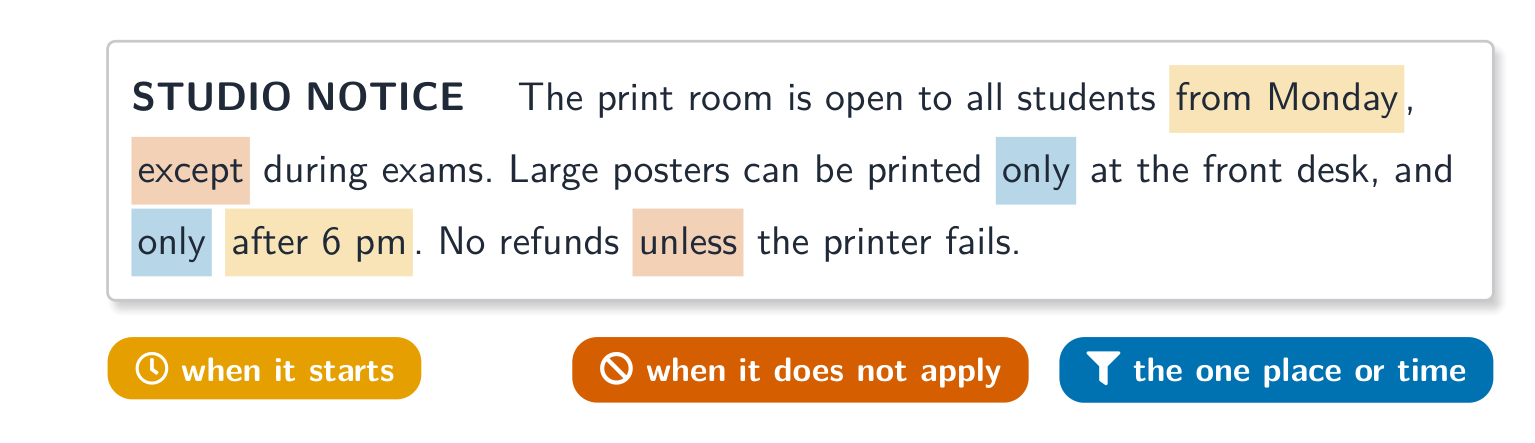
Main idea, key detail or implied action?
Read in Daily Life asks about the main idea, a key detail, or what the reader should do.
Sebuah pemberitahuan berbunyi: 'Perpustakaan buka setiap hari mulai jam 8am, kecuali hari Minggu.' Hari ini adalah pagi hari Minggu. Apakah perpustakaan buka?
Kesulitan 1/5 · 100 koin + bonus kecil pada penyelesaian pertama hari ini
'Kecuali Minggu' menyingkirkan Minggu dari aturan jam buka. Periksa setiap pengecualian terhadap orang atau hari yang disebutkan dalam pertanyaan.
Polite isn't the same as compulsory
- You may wish to consider is a suggestion; you must submit is a requirement. Don't turn one into the other.
- It would be helpful if you could is a request, but how urgent it is depends on the rest of the message. Notices tend to be direct (Students must, No access); emails more personal. Neither style changes a date or a deadline.

Dosen pembimbing Anda menulis: 'Anda mungkin ingin mempertimbangkan untuk menyerahkan draf sebelum tenggat waktu.' Apa yang ditetapkan oleh frasa tersebut?
Kesulitan 1/5 · 100 koin + bonus kecil pada penyelesaian pertama hari ini
'May wish to consider' adalah saran. Mungkin bijak untuk mengirimkan draf, tetapi kalimat itu tidak menjadikannya wajib. Bandingkan dengan 'you must submit'.
A method that fits the clock
- Read the question first, so you know what you're looking for.
- Read the text once, marking dates, numbers and exception words.
- Answer, then check the line you used and any exception linked to it. Read more widely only when the question needs it.
Untuk satu pertanyaan mengenai batas waktu pembatalan dalam pengumuman singkat, langkah awal mana yang membantu memfokuskan pencarian Anda?
Kesulitan 1/5 · 100 koin + bonus kecil pada penyelesaian pertama hari ini
Baca apa yang diminta pertanyaan, lalu temukan batas waktu dan kondisi terkait. Pertanyaan lain mungkin memerlukan ide utama atau beberapa kalimat terhubung; pendekatan pertanyaan-dulu adalah metode berguna, bukan aturan universal.
How to practise
- Read one real practical text in English every day: a university notice, an airline email, a bus timetable.
- Ask three questions: What is this text for? Which detail would change what I do? What does the writer imply? Checked on 23 September 2026: ETS Reading section.
Berlatih hanya teks akademik mempersiapkan Anda untuk seluruh bagian Reading.
Kesulitan 1/5 · 100 koin + bonus kecil pada penyelesaian pertama hari ini
ETS mencantumkan Melengkapi Kata, Membaca dalam Kehidupan Sehari-hari, dan Membaca Teks Akademik. Latihlah juga teks pendek sehari-hari selain teks akademik.
A condition can change where you go
- "Camera returns go to Desk A until Friday. From Saturday, use Desk B, except damaged cameras, which must go to the technician." A damaged camera on Saturday → the technician.
- A working camera on Friday → Desk A. A working camera on Saturday → Desk B. Follow the date and the condition together.
- An option that says Desk B can still be wrong, if it ignores the damaged-camera exception.
- Read the purpose, the date, the condition and the action as one rule. You may wish to suggests; you must requires.
Continue with practical messages and more everyday reading, including requests, exceptions and confirmations.
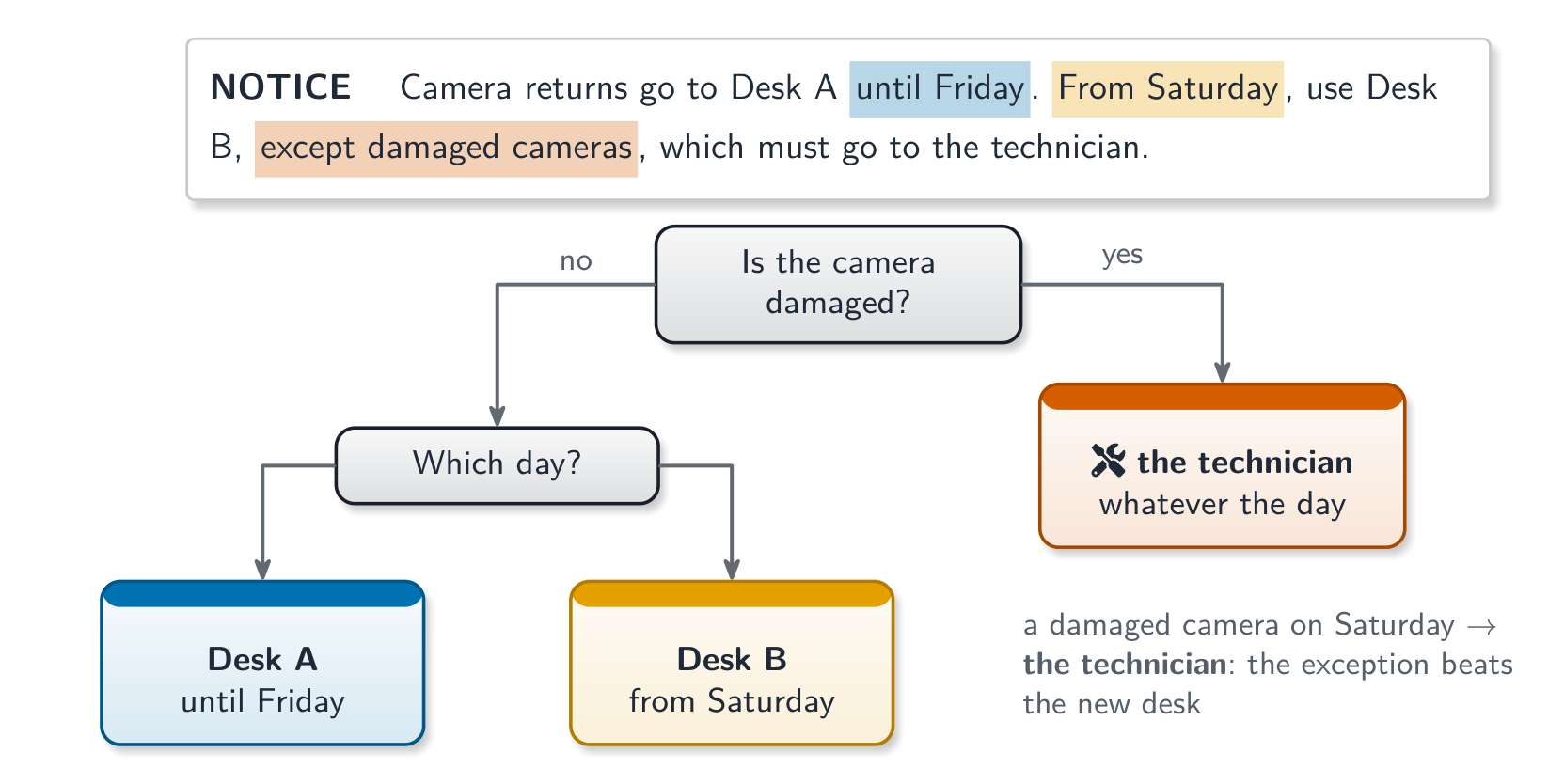
Match the three distinctions from the worked case.
Kesulitan 2/5 · 140 koin + bonus kecil pada penyelesaian pertama hari ini
A working camera returned on Friday goes to Desk A. A working camera returned on Saturday goes to Desk B. Trace date and condition together before choosing.
Where does a damaged camera returned on Saturday go in this notice?
Kesulitan 1/5 · 100 koin + bonus kecil pada penyelesaian pertama hari ini
Original notice: “Camera returns go to Desk A until Friday. From Saturday, use Desk B, except damaged cameras, which must go to the technician.” A damaged camera on Saturday goes to the technician. A working camera returned on Friday goes to Desk A. A working camera returned on Saturday goes to Desk B. Trace date and condition together before choosing.
Complete the worked-case label: Working camera on Friday → ____. Use the phrase in the diagram.
Kesulitan 1/5 · 100 koin + bonus kecil pada penyelesaian pertama hari ini
Read the purpose, date, condition and required action as one rule.