Group I properties
Diperkenalkan| English | Makna |
|---|---|
| Group I/ɡruːp aɪ/ | Golongan I |
| alkali metals/ˈælkəlaɪ ˈmetlz/ | logam alkali |
| reactivity/rɪəkˈtɪvɪti/ | reaktivitas |
| hydroxide/haɪˈdrɒksaɪd/ | hidroksida |
The reactive Group I 第一族 metals
- Drop a small piece of sodium in water and it fizzes across the surface.
- The Group I metals (the alkali metals 碱金属) are soft, light and very reactive.
Lab tren Golongan I
Follow Group I metals down the group and watch reactivity increase.
How many electrons are in the outer shell of a Group I element?
Kesulitan 2/5 · 140 koin + bonus kecil pada penyelesaian pertama hari ini
Group I elements have one outer electron.
Group I metals are hard and very dense.
Kesulitan 1/5 · 100 koin + bonus kecil pada penyelesaian pertama hari ini
False. Group I metals are soft enough to cut with a knife and have low densities; lithium, sodium and potassium even float on water.
Group I metals lose one electron to form ions with a charge of +______.
Kesulitan 1/5 · 100 koin + bonus kecil pada penyelesaian pertama hari ini
Losing one electron gives a +1 ion.
Properties of Group I
- They are soft (can be cut with a knife) and have low densities.
- They have one outer electron, which they readily lose to form +1 ions.
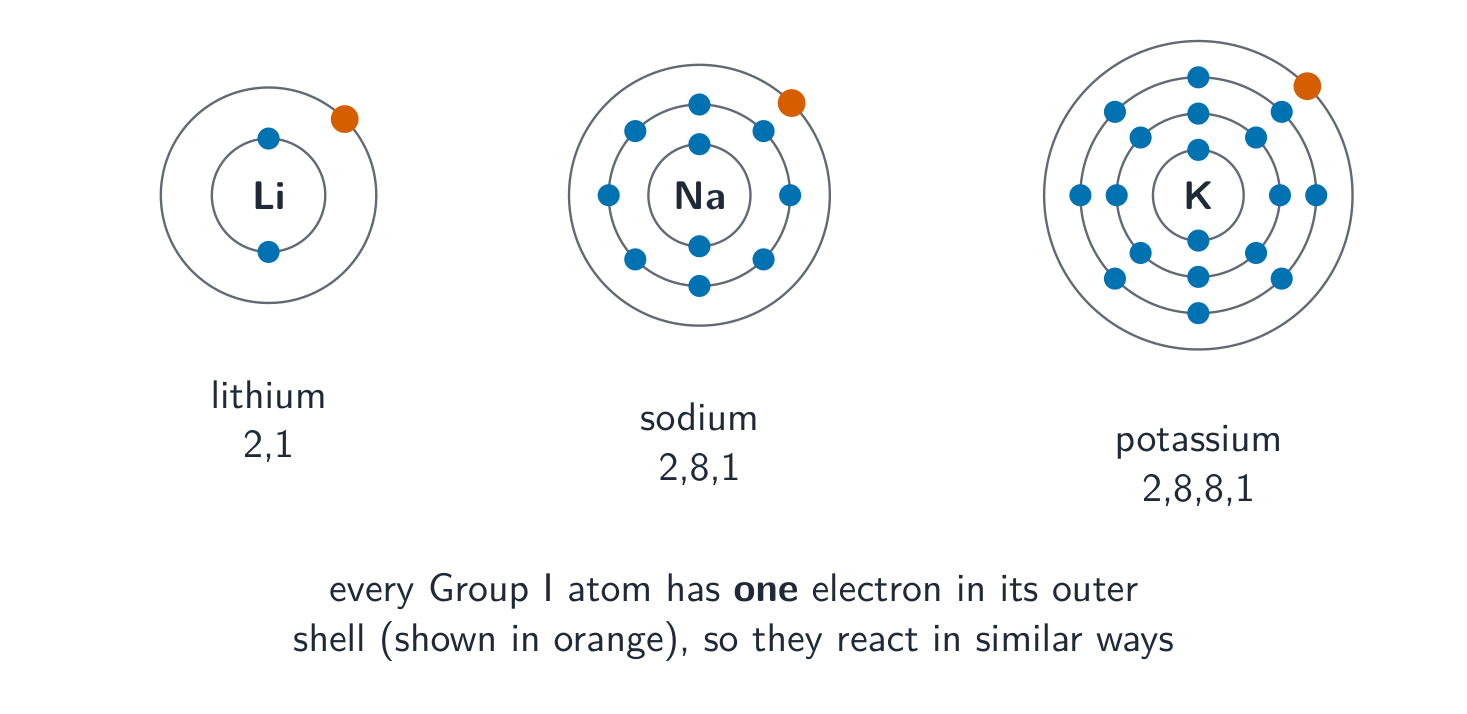
Every Group I atom has one electron in its outer shell, which is why they react in similar ways
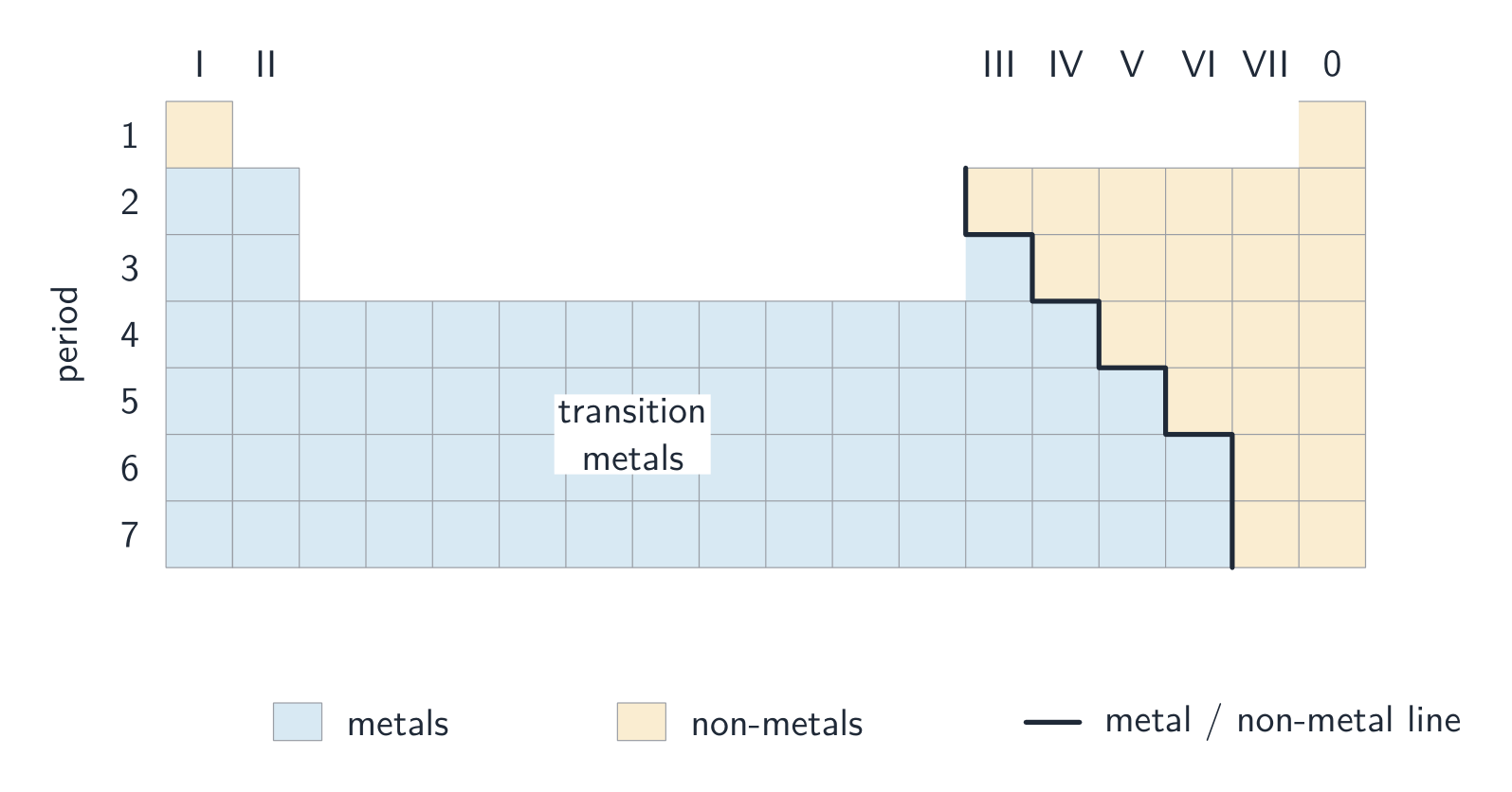
Groups are columns and periods are rows; metals sit on the left, non-metals on the right
Going down Group I, reactivity:
Kesulitan 1/5 · 100 koin + bonus kecil pada penyelesaian pertama hari ini
The outer electron is lost more easily down the group.
Reactivity 活泼性 down the group
- Reactivity increases down Group I (lithium → sodium → potassium...).
- The outer electron is further from the nucleus, so it is lost more easily.
Group I metals react with water to form a hydroxide and:
Kesulitan 1/5 · 100 koin + bonus kecil pada penyelesaian pertama hari ini
Metal + water → metal hydroxide + hydrogen.
Reaction with water
- Group I metals react with water to form a hydroxide 氢氧化物 + hydrogen gas.
- The reaction gets more vigorous down the group.
Worked example. Lithium fizzes gently on water; sodium darts about; potassium reacts so fast it bursts into lilac flame. Reactivity clearly increases down the group.
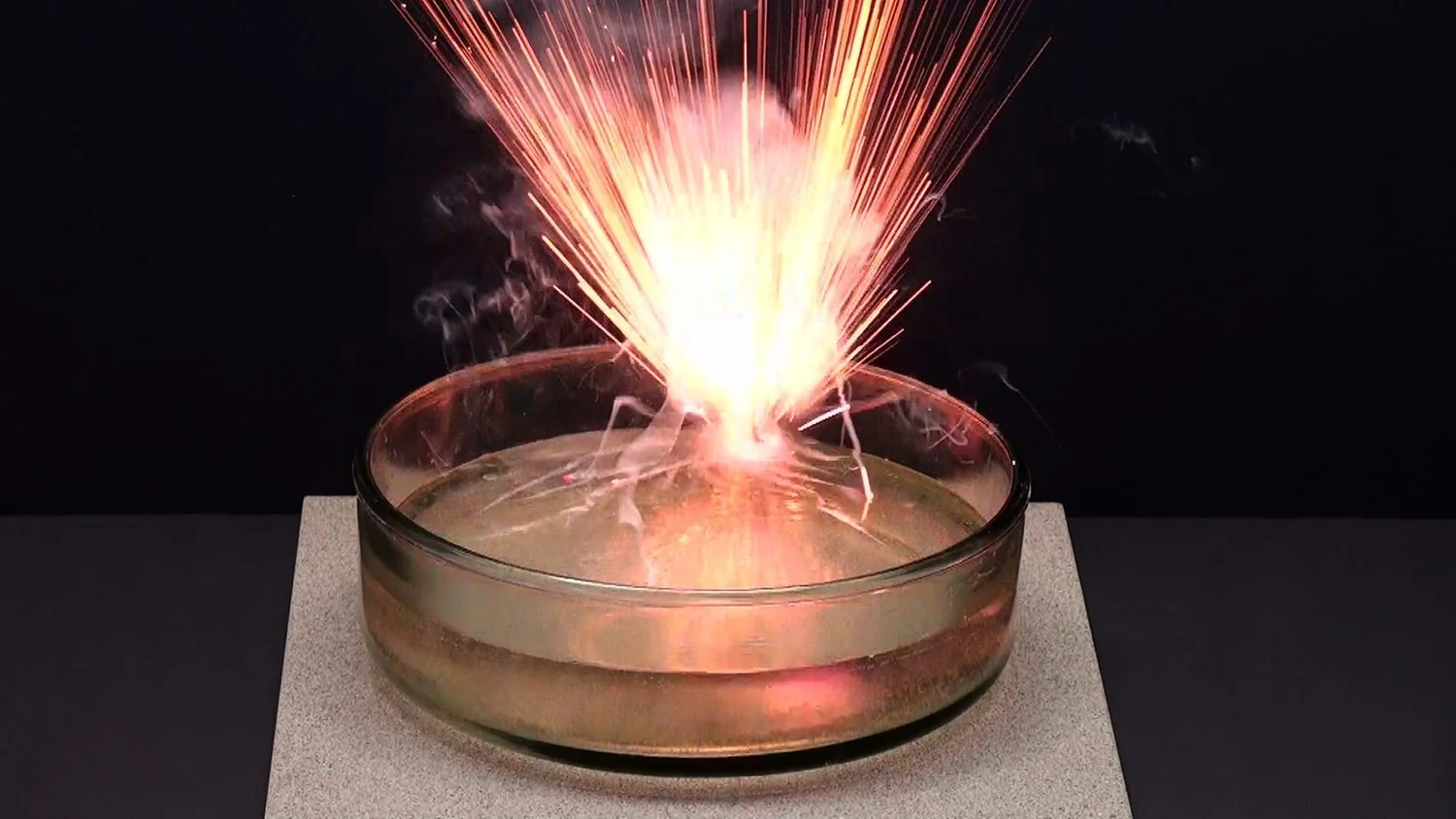
Potassium reacts so vigorously with water that the hydrogen given off burns with a lilac flame — reactivity increases down Group I
Group I data and a prediction
| Metal | Melting point / °C | Density / g/cm³ | Reaction with water |
|---|---|---|---|
| lithium | 181 | 0.53 | fizzes steadily, floats |
| sodium | 98 | 0.97 | melts into a ball, fizzes quickly |
| potassium | 63 | 0.86 | ignites with a lilac flame |
| rubidium | ? | 1.53 | ? |
- Melting point falls down the group, and reactivity rises: the outer electron is further from the nucleus, so it is lost more easily.
- So rubidium melts below 63 °C (it is 39 °C) and reacts explosively with water. Each metal makes a hydroxide and hydrogen: 2K + 2H₂O → 2KOH + H₂.
Predict how rubidium reacts with water.
Kesulitan 1/5 · 100 koin + bonus kecil pada penyelesaian pertama hari ini
Reactivity increases down Group I, and rubidium is below potassium.
Sodium reacts with water containing universal indicator. What colour does the indicator turn?
Kesulitan 1/5 · 100 koin + bonus kecil pada penyelesaian pertama hari ini
Sodium hydroxide is a strong alkali: 2Na + 2H₂O → 2NaOH + H₂.
You've got it
- Group I (alkali metals) are soft, low-density, with one outer electron (+1 ions)
- reactivity increases down the group (outer electron lost more easily)
- they react with water → metal hydroxide + hydrogen, more vigorously down the group
Write from potassium being more reactive
- Sodium and potassium are both in Group I.
- Each has one outer electron. Potassium is below sodium.
Which metal reacts more vigorously with water?
Reactivity of Group I increases down the group.
Which Group I metal is more reactive here?
Kesulitan 1/5 · 100 koin + bonus kecil pada penyelesaian pertama hari ini
The outer electron is lost more easily further down the group.