Baca teks kesehatan dan buat parafrasa yang bertanggung jawab
DiperkenalkanReplacing three words can still copy a sentence
- A student reads a passage, changes a few words and submits the same sentence structure as their own. That is not a reliable paraphrase. Responsible writing requires understanding the idea, expressing it independently and acknowledging the source.
- This GAC008-aligned lesson uses a fictional classroom observation about break habits, not medical research or personal health advice. It practises reading and avoiding plagiarism. A citation cannot turn an inaccurate or unsupported claim into a good one.
Read the finding and the limit together
- Skim the passage for its central point, then scan for the group and measurement. Twenty-four volunteers completed a short recall task after a study period. The observation compares reported habits; it does not randomly assign a treatment or test medical outcomes.
- Identify the uncertainty sentence before writing notes. Volunteers chose their own habits, so other differences could matter. “Reported association” must not become “proved cure,” and the task score must not become a general measure of health.
Classroom source card H, written for this lesson: Twenty-four volunteers recorded whether they took a brief break during a study period. Those reporting a break had higher average scores on a later word-recall task. However, the participants selected their own study habits, and their earlier recall ability was not measured. The observation therefore cannot establish that the break caused the score difference.
Apa yang diukur oleh pengamatan fiksi tersebut?
Kesulitan 1/5 · 100 koin + bonus kecil pada penyelesaian pertama hari ini
Kartu H menggambarkan tugas mengingat, bukan hasil klinis atau durasi yang ditetapkan.
Berapa banyak sukarelawan yang ada dalam kartu H?
Kesulitan 2/5 · 140 koin + bonus kecil pada penyelesaian pertama hari ini
Teks secara eksplisit menyatakan dua puluh empat sukarelawan.
Make notes without copying the sentence
- Put the passage aside after reading. Note the key ideas in short form: 24 volunteers; self-reported break habit; later recall-score difference; self-selection; no earlier recall measure; cause unproved. Then reopen the source to check your notes for omissions.
- Separate facts from your interpretation in two columns. “Earlier ability was not measured” belongs under source information. “A future comparison should include a baseline” is your proposed next step and should be labelled as such, not attributed to the source card.
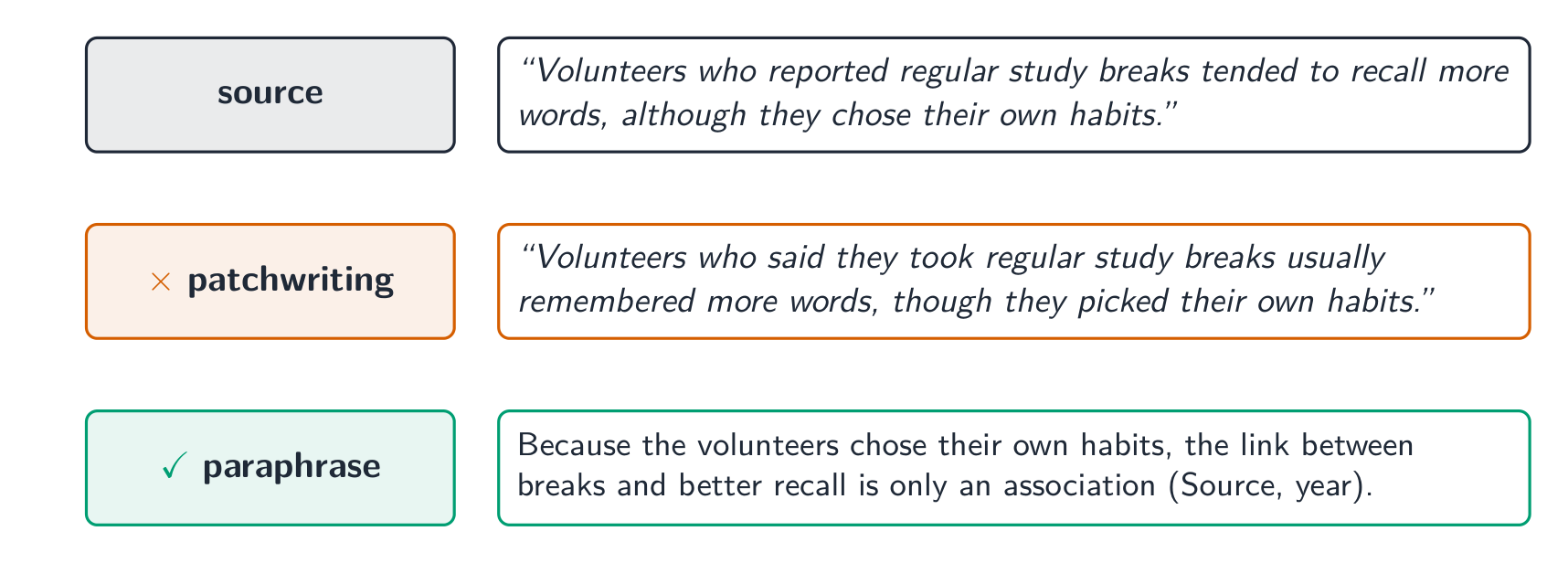
In the lesson's fictional source card H, volunteers who reported taking a short study break scored higher on a later recall task. Since habits were self-selected and earlier recall ability was unknown, the observation does not isolate the effect of a break. This restates the finding and its limits while acknowledging the classroom source. It is not a citation to a real study.
Pengamatan menetapkan bahwa mengambil istirahat menyebabkan perbedaan tersebut.
Kesulitan 1/5 · 100 koin + bonus kecil pada penyelesaian pertama hari ini
Kebiasaan dipilih sendiri dan kemampuan mengingat sebelumnya tidak diukur.
Distinguish paraphrase, quotation and acknowledgment
- A paraphrase changes expression while preserving meaning; it still needs acknowledgment when the idea comes from a source. A quotation repeats exact words, uses quotation marks and needs the source and locator required by your course's style.
- A patchwork of copied phrases with a few synonyms may remain too close to the source. Compare your structure and wording, not just the number of changed words. For real coursework, retain real author, title, date and locator details; do not invent them from this classroom card.
Do not attach a made-up journal reference to the fictional card. It is practice material. In assessed research, use a real source you can retrieve and follow the teaching centre's required citation style.
Dua pernyataan manakah tentang penggunaan sumber yang benar?
Kesulitan 2/5 · 140 koin + bonus kecil pada penyelesaian pertama hari ini
Pengakuan berlaku untuk ide yang dipinjam; kutipan persis memerlukan penandaan akurat dan informasi sumber.
Write a short summary with the limit intact
- Write 65–85 words summarising card H. State the group, observed difference and two design limits. Begin with an acknowledgment to the fictional classroom source. Avoid adding advice about a safe or ideal break duration; none was measured here.
- Then add a separate sentence proposing one improvement to a future study. Mark it as your suggestion. Comparing earlier recall scores could add useful information, but it would not by itself remove every possible difference between the groups.
Audit source use before submission
- Compare your draft with card H: same finding, same uncertainty, no invented cause, no invented medical outcome. Check whether distinctive exact wording needs quotation marks or a genuine rewrite. Citation and paraphrase are two different checks.
- Keep a source log for real assignments so acknowledgment can be completed accurately. If you cannot trace a factual claim, verify it or remove it before submitting. A fluent summary is only useful when the reader can trust its meaning and origin.
Understand before rewriting, keep the source's uncertainty, distinguish your suggestions from its findings, and acknowledge borrowed ideas accurately.
Penambahan manakah harus diberi label sebagai saran penulis?
Kesulitan 1/5 · 100 koin + bonus kecil pada penyelesaian pertama hari ini
Dua pertama adalah fakta sumber. Perbandingan masa depan yang diusulkan adalah rekomendasi penulis.