25 questions
Emergencies
Tyre blowout, brake or steering failure, skids, fire and water.
Tap an answer to check it, or open "Show the answer". To practise one question at a time, use the button.
-
1
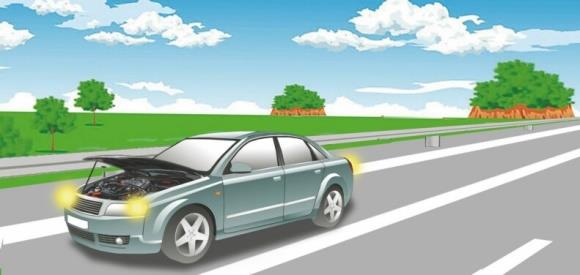
In which of the following statements is a broken-down vehicle breaking the law?
Show the answer
Answer: A. A warning sign has not been set up
If a broken-down vehicle cannot be moved, turn on the hazard lights and place a warning sign behind it.
-
2
If a motor vehicle breaks down on the road and the driver needs to deal with the problem, what should the driver do?
Show the answer
Answer: C. Drive the vehicle to a place where it will not obstruct the traffic flow
If the vehicle can be moved safely, move it to a place where it will not obstruct traffic.
-
3
When a motor vehicle breaks down on the road and cannot be moved easily, what should the driver do?
Show the answer
Answer: A. Turn on the hazard warning lamps
Turn on the hazard warning lamps and place a warning sign behind the vehicle.
-
4
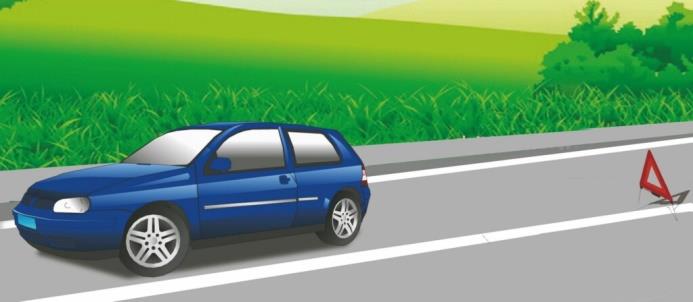
It is not a law-breaking act for this motor vehicle to stop on the roadside.
Show the answer
Answer: False
A broken-down vehicle that cannot be moved must use hazard warning lights and a warning sign.
-
5
If a motor vehicle breaks down on the road and cannot be moved easily, the driver should set up a warning sign no more than 50 meters behind the vehicle.
Show the answer
Answer: False
On an ordinary road, place the warning sign 50 to 100 meters behind the vehicle. Expressways require a greater distance.
-
6
If a motor vehicle breaks down on the road at night and cannot be moved easily, the driver should turn on the hazard warning lamps, the clearance lamps and the tail lamps.
Show the answer
Answer: True
These lights help other drivers see the stopped vehicle at night. Also place a warning sign behind it.
-
7
If a front tire blowout has caused a change in direction, the driver should avoid excess adjustment. Besides controlling the direction of the vehicle, what should the driver do so as to slowly reduce the speed of the vehicle?
Show the answer
Answer: C. Depress the braking pedal gently
Hold the steering wheel firmly and slow down gradually. Gentle braking helps avoid a further loss of control.
-
8
When the driver finds a tire is leaking and steers the vehicle off the main driving lane, he/she should refrain from using the emergency brake so as to avoid a vehicle turnover or a rear-end collision arising from the late braking of a following vehicle.
Show the answer
Answer: True
Sudden hard braking can make a vehicle with a damaged tyre unstable. Slow down gradually and move to a safe place.
-
9
A rear tire blowout can sway the tail of the vehicle. In such circumstances, the driver should hold the steering wheel firmly with both hands to ensure the vehicle continues straight, then reduce speed and stop.
Show the answer
Answer: True
A rear tyre blowout can make the vehicle sway. Hold the wheel firmly, keep control and slow down gradually.
-
10
Upon realizing that a tire has burst, drivers should gently depress the brake pedal while controlling the direction of the vehicle, reduce the speed and pull over slowly.
Show the answer
Answer: True
Keep the vehicle under control and slow down gradually. Avoid sudden, hard braking after a blowout.
-
11
When a tire bursts suddenly on the road, drivers should refrain from violently depressing the brake pedal in panic. Instead, they should try their best to change to a low gear and use engine braking to reduce the speed of the vehicle.
Show the answer
Answer: True
Hold the steering wheel firmly and slow down gradually. Avoid hard braking or sudden gear changes that could upset the vehicle.
-
12
A front tire burst is very dangerous. The vehicle will immediately turn to the side where the tire bursts and this will directly impact the driver's control of the steering wheel.
Show the answer
Answer: True
A front tyre blowout can pull the vehicle towards the damaged tyre. Hold the steering wheel firmly and slow down gradually.
-
13
After a tire bursts and before the driver can control the speed of the vehicle, he/she should not risk using the foot brake to stop the vehicle. Otherwise a horizontal swing of the vehicle can cause greater danger.
Show the answer
Answer: True
First keep the vehicle under control and let it slow down. Sudden hard braking can make it swing or skid.
-
14
When a vehicle has changed its direction due to a front tire burst on the road, the driver should firstly hold the steering wheel with both hands to ensure the vehicle goes straight.
Show the answer
Answer: True
A front tyre blowout can pull the steering wheel. Hold it firmly with both hands and avoid sudden steering movements.
-
15
Upon realizing a tire burst on the road, the driver should use emergency braking to stop the vehicle quickly while controlling the direction of the vehicle at the same time.
Show the answer
Answer: False
Hard braking after a blowout can make the vehicle unstable. Hold the wheel firmly and slow down gradually.
-
16
What should the driver do when a bus encounters danger on the road?
Show the answer
Answer: A. First ensure the safety of the passengers
Protecting passengers comes before saving the vehicle or other property.
-
17
When a bus catches fire and its door cannot be opened, in order to minimize injuries what should be done as soon as possible to organize escape?
Show the answer
Answer: B. Smash the side windscreen
Use an emergency hammer to break a suitable side window and evacuate quickly.
-
18
To protect passengers from being injured, the bus driver or conductor should tell the passengers how to use safety exits.
Show the answer
Answer: True
Passengers who know how to use the emergency exits can leave more quickly in danger.
-
19
Upon encountering danger, the bus driver should take all decisive and effective measures to protect passengers from receiving minor or serious injuries and to prevent the vehicle from overturning.
Show the answer
Answer: True
The driver should act promptly to reduce the risk of injury and keep control of the bus.
-
20
When a bus encounters an unexpected situation or an accident, the driver should do his best to minimize the loss and should never cause a secondary accident or even greater loss for the sake of avoiding danger.
Show the answer
Answer: True
An emergency response should reduce harm and avoid creating another crash.
-
21
When a bus driver deals with an emergency on a mountain road, a bridge or an expressway, he/she should first turn the steering wheel to evade danger and then use braking to reduce speed.
Show the answer
Answer: False
A sudden turn can cause a bus to skid or overturn. Slow down in a controlled way and steer only as needed.
-
22
When a bus encounters danger, the driver should manage to open the door, the safety door or emergency exits to evacuate passengers as fast as possible.
Show the answer
Answer: True
If evacuation is necessary, use the available safe exits to get passengers away from danger quickly.
-
23
If a bus without safety doors encounters danger, the driver or the passengers may use the hammers or other articles in the vehicle to smash the window glass and evacuate the passengers through the windows.
Show the answer
Answer: True
When normal exits cannot be used, an emergency hammer can break a suitable window for evacuation.
-
24
In an emergency, the roof window of a bus can also serve as an emergency exit for evacuating passengers.
Show the answer
Answer: True
A roof hatch designed as an emergency exit can provide another way out when other exits are blocked.
-
25
When a driver escaping from a fire disaster is unable to open the door of the driver's cab or the door of the vehicle, he/she should smash the windscreen to escape.
Show the answer
Answer: False
A suitable side window is generally a better escape route. A laminated front windscreen is difficult to break through.