94 questions
Night, weather and difficult roads
Night, rain, fog, snow and ice, mountain roads, bridges, tunnels and level crossings.
Tap an answer to check it, or open "Show the answer". To practise one question at a time, use the button.
-
1
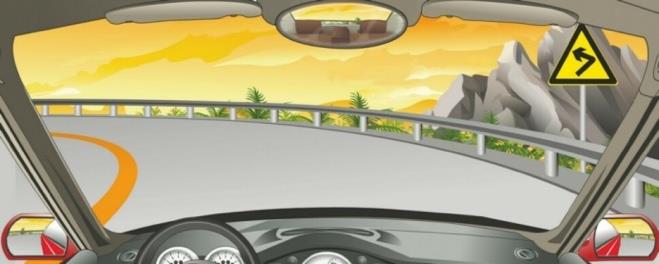
How to drive in such a road section?
Show the answer
Answer: A. Reduce speed and sound the horn to indicate the intention
Slow down before the sharp bend and sound the horn to warn road users you cannot yet see.
-
2
The driver driving a motor vehicle uphill should speed up and sound the horn when approaching the top of the slope.
Show the answer
Answer: False
Slow down near the top because you cannot see traffic or hazards on the other side. Sound the horn to warn others where appropriate.
-
3
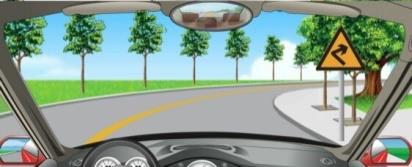
The speed limit on this curve is:
Show the answer
Answer: A. 30 km/hour
The maximum speed on a sharp curve is 30 km/hour. Slow down further if conditions require it.
-
4
Under weather conditions of sand, hail, rain, fog and ice, the motor vehicle should be driven:
Show the answer
Answer: C. At a reduced speed
Bad weather can reduce visibility and grip. Reduce speed to give yourself more time to react.
-
5
When driving under weather conditions such as fog, rain and snow, with visibility less than 50 meters, the maximum speed should not exceed:
Show the answer
Answer: D. 30 km/hour
The general maximum is 30 km/hour when visibility is under 50 metres in these conditions. On an expressway, a stricter 20 km/hour limit applies and you must leave at the nearest exit as soon as possible.
-
6
When a motor vehicle passes a level crossing, the maximum speed should not exceed:
Show the answer
Answer: C. 30 km/hour
The maximum is 30 km/hour at a level crossing. Obey the crossing signals and check for trains.
-
7
When a motor vehicle passes a sharp curve, the maximum speed should not exceed:
Show the answer
Answer: B. 30 km/hour
The maximum is 30 km/hour on a sharp curve. Reduce speed further if you cannot see or stop safely.
-
8
When a motor vehicle passes a narrow road or narrow bridge, the maximum speed should not exceed:
Show the answer
Answer: D. 30 km/hour
The maximum is 30 km/hour on a narrow road or bridge. A lower speed gives you more time to deal with oncoming traffic.
-
9
When a motor vehicle descends an abrupt slope, or makes a turn or a U-turn, the maximum speed should not exceed:
Show the answer
Answer: A. 30 km/hour
The maximum is 30 km/hour when descending a steep slope, turning or making a U-turn.
-
10
The maximum speed of motor vehicles on roads covered by ice and snow should not exceed:
Show the answer
Answer: B. 30 km/hour
The maximum is 30 km/hour on an icy or snowy road. Drive more slowly if needed because stopping takes longer.
-
11
The maximum speed of motor vehicles on muddy roads should not exceed:
Show the answer
Answer: C. 30 km/hour
The maximum is 30 km/hour on a muddy road, where tyres may have less grip.
-
12
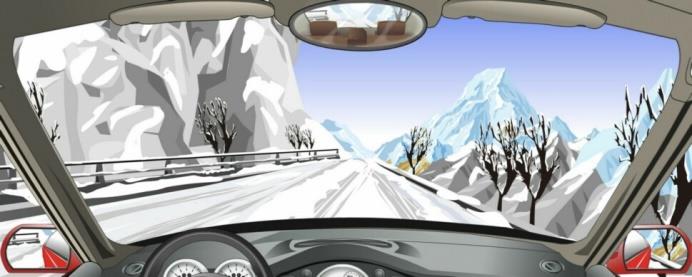
The maximum speed should not exceed 50 km/hour when a motor vehicle runs on such a road as shown.
Show the answer
Answer: False
On an icy or snowy road, the maximum speed is 30 km/hour. Reduce speed further if conditions require it.
-
13
Motor vehicles are allowed to overtake at level crossings in urban areas when there's no train passing by.
Show the answer
Answer: False
Overtaking is prohibited at level crossings, even when no train is visible.
-
14
Motor vehicles are prohibited from overtaking in special sections such as tunnels or abrupt slopes.
Show the answer
Answer: True
Tunnels and steep slopes may not provide enough visibility or space for safe overtaking.
-
15
When motor vehicles approach each other on a narrow mountain road, what should the driver do?
Show the answer
Answer: D. The vehicle farther from the mountain should go first
On a narrow mountain road, the vehicle on the outside, away from the mountain, has priority.
-
16
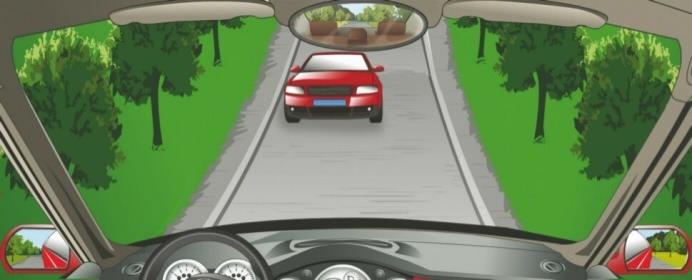
An uphill motor vehicle should yield to the motor vehicle which intends to go downhill.
Show the answer
Answer: True
On a narrow slope, the downhill vehicle normally yields to the uphill vehicle. If the downhill vehicle has already started and the uphill vehicle has not, the uphill vehicle yields.
-
17
Which of the following is the correct way to pass such an intersection as shown?
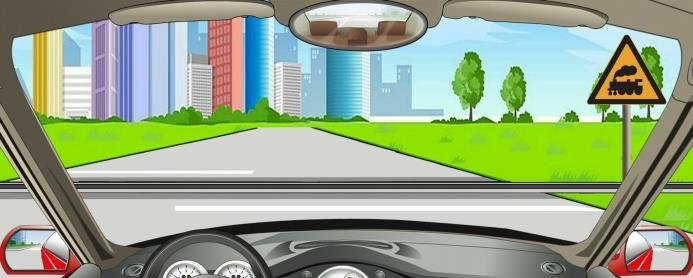
Show the answer
Answer: D. Slow down and stop to observe carefully
At an unguarded level crossing, stop and check that it is safe before crossing.
-
18
When a motor vehicle passes a level crossing without traffic signals and railway staff, what should the driver do?
Show the answer
Answer: C. Stop and check whether it is safe before passing
Stop and check for trains before crossing an unguarded railway line.
-
19
Motor vehicles should pass this kind of level crossings with an increased speed.
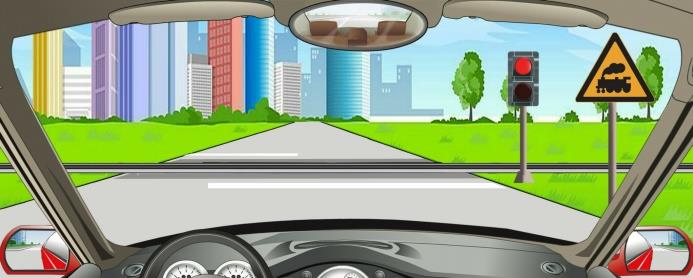
Show the answer
Answer: False
The red signal requires you to stop before the railway crossing. Do not speed across.
-
20
The driver should stop and observe carefully at the level crossing in this condition.
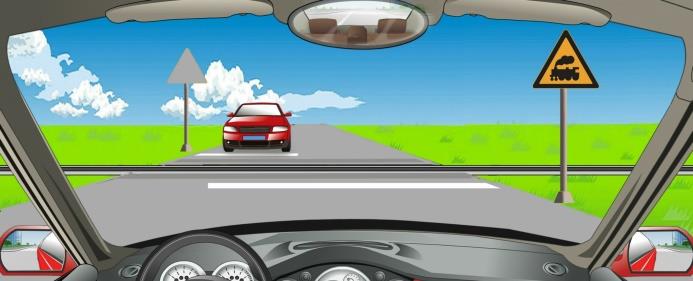
Show the answer
Answer: True
Stop and check for trains at an unguarded level crossing. Cross only when it is safe.
-
21
What should the driver do first if he/she encounters such a bridge?
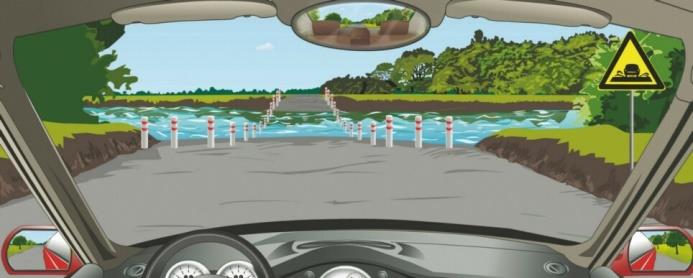
Show the answer
Answer: D. Stop the vehicle and identify the situation of the water
Stop and check the water depth and road condition first. Cross only if it is safe.
-
22
When passing through a flooded road, motor vehicle drivers should speed up.
Show the answer
Answer: False
Check that the water is safe to cross, then drive slowly and steadily.
-
23
If a motor vehicle encounters a flooded bridge, the driver should identify the situation of the water and make sure that it is safe to cross before doing so at a low speed.
Show the answer
Answer: True
Check the water and bridge before entering. If crossing is safe, proceed slowly.
-
24
Which of the following acts is deemed dangerous when a motor vehicle is on a steep downhill road?
Show the answer
Answer: B. Changing to neutral gear and coasting
Coasting in neutral removes engine braking and makes speed harder to control. Select a low gear before the descent.
-
25
When driving a small vehicle on a steep downhill road, the driver is allowed to stop the engine and coast.
Show the answer
Answer: False
Do not switch off the engine and coast downhill. Keep the vehicle in a suitable low gear to help control its speed.
-
26
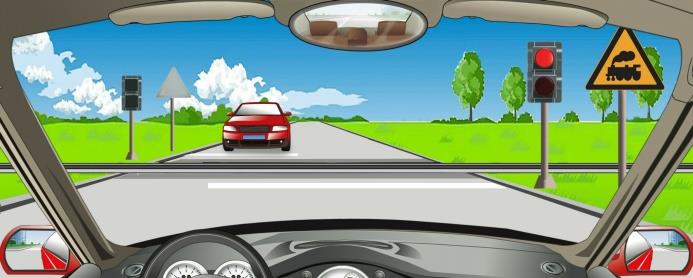
What should motor vehicle drivers do when meeting with these traffic lights at a level crossing?
Show the answer
Answer: D. Drivers are not allowed to pass the stop line
A red railway crossing signal means drivers must stop before the stop line and wait.
-
27
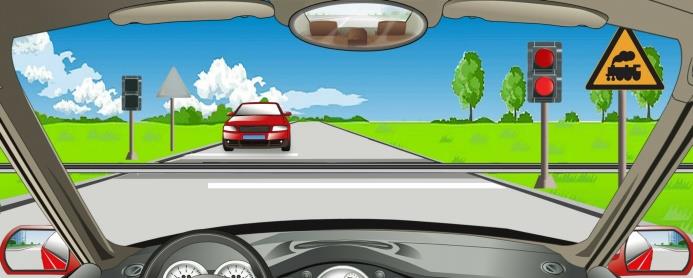
If two red lights at a level crossing flash alternately, it means that drivers should stop the vehicle and wait.
Show the answer
Answer: True
Alternating red lights warn that the crossing is closed to road traffic. Stop and wait until it is safe and permitted to cross.
-
28
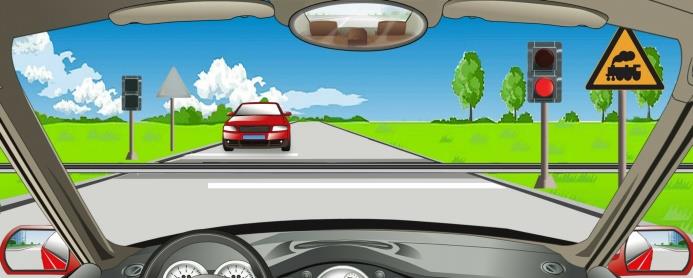
If only one of the red lights at a level crossing is on, it means that drivers should pass through the level crossing as soon as possible.
Show the answer
Answer: False
One red light can be lit during the alternating flashing sequence. Drivers must stop and wait.
-
29
What's the main impact of rainy weather on safe driving?
Show the answer
Answer: B. Road is wet and slippery and visibility is poor
Rain makes the road slippery and can make it harder to see. Slow down and leave more space to stop.
-
30
What is prone to happen when a motor vehicle applies emergency braking on a slippery road in rainy weather?
Show the answer
Answer: D. Side slipping and causing a traffic accident
Hard braking on a slippery road can cause the vehicle to skid sideways and hit something.
-
31
What's the main impact of foggy weather on safe driving?
Show the answer
Answer: D. Poor visibility and vision
Fog limits how far ahead you can see, so hazards are harder to notice in time.
-
32
What's the main impact of the road conditions at night on safe driving?
Show the answer
Answer: A. The poor visibility makes it hard to observe the road and traffic conditions
Darkness makes road features, people and other hazards harder to see.
-
33
As the driver's observation ability at night is poorer than in daytime, what's the change in the range of visibility?
Show the answer
Answer: B. It will be shorter
At night, darkness limits the distance a driver can see clearly.
-
34
What's the main impact of the road conditions in icy and snowy weather on safe driving?
Show the answer
Answer: D. The poor braking performance makes it easy to come off track
Ice and snow reduce tyre grip. Braking is less effective and the vehicle can slide off its path.
-
35
What should be kept in mind when driving on the road in icy and snowy weather?
Show the answer
Answer: A. The braking distance lengthens
Tyres have less grip on ice and snow, so the vehicle needs more distance to stop.
-
36
What's the impact of muddy roads on safe driving?
Show the answer
Answer: B. The tires can easily spin and side slip
Mud reduces tyre grip, so the wheels can spin or slide sideways.
-
37
How does a flooded road impact safe driving and smooth passage?
Show the answer
Answer: A. It is impossible to see the hidden pits and bumps on the road
Floodwater can hide holes, obstacles and damage to the road. Check that the route is safe before entering water.
-
38
What's the main impact of mountain roads on safe driving?
Show the answer
Answer: C. The slope is long and the curve is sharp, so the range of visibility is short
Sharp bends and slopes can hide traffic and hazards ahead. Drive at a speed that lets you stop within the distance you can see.
-
39
When driving at night, the driver's visibility range becomes shorter and his observation ability becomes poorer. Meanwhile, as the driver needs to concentrate highly, he/she may become easily tired.
Show the answer
Answer: True
Darkness limits visibility, and the extra concentration needed can make a driver tired.
-
40
When driving in icy and snowy weather, the reflection of light by accumulated snow can easily make drivers feel dizzy and have illusions.
Show the answer
Answer: True
Bright light reflected from snow can cause glare and make it harder to judge the road.
-
41
When driving in icy and snowy weather, as the steadiness of vehicles decreases, sudden acceleration can easily cause spins and slides.
Show the answer
Answer: True
Sudden acceleration can make the wheels lose grip on ice or snow. Accelerate gently.
-
42
When braking on a muddy road, the tires can easily spin or drift, and this may cause a traffic accident.
Show the answer
Answer: True
Mud gives tyres less grip, so the vehicle can slide when braking.
-
43
When passing over a flooded road, a high gear should be used to pass rapidly.
Show the answer
Answer: False
Do not drive rapidly through floodwater. If it is safe to cross, use a low gear and proceed slowly and steadily.
-
44
What should the driver do when passing over a wet road surface?
Show the answer
Answer: A. Reduce speed and go slowly with special care
A wet road reduces tyre grip and increases stopping distance. Slow down and drive carefully.
-
45
What should the driver do when driving on a wet road surface with pedestrians on both sides?
Show the answer
Answer: C. Reduce speed and drive slowly
Slow down because the road is slippery and pedestrians may move into your path.
-
46
What should the driver do when driving over a wet road surface with non-motor vehicles moving on both sides?
Show the answer
Answer: A. Reduce speed and drive slowly
Slow down to keep control on the wet road and leave time to react to cyclists and other road users.
-
47
What should the driver do when his/her vehicle reaches a sharp curve?
Show the answer
Answer: D. Slow down as much as possible and drive on the right side
Slow down before the curve and keep right. This gives you more time to react to traffic you cannot yet see.
-
48
What should the driver do when his/her vehicle enters a curve of a mountain road without any oncoming vehicles?
Show the answer
Answer: A. Slow down, sound the horn and drive on the right side
Slow down and keep right because an oncoming vehicle may be hidden around the bend. Sound the horn to warn other road users.
-
49
When a motor vehicle passes through a level crossing without guards, what should the driver do?
Show the answer
Answer: D. Stop first, then observe the traffic situation and pass.
Stop and check for trains before crossing an unguarded level crossing. Cross only when it is safe.
-
50
Before entering a level crossing, a driver should cut the speed and shift.
Show the answer
Answer: A. Should not shift gears
Select a suitable low gear before crossing and avoid changing gear on the tracks. This reduces the risk of stalling.
-
51
When driving on a bumpy road section, what should the driver do?
Show the answer
Answer: A. Pass over it steadily at a slow speed
Drive slowly and steadily to keep control on the uneven surface.
-
52
When encountering an oncoming bicycle at night, what should the driver do?
Show the answer
Answer: D. Use the low-beam, slow down, or stop and yield
Use low beams so you do not dazzle the cyclist. Slow down or stop if needed to pass safely.
-
53
When encountering an oncoming bicycle at night, what should the driver do?
Show the answer
Answer: A. Slow down in advance, observe the traffic situation and drive carefully
Slow down early and watch the cyclist and the road carefully. Allow enough room to pass.
-
54
When encountering passengers walking on the road under umbrellas or wearing raincoats on a rainy day, what should the driver do?
Show the answer
Answer: D. Sound the horn in advance and slow down properly
Rain and umbrellas can make it harder for pedestrians to see and hear traffic. Slow down and give an early warning when needed.
-
55
When passing a level crossing, the driver should shift to low gear and drive with it throughout in order to avoid stalling the engine.
Show the answer
Answer: True
Select a suitable low gear before crossing and keep it while on the tracks. This helps prevent the engine from stalling.
-
56
When approaching a sharp curve, the driver should slow down and drive along the right side to avoid a collision with an oncoming vehicle that crosses the central line of the curve.
Show the answer
Answer: True
Slow down before the curve and keep to the right. This gives you more time and space to respond to oncoming traffic.
-
57
What should a driver do when his/her vehicle follows another vehicle on a mountain road?
Show the answer
Answer: B. Properly increase the safety distance
Leave a larger gap on mountain roads. It gives you more time to react to curves, slopes and sudden stops.
-
58
What should the driver do when he/she overtakes other vehicles on a mountain road?
Show the answer
Answer: C. Select a wide and gentle uphill section
A wide, gentle uphill section gives better control and space. Overtake only where it is permitted and you can see that the road is clear.
-
59
What should the driver do when he or she encounters an oncoming vehicle on a mountain road?
Show the answer
Answer: D. Slow down or stop to yield
Slow down and, if necessary, stop to let the oncoming vehicle pass safely.
-
60
When driving on a long downhill road, is there any other effective method for a driver to control the speed besides the foot brake?
Show the answer
Answer: B. Use the engine brake to reduce speed
Engine braking helps control speed and reduces strain on the foot brakes. Select a suitable lower gear.
-
61
What will happen if the driver continuously uses the foot brake on a long downhill road?
Show the answer
Answer: C. Drastically reduce the braking efficiency due to the rising temperature of the brake
Continuous braking can overheat the brakes and make them less effective. Use engine braking to help control speed.
-
62
When a vehicle runs on a narrow mountain road, what should the driver do if another vehicle close to the mountain refuses to yield?
Show the answer
Answer: B. Slow down in advance and stop to yield
Slow down and stop if necessary to prevent a collision. Do not force your way past.
-
63
When a vehicle goes uphill, the driver should observe the road conditions and the length of the slope in advance and shift to a lower gear in a timely manner to ensure the vehicle has sufficient power.
Show the answer
Answer: True
A suitable lower gear helps the engine provide enough power to climb the slope.
-
64
When a vehicle goes downhill, the driver should properly control the speed and fully use the engine to brake.
Show the answer
Answer: True
Engine braking helps control downhill speed and reduces strain on the brakes.
-
65
When a vehicle goes down a long slope, it should run at a lower gear and fully use the engine to brake.
Show the answer
Answer: True
A lower gear provides engine braking. This helps prevent the foot brakes from overheating on a long descent.
-
66
When a vehicle passes a curve on a mountain road, the driver should reduce speed, sound the horn and stick to the right.
Show the answer
Answer: True
Slow down and keep right on a mountain curve. Sound the horn when needed to warn traffic that cannot see you, unless horn use is prohibited.
-
67
When a vehicle goes downhill on a mountain road, it is not allowed to overtake.
Show the answer
Answer: True
Overtaking downhill on a mountain road is risky because control and visibility may be limited. Wait for a safe, permitted section.
-
68
When a vehicle goes downhill, it may fully use the neutral gear and coast.
Show the answer
Answer: False
Coasting in neutral removes engine braking and makes it harder to control speed. Use a suitable gear.
-
69
After entering a mountain road, the driver should pay special attention to the "Winding Road" sign, voluntarily evade other vehicles and pedestrians, reduce speed at the proper time and sound the horn in advance.
Show the answer
Answer: True
Watch for curves and other road users, and slow down in good time. Use the horn when needed and where it is permitted.
-
70
When driving on a mountain uphill road, drivers should change to a lower gear in a timely, accurate and rapid manner so as to avoid insufficient engine power caused by driving in high gear.
Show the answer
Answer: True
Shift to a suitable lower gear before the engine loses too much power on the climb.
-
71
When passing a dangerous section of a mountain road, especially where landslides and mud-rock flow are prone to happen, the driver should drive with caution and avoid stopping.
Show the answer
Answer: True
Drive carefully through a hazardous section and avoid stopping where falling material could hit the vehicle.
-
72
When passing through a mountain road where landslides and mud-rock flow are prone to happen, drivers should avoid stopping.
Show the answer
Answer: True
Avoid stopping in an area exposed to landslides or mudflows. Follow any road closures and traffic instructions.
-
73
Which lamp should be turned on when a vehicle is about to drive into a two-way tunnel?
Show the answer
Answer: D. Clearance lamp or low-beam
Use the appropriate lights when entering a tunnel. Low-beam headlights help you see without dazzling oncoming drivers.
-
74
Because the traffic flow on a flyover is generally one-way, vehicles do not necessarily need to reduce speed when passing.
Show the answer
Answer: False
Flyovers may have curves, slopes and merging traffic. Reduce speed when road and traffic conditions require it.
-
75
When driving at night, what will happen to the light beam if there is a curve ahead?
Show the answer
Answer: D. Transferring from the middle to the sides of the road
On a curve, the headlight beam moves towards the side of the road. This can warn you that the road is changing direction.
-
76
When driving at night, because the driver's view is restricted and it is hard to observe the road conditions outside the lighting range, the driver should drive at a lower speed.
Show the answer
Answer: True
At night you can see less of the road ahead. A lower speed gives you more time to react to hazards.
-
77
The driver's observation ability at night is poorer than in daytime and the range of visibility shortens at night.
Show the answer
Answer: True
Darkness reduces the distance at which a driver can see hazards. Drive at a speed that allows you to stop within the visible distance.
-
78
When approaching an oncoming vehicle at night which fails to turn off its high-beam, the driver may remind that vehicle by changing lights and at the same time go at a lower speed by the right side or pull over.
Show the answer
Answer: True
Oncoming high beams can dazzle you. Slow down and, if necessary, stop safely until you can see clearly.
-
79
When driving at night, if an oncoming vehicle fails to turn off its high-beam, drivers should drive at a lower speed to avoid a traffic accident with pedestrians in the place where the lights of the two vehicles meet.
Show the answer
Answer: True
Glare from an oncoming vehicle can hide pedestrians and other hazards. Slow down so you have more time to react.
-
80
What should drivers do when the windscreen wiper cannot totally clear the rainwater in stormy weather?
Show the answer
Answer: C. Reduce speed immediately and pull over
If the wipers cannot clear the windscreen, you may not be able to see hazards. Slow down and stop in a safe place.
-
81
When driving on a mountain road covered with ice and snow, what should drivers do if the vehicle in front is ascending a slope?
Show the answer
Answer: A. Stop at a proper place and not ascend the slope until the vehicle in front has passed
Wait in a safe place until the vehicle ahead has cleared the slope. This leaves space if it slips or stops.
-
82
When driving in foggy weather, which lamp should be turned on in a timely fashion?
Show the answer
Answer: D. Fog lamp
Fog lamps help other road users see your vehicle in fog. High beams can reflect off the fog and make it harder to see.
-
83
What should drivers do when driving in thick or extremely thick fog and the visibility is low?
Show the answer
Answer: C. Turn on both the hazard warning lamp and fog lamp and stop at a safe place
When visibility is too poor to drive safely, stop in a safe place. Fog and hazard warning lamps help others notice the vehicle.
-
84
When a vehicle drives through water, besides maintaining a low speed, what should the driver do to the brake pedal so as to restore the braking efficiency?
Show the answer
Answer: D. Intermittently depress the brake pedal gently
Water can reduce braking effectiveness. When safe, apply the brakes gently and intermittently to help dry them and check their response.
-
85
When driving in windy, rainy, snowy, foggy and other complex weather conditions, the driver should turn on the headlamp, sound the horn continuously and overtake rapidly if the vehicle in front moves slowly.
Show the answer
Answer: False
Bad weather reduces visibility and grip. Slow down and keep a safe distance instead of overtaking rapidly or sounding the horn continuously.
-
86
As the braking distance increases on a wet road on a rainy day, the driver should use the emergency brake as best as possible to reduce speed.
Show the answer
Answer: False
Hard braking on a wet road can cause a skid. Slow down early and brake smoothly.
-
87
As thick fog reduces visibility, turning on the high-beam is an effective way to increase visibility.
Show the answer
Answer: False
High beams can reflect off fog and make it harder to see. Use appropriate fog lamps and low beams.
-
88
When there is continuous rain, the shoulders of mountain roads may become loose and the embankments may collapse. When driving in this weather, drivers should select the middle solid road and refrain from going close to the roadsides.
Show the answer
Answer: True
Heavy rain can weaken the edge of a mountain road. Keep away from unstable edges while staying alert to oncoming traffic.
-
89
Sounding the horn in foggy weather can draw the attention of the oncoming vehicles. On hearing a horn from the opposite side, drivers should also sound the horn to respond.
Show the answer
Answer: True
In fog, drivers may hear another vehicle before they can see it. A horn response can warn the other driver of your presence.
-
90
When driving on a road covered with ice and snow, drivers must reduce speed and increase the safety distance.
Show the answer
Answer: True
Ice and snow reduce tyre grip and increase stopping distance. Drive more slowly and leave more space.
-
91
When driving on a snowy day, drivers should drive along existing vehicle tracks if there are any.
Show the answer
Answer: True
Existing tracks can help guide the vehicle through snow. Follow them only when the route is safe.
-
92
When driving on a snowy day, drivers should drive along existing vehicle tracks if there are any.
Show the answer
Answer: True
Existing tracks can help guide the vehicle through snow. Follow them only when the route is safe.
-
93
When reaching a road section which is muddy or has frost heave, drivers should stop, observe, and choose a level and solid section or a section with vehicle tracks.
Show the answer
Answer: True
Stopping to inspect the road helps you choose a firm route and avoid getting stuck or losing control.
-
94
When driving in heavy rain, drivers should control their speed to avoid danger arising from a slippery road surface.
Show the answer
Answer: True
Heavy rain reduces tyre grip and visibility. A lower speed reduces the risk of skidding and gives you more time to react.