Ethics, law and staying safe
This page needs a recent browser (with SharedArrayBuffer support). Please update Chrome, Edge, Firefox or Safari to the latest version.
Power with responsibility
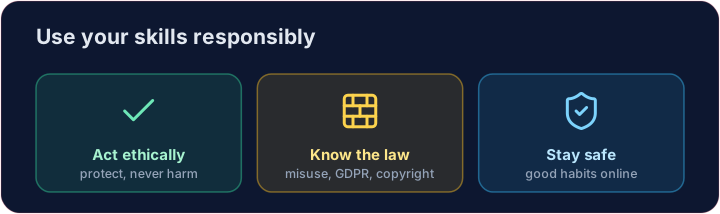
- You now know how attacks work. With that knowledge comes a duty to act ethically.
- A computing professional uses these skills to protect people, never to harm them.
- Acting unethically — accessing data you should not, or breaking systems — damages people and your own career.
The law
- Computer-misuse laws make unauthorised access a crime — even "just looking" can be illegal.
- Data-protection laws (like GDPR) force organisations to keep your personal data safe and use it fairly.
- Copyright protects creative work; you may not copy software or media without permission.
Licences
- Software comes with a licence saying what you may do with it.
- Proprietary licences restrict copying and sharing; open-source licences allow you to use and modify the code.
- Always check the licence before reusing someone's code or images — respecting it is both legal and ethical.
Staying safe — your checklist
- Use a password manager and a different strong password everywhere.
- Turn on two-step verification. Keep software updated. Look for HTTPS before logging in.
- Think before you click. You have the knowledge now — use it to keep yourself and others safe. Well done!
Covers: A-Level 7.1 (ethics, copyright, licensing), AP CSP; everyday safe computing.
Now you try
- First decide what each licence allows — proprietary or open-source.
- Then decide which law each incident breaks. That is the exam skill for this topic.
Common mistakes
- Only test systems you have permission to test.
- Keep software updated and think before you click.
Difficulty 2/5 · 140 coins + a small bonus on first completion today
What does each licence allow? Set each variable to open-source or proprietary.
Click Run to see the output here.
Difficulty 2/5 · 140 coins + a small bonus on first completion today
Which law does each incident break? Set each variable to computer misuse, data protection or copyright.
Click Run to see the output here.