Malware
This page needs a recent browser (with SharedArrayBuffer support). Please update Chrome, Edge, Firefox or Safari to the latest version.
Malware = malicious software
- Malware is any program written to harm a computer or steal from it.
- The exam expects you to know the main types and how they differ. Here they are.
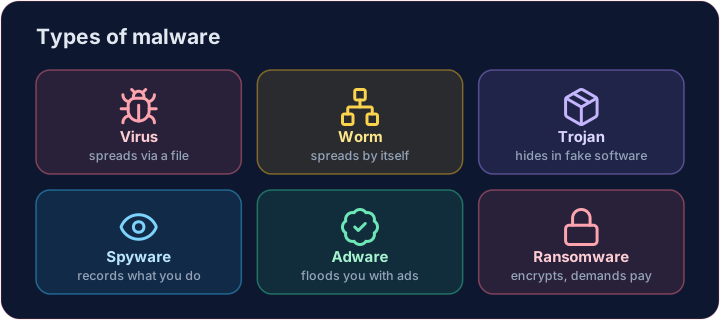
Spreading types
- Virus — attaches to a file; runs and spreads when you open that file.
- Worm — spreads by itself across a network, with no file to open. The Morris worm was one.
- Trojan horse — pretends to be useful software, but hides something harmful inside.
Stealing and spying types
- Spyware — secretly records what you do, such as the keys you type (your passwords).
- Adware — floods you with adverts; often bundled with free downloads.
Holding data hostage
- Ransomware — encrypts your files and demands payment for the key to unlock them.
- It has shut down hospitals and companies. The best defence is backups you can restore from.
Covers: IGCSE 5.3 (Cyber security threats), A-Level 6.1, AP CSP Big Idea 5.
Now you try
- First, read three behaviours and name the malware type each one describes.
- Then play defender: ransomware has struck, and you must count how many files your backup can restore.
Common mistakes
- A virus needs a host file to spread; a worm spreads by itself across a network.
- A Trojan hides inside useful-looking software.
Difficulty 1/5 · 100 coins + a small bonus on first completion today
Name the malware. Read each behaviour and set the variable to virus, worm or trojan.
Click Run to see the output here.
Difficulty 1/5 · 100 coins + a small bonus on first completion today
Ransomware has encrypted the laptop, but you kept a backup. Count how many of the files also appear in backup — that is how many you can restore. Print the count.
Click Run to see the output here.