Security, privacy and integrity
This page needs a recent browser (with SharedArrayBuffer support). Please update Chrome, Edge, Firefox or Safari to the latest version.
Three words that sound alike
- People mix up security, privacy, and integrity, but they mean different things.
- Knowing the difference is a favourite exam question — and it makes the rest of the course clearer.
What each one means
- Security — keeping data and systems safe from people who should not have access.
- Privacy — your right to control who sees your personal data.
- Integrity — the data is accurate and complete, and has not been changed by accident or attack.
A quick example
- A hospital stores patient records.
- Security: locks and passwords stop outsiders getting in.
- Privacy: only the patient's own doctor may look at their record.
- Integrity: a blood-type value must never be altered or corrupted — a wrong value could be deadly.
Protect the system and the data
- You must protect both the computer system (so it keeps working) and the data (so it stays correct and secret).
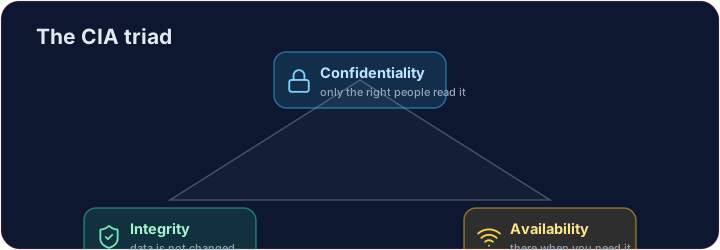
- A threat to either is a threat to all three goals of the CIA triad.
Covers: A-Level 6.1 (Data Security), IGCSE 5.3.
Now you try
- Two short tasks below: first label three real events with the right word — security, privacy or integrity.
- Then act as a backup checker: compare a stored record with the original and report whether it changed.
Common mistakes
- Keep the three ideas separate: security (safe), privacy (who may see it), integrity (correct).
- Encryption protects confidentiality, not integrity.
Explore
The CIA triad
Security rests on three goals: Confidentiality, Integrity, Availability.
Difficulty 1/5 · 100 coins + a small bonus on first completion today
Label each event with the right word: security, privacy or integrity. Set the three variables to the matching word.
Click Run to see the output here.
Difficulty 1/5 · 100 coins + a small bonus on first completion today
Be the backup checker. Compare the received record with the original and print CHANGED if they differ, otherwise INTACT.
Click Run to see the output here.