| English | 释义 | 拼音 |
|---|---|---|
| patch/pætʃ/ | 补丁 | bǔ dīng |
| anti-malware software/ˈænti ˈmælweə ˈsɒftweə/ | 反恶意软件 | fǎn è yì ruǎn jiàn |
| host-based firewall/həʊst beɪst ˈfaɪəwɔːl/ | 主机防火墙 | zhǔ jī fáng huǒ qiáng |
| acceptable use policy/əkˈseptəbl juːs ˈpɒlɪsi/ | 可接受使用政策 | kě jiē shòu shǐ yòng zhèng cè |
A patch that came two months early, 2017
- On 14 March 2017 Microsoft released a security update for a flaw in Windows file sharing. On 12 May 2017 the WannaCry ransomware spread across the world through that same flaw, encrypting computers in more than 150 countries. Britain's National Health Service cancelled thousands of appointments. The computers it hit had not installed the update.
- Protecting a device starts with installing each patch 补丁 — a fix for a known weakness — and continues with layers of defence.
Microsoft's patch came out on 14 March 2017 and WannaCry spread on 12 May 2017. About how many days apart is that? (March has 31 days, April 30.)
难度 2/5 · 今日首次完成可获 140 金币及少量额外奖励
17 + 30 + 12 = 59 days.
Patching
- Turn on automatic updates for the operating system and applications; test critical systems first, but quickly.
- Replace devices that no longer receive security updates.
Which control protects the device here?
Anti-malware catches known malware; patching closes known holes; a host firewall blocks unneeded ports; a policy sets rules.
What is a patch?
难度 1/5 · 今日首次完成可获 100 金币及少量额外奖励
Install it quickly.
Anti-malware software
- Anti-malware software 反恶意软件 scans files against a database of known malware signatures and watches program behaviour; it quarantines anything that matches.
- Its signature database must update every day to recognise new malware.
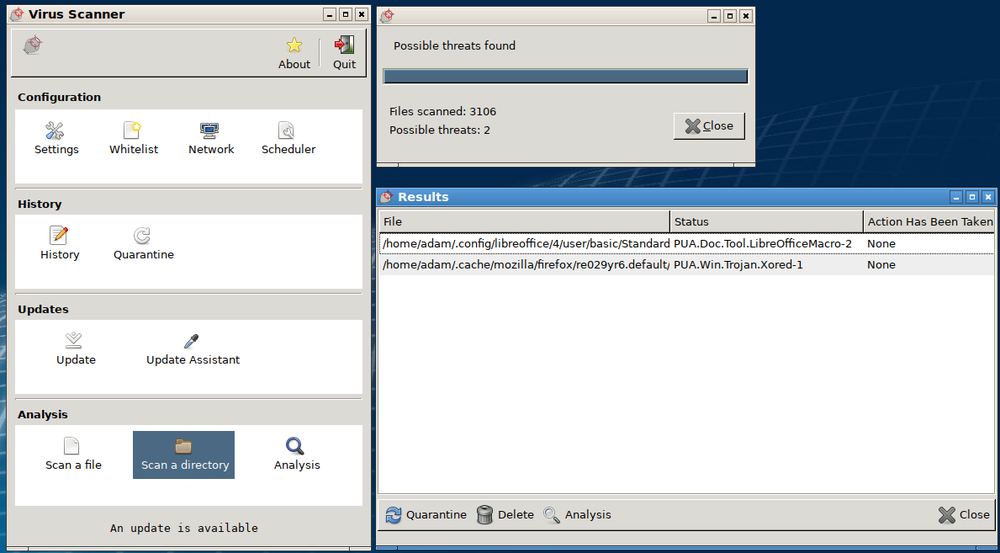
Anti-malware needs frequent signature updates to recognise new malware.
难度 1/5 · 今日首次完成可获 100 金币及少量额外奖励
New malware appears every day.
Host-based firewalls
- A host-based firewall 主机防火墙 runs on the device itself and allows or blocks network traffic by rules — for example, block all incoming connections except approved ones.
- It still protects a laptop on public Wi-Fi, where the office firewall cannot help.
Why is a host-based firewall useful on public Wi-Fi?
难度 1/5 · 今日首次完成可获 100 金币及少量额外奖励
It runs on the device itself.
Worked example: harden a school laptop
A new laptop will be lent to students.
- Patch: install all updates and enable automatic updates.
- Protect: turn on anti-malware with daily signature updates; enable the host-based firewall to block incoming connections.
- Limit: give students standard accounts, not administrator accounts, so malware they run cannot change system settings.
Which steps harden a shared laptop?
难度 2/5 · 今日首次完成可获 140 金币及少量额外奖励
Limit privileges.
Policies for people
- An acceptable use policy 可接受使用政策 (AUP) states what users may and may not do on an organisation's devices — no installing unapproved software, no sharing passwords.
- Users sign it, and it gives the organisation a basis for training and for action when rules are broken.
What does an acceptable use policy do?
难度 1/5 · 今日首次完成可获 100 金币及少量额外奖励
Rules for people.
Anti-malware alone is not enough. WannaCry used an unpatched flaw; signatures arrived only after it spread. Patching, firewalls, limited accounts and policies work together.
Anti-malware software alone fully protects a device.
难度 1/5 · 今日首次完成可获 100 金币及少量额外奖励
Layers are needed.
Protect devices in layers: patch quickly, run anti-malware with current signatures, use a host-based firewall, give users limited accounts, and set clear rules in an acceptable use policy.
Explain why WannaCry hit some hospitals but not others that used the same software.
Patching matters.