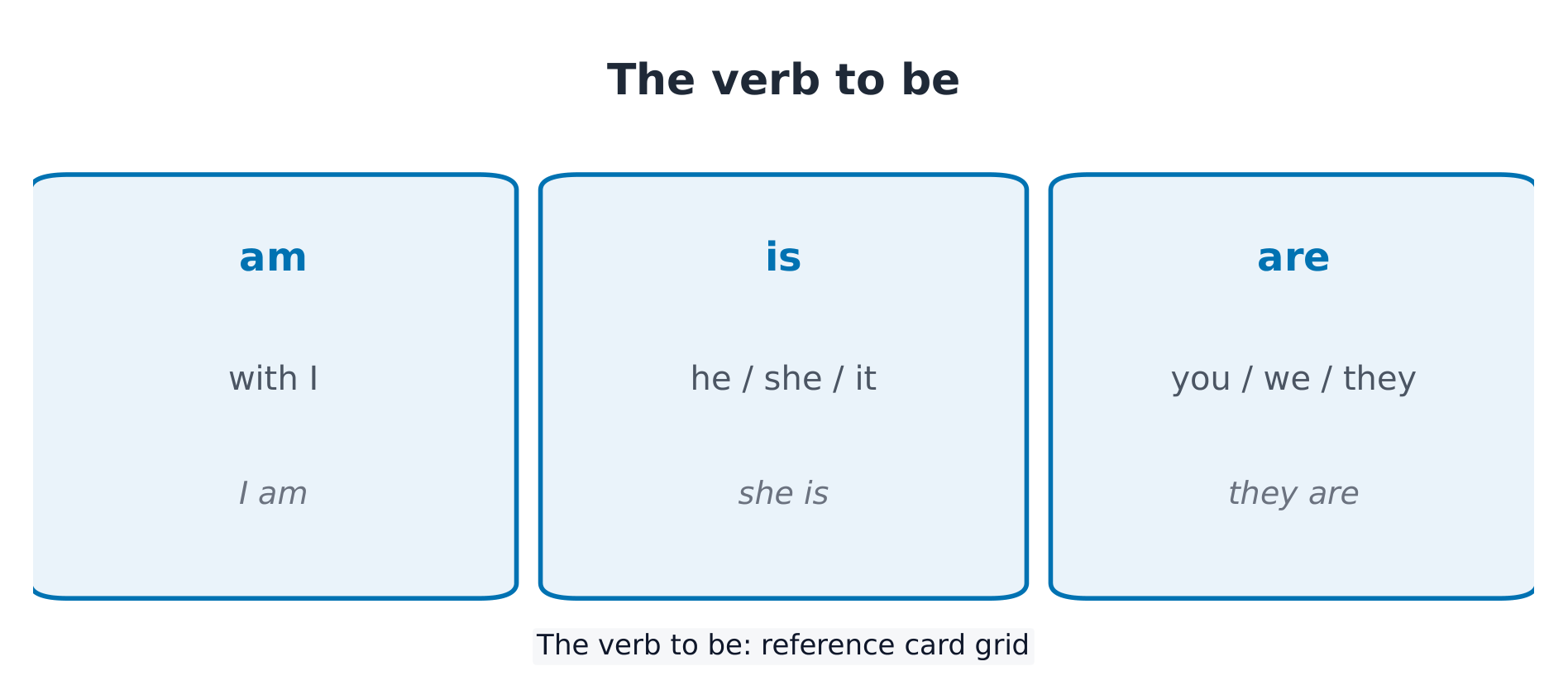
be 动词 (the verb to be) 表示“是 / 在”。它随主语变化,有三种形式:
- I → am
- he / she / it → is
- you / we / they → are
我I 是am 一名a 学生student.
我是一名学生。
她She 是is 开心happy.
她很开心。
他们They (是)are 来自from 中国China.
他们来自中国。
注意 口语常用缩写:I'm、you're、he's、she's、it's、we're、they're。
be 动词 (the verb to be) 表示“是 / 在”。它随主语变化,有三种形式:
我I 是am 一名a 学生student.
我是一名学生。
她She 是is 开心happy.
她很开心。
他们They (是)are 来自from 中国China.
他们来自中国。
注意 口语常用缩写:I'm、you're、he's、she's、it's、we're、they're。
否定: 在 be 动词后加 not(常缩写)。
他He 不是is not 一名a 老师teacher.
他不是老师。(= He isn't a teacher.)
疑问: 把 be 动词放到主语前面。
(是吗)Are 你you 准备好ready?
你准备好了吗?
简短回答:Yes, I am. / No, I'm not.
注意 否定缩写:is not → isn't,are not → aren't;但 am not 只缩写成 I'm not(没有 ~~amn't~~)。
常见错误
正在加载学科…