Scope and prerequisites
IB classical languages first assessment 2024; Latin focus. This supplemental reference covers only the listed preparation outcomes. School selections, full-guide procedures and required live or recorded performance are separate.
- Form a focused inquiry 聚焦探究 into Latin language or culture
- Evaluate and annotate primary sources without claiming one genre represents all Romans
Prerequisites: Research question; source origin, purpose and limits.
Explain and choose the method
A primary source 一手史料 comes from the world under investigation, but it does not give transparent access to every person's experience.
An annotation 评注 should explain how the source answers the question, its context and a relevant limitation.
A focused inquiry asks a bounded question that actual evidence 证据 can answer. “How does this household's memorial present generosity?” is more manageable than “What did all Romans believe?” An annotation identifies the source, explains its contribution and tests its limits. Separate an ancient object or text from its modern edition, catalogue and translation 翻译. Credit each accurately.
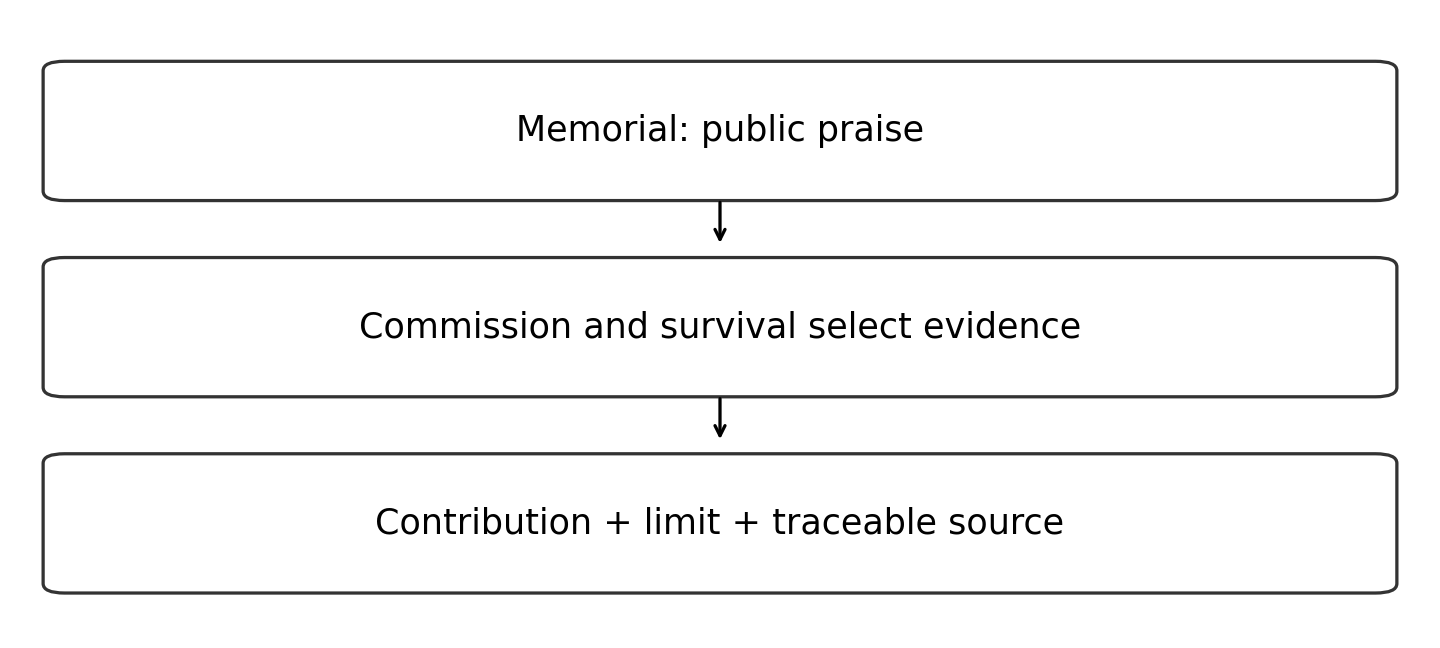
Existing worked example: Ask how a particular commemorative practice represents family roles. Compare a bounded set of inscriptions with literary evidence and an object. Record exact location 位置, date range, text, translation source and why each item contributes to the inquiry.
Complete original context
Original simulated source cards for learning how to evaluate evidence, not ancient documents or a real dossier collection.
Card A: A memorial inscription commissioned by one wealthy household, dated to a stated twenty-year interval by the supplied catalogue. The inscription praises a family member's generosity. The catalogue records the findspot but does not identify who wrote the wording. Card B: A satirical poem by an elite writer, preserved in a later manuscript. Its speaker exaggerates a dinner host's behaviour for comic effect. The supplied edition identifies the passage and translation, but the speaker is not automatically the author. Card C: A worn household vessel from an excavated domestic room. The excavation record gives its layer and measurements. No owner name or inscription survives.
These descriptions deliberately omit actual inventory numbers, dates and Latin text. They can support method practice only. An assessed dossier needs real, traceable primary materials and the school's approved source selection, with accurate editions and translation credits.
Independent practice and checked reasoning
Transfer 1
Choose a bounded inquiry for Card A and write a model annotation using only its supplied information.
Reasoning: Inquiry: “How does the household's memorial represent generosity?” Annotation: “Card A presents generosity as a quality worth commemorating, so it can illuminate the household's public representation of the deceased. Commissioning and praise may select favourable qualities; the inscription does not independently verify every act or represent all social groups. Its twenty-year dating interval limits precise chronological claims. Before assessed use, replace this simulated card with the actual inscription, catalogue number, location, text and credited translation.”
Transfer 2
Compare one useful contribution and one limitation of Cards B and C for investigating dining practices.
Reasoning: B may illuminate an elite literary representation of a host, but satire and speaker exaggeration limit literal reporting. C can illuminate a vessel's material form and excavated context, but no named owner or stated use survives. Corroborate any dining interpretation rather than assigning a personal story to the object.
Transfer 3
Explain why collecting attractive images and treating a modern translation as an ancient author are weak methods. State the exact next step before using these cards in a real dossier.
Reasoning: Images without traceable identity, context and relevance 相关性 cannot support the inquiry; a translator's choices are modern mediation of an ancient text, not the ancient author. Obtain teacher-approved real primary sources, exact identifiers, dates, editions and translation credits, then compare their evidence and limitations. These simulated cards are not an assessed source collection.
Limits and next use
The dossier requires seven to nine primary source materials plus an inspiration source. Teacher checks full-guide details. Do not submit a scrapbook of attractive images or treat modern translation as an ancient source in its own right.
All tasks here are public original practice with authored guidance. They are not official questions or fresh diagnostics. Existing protected tests and mocks remain separate.