Workers
Introduced| English | Meaning |
|---|---|
| wages/ˈweɪdʒɪz/ | Payments to workers in return for their labour. |
| demand for labour/dɪˈmænd fɔː ˈleɪbə/ | demand for labour |
| skills/skɪlz/ | skills |
| qualifications/ˌkwɒlɪfɪˈkeɪʃnz/ | Recognised achievements, credentials or abilities that show suitability for a role or activity. |
| trade unions/treɪd ˈjuːnɪənz/ | Organisations of workers that represent members' interests and negotiate with employers. |
| minimum wage/ˈmɪnɪməm weɪdʒ/ | The lowest wage rate that an employer is legally permitted to pay covered workers. |
| non-wage factors/nɒn weɪdʒ ˈfæktəz/ | non-wage factors |
Why some jobs pay more
- A surgeon earns far more than a cleaner. A footballer more than a teacher. Why?
- Wages 工资 are set by the demand for and supply of each kind of labour.
Economics case lab
Classify real examples by the economic idea they show.
In a free labour market, wages are determined by:
Difficulty 1/5 · 100 coins + a small bonus on first completion today
Wages are the price of labour, set by demand and supply.
How wages are determined
- Wages are a price — set where the demand for labour 劳动需求 meets the supply of it.
- High pay comes from high demand (valuable skills 技能) and low supply (few can do it).

A car assembly line is capital-intensive (many machines, few workers) and uses the division of labour — each worker repeats one task
A job is likely to pay highly when:
Difficulty 1/5 · 100 coins + a small bonus on first completion today
Scarce, in-demand skills command high wages.
A trade union may raise wages above the free-market level.
Difficulty 1/5 · 100 coins + a small bonus on first completion today
Unions bargain collectively to push pay above the market rate.
Training and qualifications raise pay partly by restricting the ______ of labour.
Difficulty 1/5 · 100 coins + a small bonus on first completion today
Fewer qualified workers means scarcer, better-paid labour.
Why wages differ
- Skills and qualifications 资格: training restricts supply and raises pay.
- Danger, hours, responsibility: harder jobs may pay more to attract workers.
- Trade unions 工会 and the minimum wage 最低工资 can raise pay above the market rate.
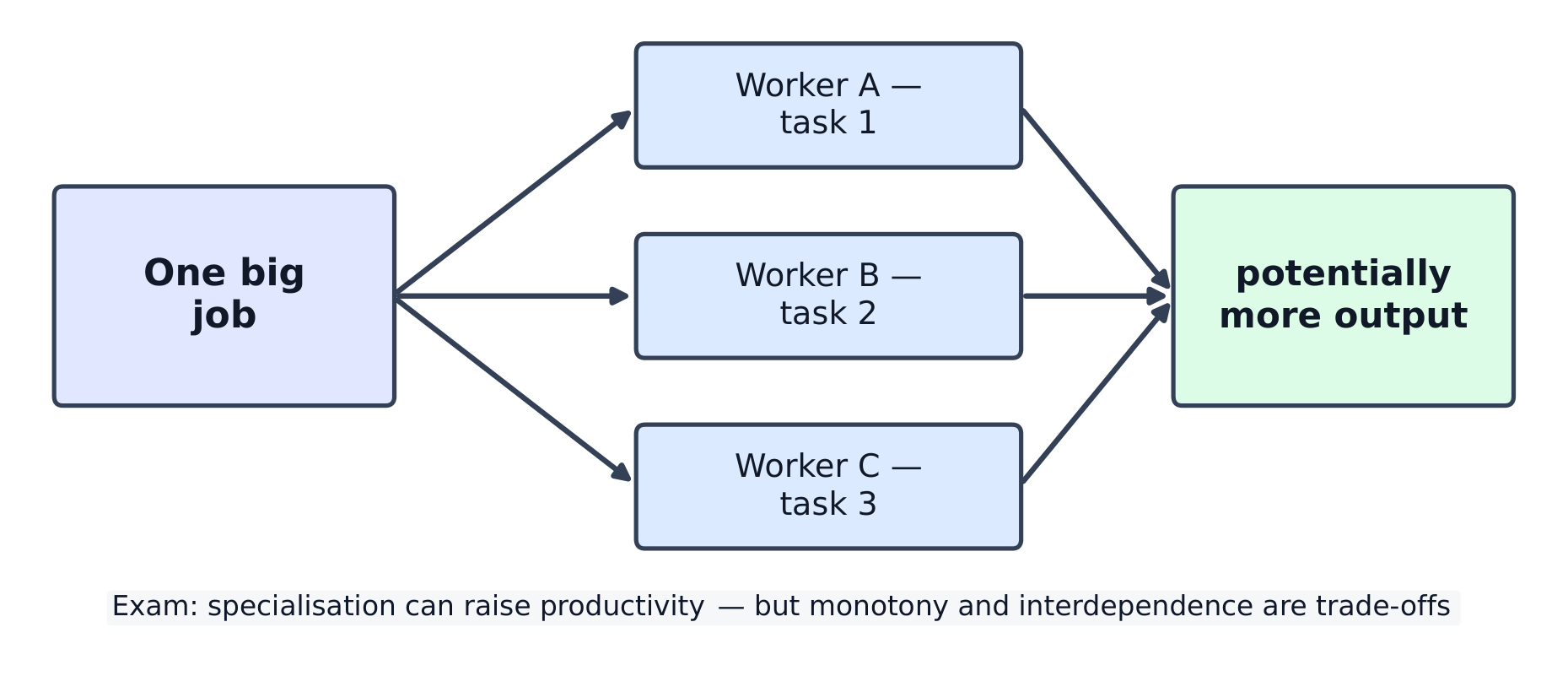
Division of labour splits one big job into small repeated tasks, one per worker, raising output
Which are non-wage factors affecting job choice? (Select all that apply.)
Difficulty 2/5 · 140 coins + a small bonus on first completion today
Pay is the wage factor; the others are non-wage factors.
Choosing a job
- People weigh pay against non-wage factors 非工资因素: job satisfaction, security, hours, location, prospects.
- This is why a well-paid but unpleasant job may still go unfilled.
Scarcity of skill, not effort, drives high pay. A job pays well when few people can do it and many employers want it — supply and demand, not how "hard" it feels.
You've got it
- wages are a price: set by labour demand and supply
- high pay = high demand (valuable skill) + low supply (scarce skill)
- non-wage factors (satisfaction, hours, security) also shape job choice