Changes in Factor Demand and Factor Supply
Introduced| English |
|---|
| wage/weɪdʒ/ |
| factor demand/ˈfæktə dɪˈmænd/ |
| output price/ˈaʊtpʊt praɪs/ |
| productivity/ˌprɒdəkˈtɪvɪti/ |
| related input/rɪˈleɪtɪd ˈɪnpʊt/ |
| factor supply/ˈfæktə səˈplaɪ/ |
| number of available workers/ˈnʌmbə ɒv əˈveɪləbl ˈwɜːkəz/ |
Why wages climb in booming industries
- When an industry takes off, its workers suddenly get paid much more.
- Nothing about the workers changed overnight — so what did?
- The answer lives in the factor market's demand and supply.
- Shift either curve, and the wage 工资 and quantity of workers move.
What shifts factor demand
- A change in the output price 产品价格: a dearer product raises each worker's MRP, shifting factor demand 要素需求 right.
- A change in worker productivity 生产率: training or technology raises marginal product, shifting demand right.
- A change in the price of a related input 相关投入品: a cheaper complement raises demand; a cheaper substitute input can lower it.
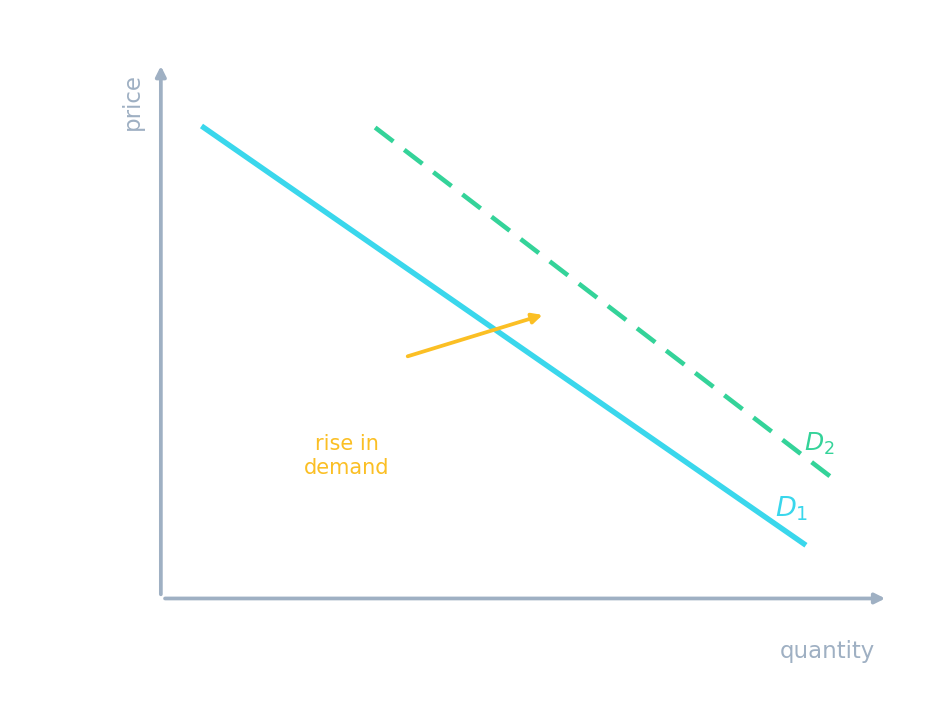
The labour market
The wage is set where labour demand meets labour supply. A more valuable product or more productive workers shift demand right, raising the wage.
The product a firm sells becomes more valuable. The firm's demand for workers:
A higher output price raises each worker's MRP, shifting factor demand right.
Select all that shift factor (labour) demand.
Output price, productivity and related-input prices shift demand; more workers shifts supply.
Better training or technology raises worker ______, shifting factor demand right.
Higher productivity means a higher marginal product, so a higher MRP.
What shifts factor supply
- The number of available workers 可用工人数量: immigration or population growth shifts factor supply 要素供给 right.
- The appeal of the job: better conditions or lower training costs draw in more workers.
- To find the result, shift the right curve and read the new crossing point — just like a product market.
A wave of immigration into a country tends to shift the labour supply curve:
More available workers increase labour supply, shifting the curve right.
Match each change to the curve it shifts.
Product value and productivity move demand; the number of workers moves supply.
A worked case
- A tech boom makes software more valuable, so the output price of apps rises.
- Each programmer's MRP jumps, shifting the demand for programmers right.
- With supply unchanged, both the equilibrium wage and the number hired rise.
- That is exactly why wages climb fastest in booming industries.
A tech boom raises the price of apps, with worker supply unchanged. The wage and number of programmers:
Higher MRP shifts labour demand right; with fixed supply, both wage and quantity rise.
The wage is set where factor demand meets factor supply. Factor demand shifts with the output price, productivity, and related-input prices; factor supply shifts with the number of workers and the job's appeal. Shift the right curve, read the new equilibrium.